
AIN: Bridging the Gap in Italian Social Opinion Mining
Social Opinion Mining: An Approach for Italian Language
The paper introduces AIN, a rule-based Sentiment Analysis framework specifically tailored for the Italian language. It utilizes a custom-built AIN Thesaurus to extract user attitudes from social media (Twitter) and web communities by calculating polarity scores based on linguistic components.
TL;DR
Social media is a goldmine for consumer sentiment, but processing the Italian language presents unique challenges for standard algorithms. This paper introduces the AIN approach (Adjectives, Intensifiers, Negations), a lightweight yet robust sentiment analysis system centered around a custom-built Italian Sentiment Thesaurus. It captures how specific word combinations—like "not very good"—alter the overall reputation of a subject.
Background Positioning: This work is primarily a domain-specific framework development. It moves away from general-purpose multilingual tools (like SentiWordNet) to provide a language-specific nuance that captures Italian linguistic subtleties.
Problem & Motivation
Most Sentiment Analysis (SA) research is "English-centric." While tools like SentiWordNet or general ML classifiers exist, they often fail when applied to Italian social media posts (e.g., from Twitter or TripAdvisor) because:
- Lexical Scarcity: Many statistical approaches lack high-quality, manually verified training data for Italian.
- Linguistic Nuance: The way Italian speakers use intensifiers (e.g., "molto," "davvero") and negations (e.g., "non") significantly changes the weight of adjectives in a way that simple bag-of-words models might miss.
- Ambiguity: Word senses in Italian can be highly contextual (e.g., "caro" meaning both "expensive" and "dear/beloved").
The authors' insight was that sentiment is not just about isolated words, but the triangular relationship between an adjective, its intensifier, and any surrounding negations.
Methodology: The AIN Approach
The core of the system is the AIN Thesaurus, containing over 1,200 Italian words categorized into five polarity levels (from -2 to +2).
1. The Architecture
The workflow begins with Opinion Extraction from Twitter via OSINT (Open Source Intelligence) methods, followed by a filtering phase that segments text into "excerpts" based on conjunctions.
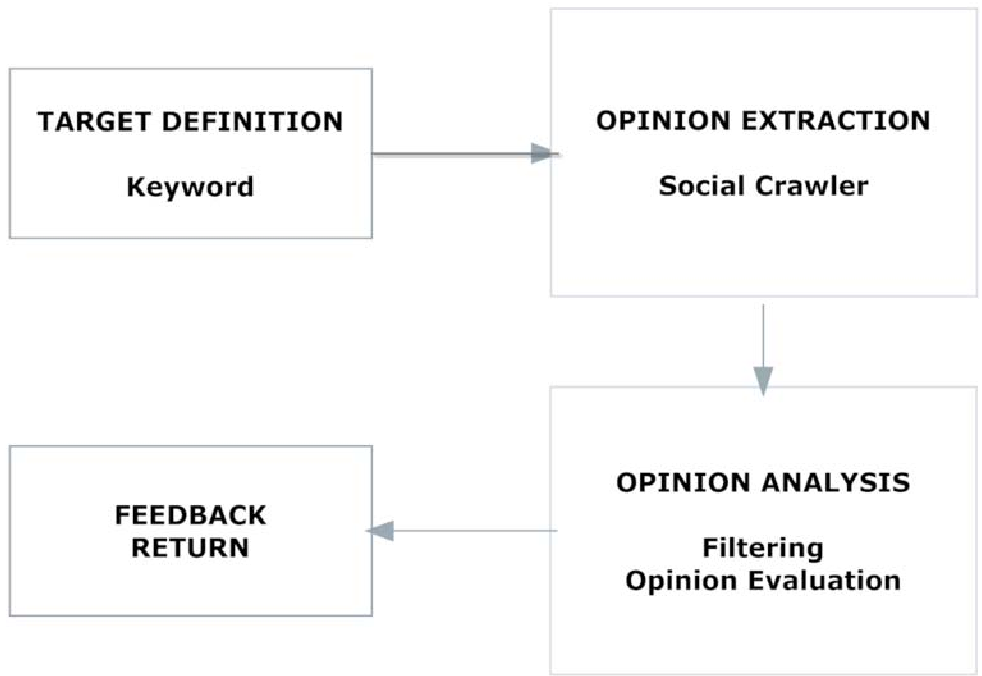 Fig 1: Overall system architecture for social network mining.
2. The Sentiment Formula
The system calculates the polarity of an excerpt using a specific logic that accounts for linguistic context:
- Adjectives (): The base sentiment (e.g., "bello" = +1).
- Intensifiers (): These adjust the magnitude of the adjective (e.g., "molto" = +1).
- Negations (): These act as modifiers. If a negation is present, the total score is usually halved, unless the polarity is very low, in which case it might double to signal a shift in meaning.
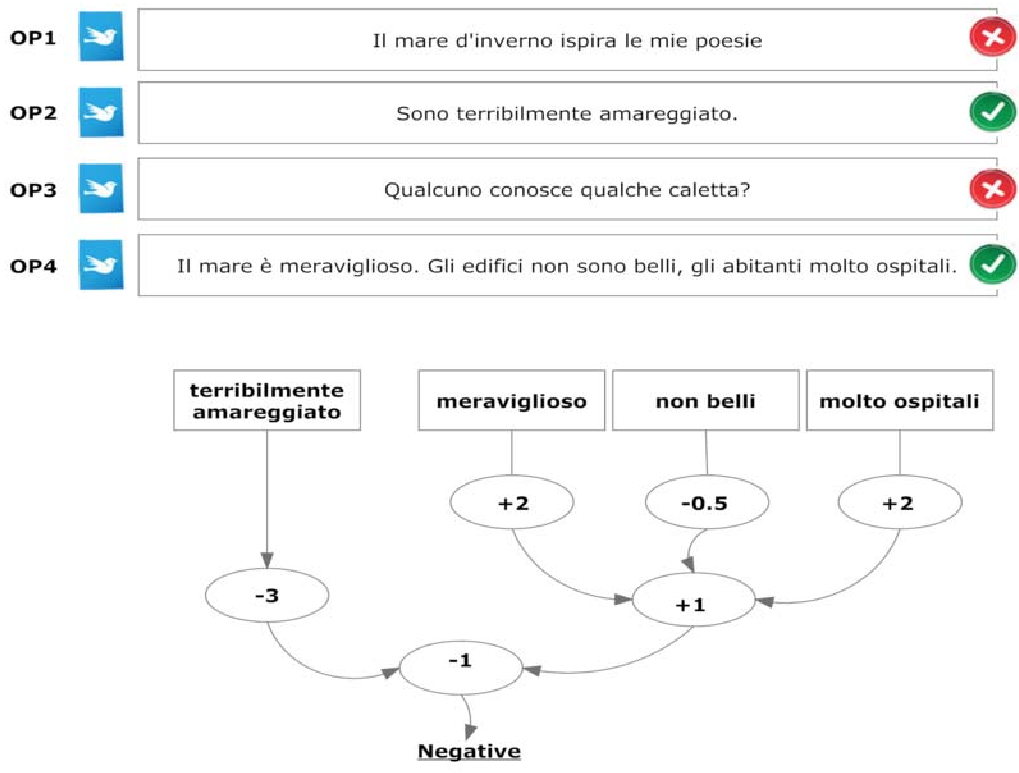 Fig 2: The AIN logic flow showing how words are processed.
Experiments & Results
The authors demonstrated the system's effectiveness using real data from Italian tourism communities. For a target like "ERICE" (a historic town in Sicily), the system analyzed multiple excerpts from a single review:
- "molto bene" (+2)
- "posizione stupenda" (+2)
- "personale disponibile" (+1)
The final score is the average of these excerpts (). The methodology allows for a more granular view than a simple binary "positive/negative" classification.
Performance Levels:
| Metric Value (M) | Sentiment |
|---|---|
| Positive | |
| Neutral | |
| Negative |
Critical Analysis & Conclusion
Takeaway
The AIN approach proves that hand-crafted, language-specific lexicons still hold significant value, especially where training data is scarce or when interpretability (knowing why a post was rated negative) is a business requirement.
Limitations
- Ambiguity Management: While the system flags ambiguous words (like "caro"), it currently defaults to "neutral" rather than performing advanced word-sense disambiguation.
- Modern Slang: The thesaurus may require frequent updates to capture evolving internet slang and emojis, which were not a primary focus of this version.
Future Outlook
The authors propose an exciting expansion: Multimodal Opinion Mining. By analyzing the colors of shared pictures (e.g., bright colors for positive feelings) or using object recognition (detecting a sea view vs. something unpleasant), the system could move beyond text to a holistic "feeling extraction" from Big Data.