
Social Pal: Redefining Device Interaction through the Social Internet of Things (SIoT)
Social Pal: A Combined Platform for Internet of Things and Social Networks
The paper introduces "Social Pal," a novel platform bridging Internet of Things (IoT) and Social Networks to form a Social Internet of Things (SIoT) ecosystem. It establishes a framework where smart objects create and manage autonomous social relationships to enhance service discovery and scalability.
TL;DR
As the number of connected devices approaches the hundreds of billions, the traditional "centralized" IoT model is hitting a wall. Social Pal proposes a shift toward the Social Internet of Things (SIoT), a paradigm where devices are not just "smart" but "socially conscious." By establishing autonomous relationships—much like a human social network—devices can discover services and collaborate without constant manual configuration.
Background: The Scalability Crisis in IoT
The rapid proliferation of smart objects (smartwatches, clinical devices, sensors) has created a "heterogeneity headache." We have different standards, protocols, and an overwhelming amount of data. The authors identify that the core issue is navigability: how does a device find the right service in a sea of billions?
Prior works attempted to layer IoT architectures, but they often lacked flexibility or failed to account for the nuanced relationships between owners and their devices.
Methodology: The Social Pal Architecture
The researchers proposed a middleware-centric approach called Social Pal. The core insight is that objects, much like humans, can be categorized based on their "social" context.
1. Relationship Modeling
Social Pal defines two primary branches of relationships:
- Profiling Relations: Static bonds such as Ownership Object Relationship (OOR) (devices owned by the same person) and Parental Object Relationship (POR) (devices from the same manufacturer).
- Dynamic Relations: Bonds formed through interaction, mainly Social Object Relations (SoR), where devices "exchange profiles" based on rules defined by their owners.
2. General Architecture
The architecture is divided into the Actor (Humans), the Social Pal Middleware, and the Interface. This ensures that the platform acts as the "glue" for human-to-device interaction.
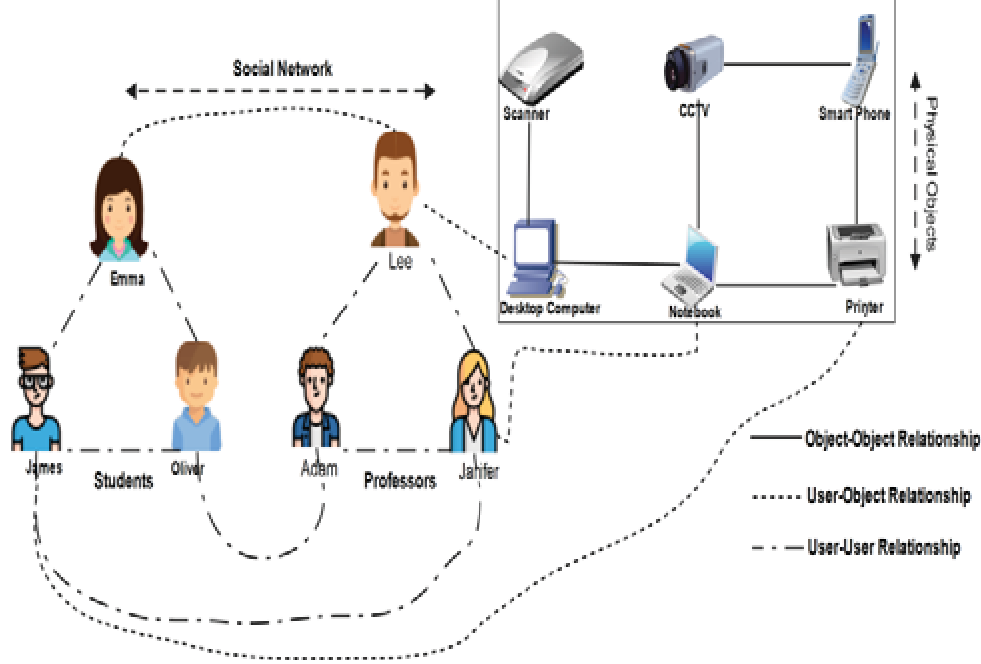 Figure 1: The layered architecture showing the server-side component management.
Implementation: From Theory to Raspberry Pi
To prove the concept, the authors built a prototype using:
- Social Application Server (SAS): Manages profiling and service discovery.
- Social Application Client (SAC): Implemented on Raspberry Pi nodes for actual device registration.
- Big Data Integration: Utilizing Hadoop to handle the vast amount of object data.
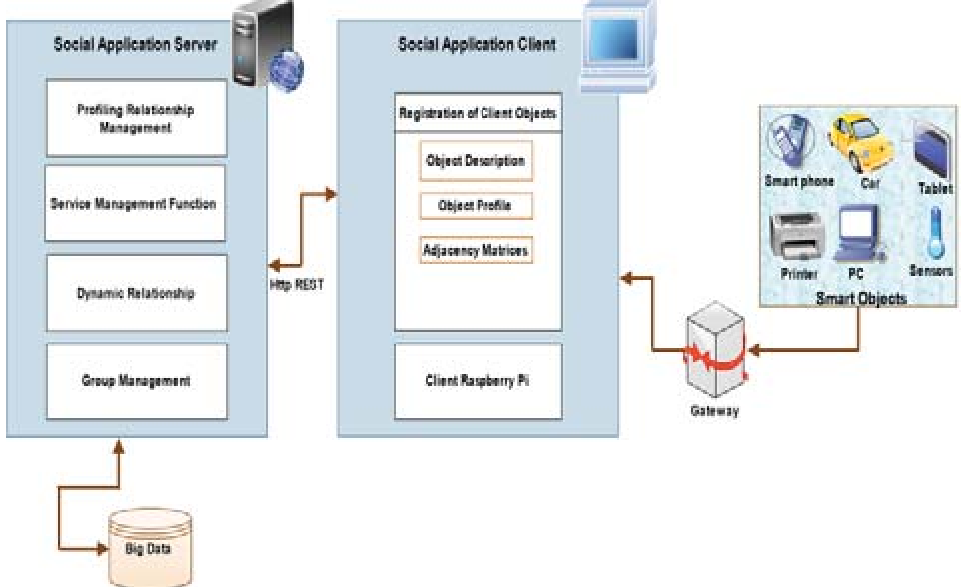 Figure 2: The prototype components bridging physical devices and high-level social logic.
Use Case: The Smart University
Imagine a student entering a library with a new MacBook. In a traditional IoT setup, they might struggle to find a compatible printer. In the Social Pal ecosystem, the MacBook automatically finds "friend" devices based on its brand (POR) or location (OOR), establishing a permanent link via API keys effortlessly.
Critical Analysis & Conclusion
The Social Pal framework provides a robust blueprint for a navigable IoT. By leveraging "social consciousness," it moves away from rigid, pre-defined connections toward a fluid, self-organizing network.
Key Contributions:
- Navigability: Objects can find neighbors based on social rules, narrowing the search space for services.
- Flexibility: Unlike rigid legacy systems, Social Pal's middleware adjusts to dynamic interactions.
- Big Data Preparedness: The inclusion of Hadoop in the prototype signifies a move toward industrial-scale IoT.
Future Outlook: While the paper establishes the social logic, the next frontier will be Trust Management. How do we ensure a "friend" device isn't a malicious actor? As the SIoT matures, integrating decentralized identity and blockchain-based trust will likely be the logical progression of Amin and Choi's work.
Paper: Social Pal: A Combined Platform for Internet of Things and Social Networks Authored by: Farhan Amin and Gyu Sang Choi