
From Lurker to Loyal: Decoding Social and Parasocial Ties on SNS
The role of social and parasocial relationships on social networking sites loyalty
This study investigates the impact of social and parasocial relationships on user loyalty within Social Networking Sites (SNSs). Using Structural Equation Modeling (SEM) on survey data from 320 participants, the research establishes a conceptual sequence where parasocial behaviors precede social identification and engagement, ultimately driving long-term SNS loyalty.
TL;DR
Why do we stay on some social platforms while abandoning others? This paper explores the hidden mechanics of Social Networking Site (SNS) Loyalty. It posits that our one-sided "parasocial" interactions with other members—watching how they solve problems or share life—actually pave the way for real social identification and engagement, which are the true anchors of platform loyalty.
The "Churn" Conundrum
Even giants like Facebook have faced millions of fleeing users. In the digital world, switching costs are low. The author argues that we’ve been looking at SNS loyalty through the wrong lens—focusing on technical features rather than the psychological ladder of online relationships. Specifically, there is a gap in understanding how "lurkers" (passive consumers) eventually become loyal advocates.
Methodology: The Psychology of "Pseudo-Relationships"
The core of this research lies in the distinction between:
- Parasocial Relationships: One-sided bonds where a user follows others’ activities but the target is unaware (e.g., following a tech guru or a fitness enthusiast).
- Social Relationships: Reciprocal interactions involving mutual identification and active engagement.
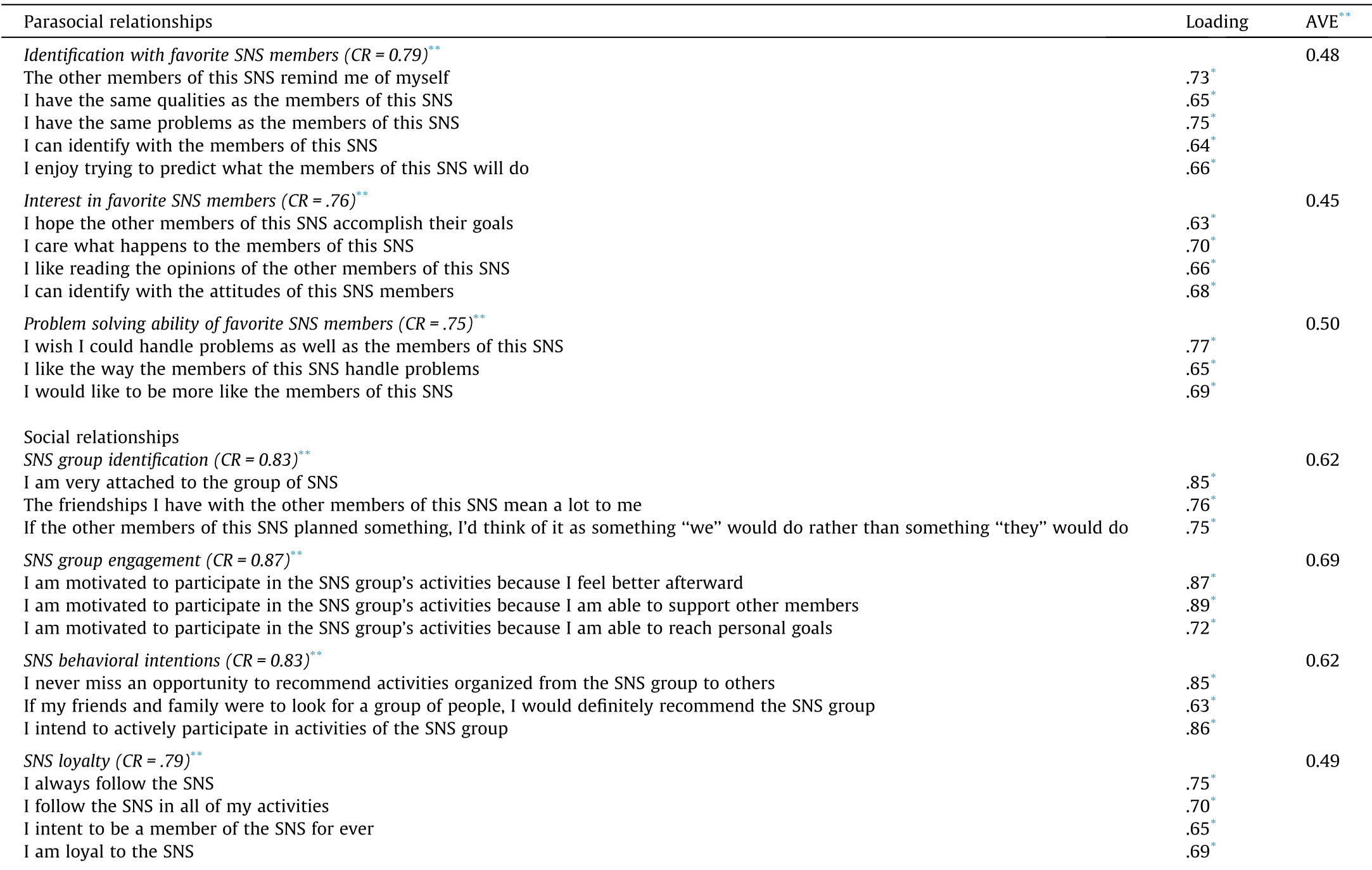
The author utilized Structural Equation Modeling (SEM) to analyze data from 320 SNS users. They adapted the Audience Persona Interaction (API) scale to see if the "parasocial" observation of members could predict future "social" loyalty.
Key Insights: Why It Works
1. Parasocial as an "Uncertainty Reducer"
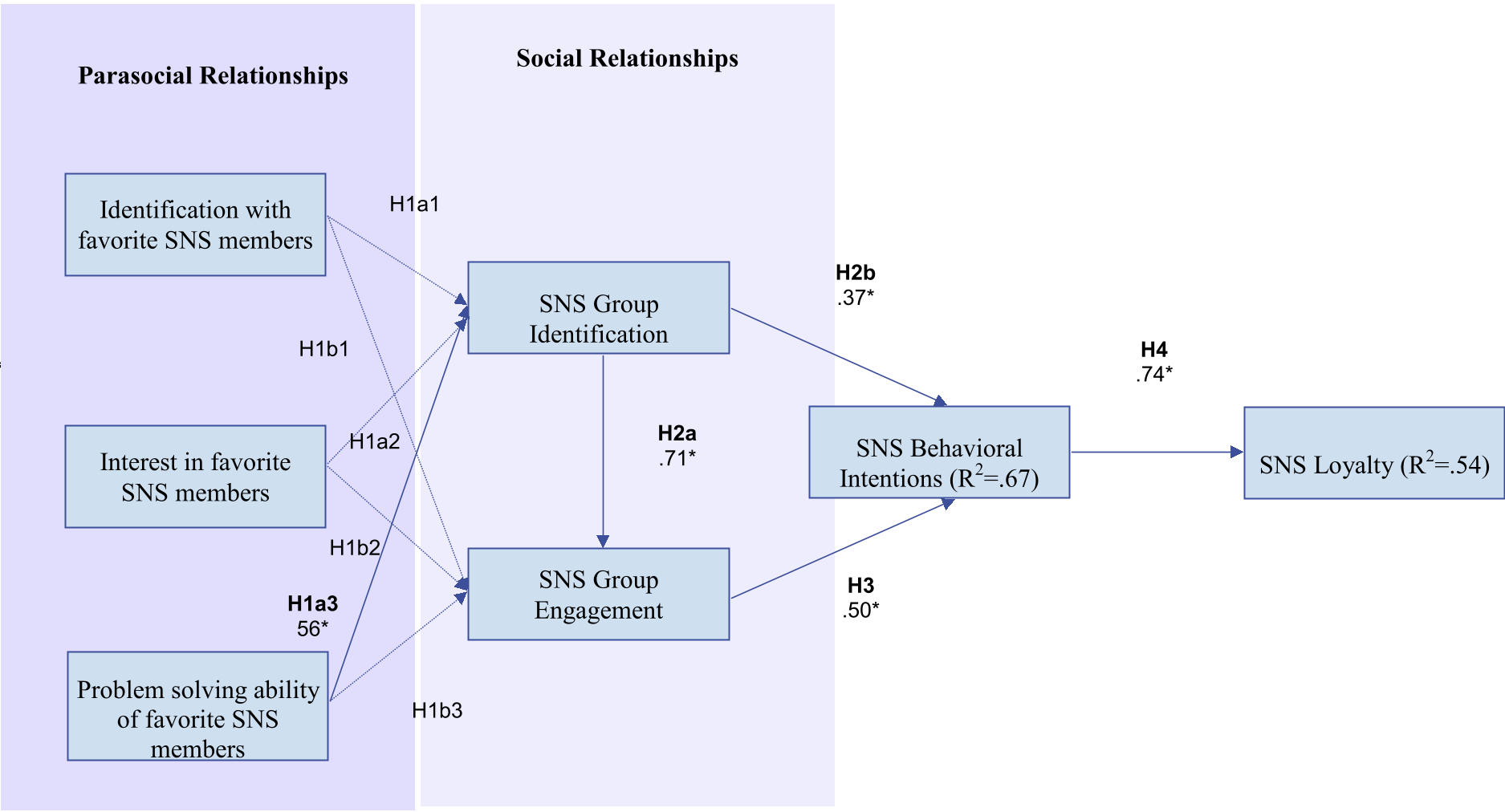
The study finds that users often use parasocial interaction as a way to gather information about group norms without the risk of initial active participation. By watching how "favorite members" handle problems (Parasocial Problem Solving), users build a sense of Identification with the SNS group (t=4.90).
2. The Identity Anchor
Once a user identifies with the group ("we" vs. "they"), their engagement spikes. Identification with the group is a powerful predictor of SNS Group Engagement (.71). This active engagement then creates a direct bridge to Behavioral Intentions (recommendation and continued use).
3. The Path to Loyalty
The final results demonstrate that Behavioral Intentions—such as the intent to recommend the group to family and friends—have the strongest direct path to SNS Loyalty (0.74 coefficient).
Academic & Managerial Impact
- For Researchers: This study validates that theories developed for "offline" media (like TV) are highly applicable to the online world. It proves that social and parasocial behaviors are interdependent, not isolated.
- For Managers: Stop focusing on "features" and start focusing on "identification." To reduce churn, SNS managers should create environments where users can easily observe and eventually "imitate" the behaviors of high-status members, facilitating the slide from passive lurking to active social bonding.
Critical Reflection
While groundbreaking in 2015, the study’s reliance on convenience sampling in Greece limits its global generalizability. However, the core insight remains timeless: Lurking is not a failure of engagement; it is the preliminary stage of loyalty construction.
Future Outlook
As we move into the era of Web3 and niche social communities, the ability of a platform to facilitate this "parasocial-to-social" transition will define its survival. Future studies should explore how algorithmic "Recommendation Engines" can artificially stimulate these parasocial bonds to accelerate the loyalty cycle.