
Beyond the Gatekeepers: Why Scientists Hesitate to Let the Crowd be Their Peers
Let the crowd be my peers? How researchers assess the prospects of social peer review
This study investigates the adoption of Social Peer Review (SPR), a system where research is instantly published in web-based social networks and critiqued by the entire academic community. Utilizing a survey of 1,429 international scholars and drawing on UTAUT 2 and institutional theory, it identifies that extrinsic factors—rather than intrinsic open-science motivations—primarily drive researchers' intentions to adopt this model.
TL;DR
The technology for "Social Peer Review" (SPR)—where research is instantly published and openly reviewed by the community—has existed for years, yet the academic world remains locked in a closed-door system. A massive survey of 1,429 researchers reveals that while scholars find the idea of open science noble, they won't switch to SPR unless it provides the same professional "prestige" and career "credits" as traditional high-impact journals.
Contextual Positioning
This study is a critical behavioral analysis at the intersection of Information Systems and Sociology of Science. It moves past the technical "how-to" of open platforms to address the "why-not" of institutional resistance, identifying the misalignment between idealistic open-access goals and the harsh reality of academic survival.
The "Diamond-Cutter" Problem: Why Closed Review Persists
Current publishing relies on editors and reviewers acting as "diamond-cutters"—not just filtering content, but actively shaping and polishing it. Traditionalists argue that the "crowd" lacks the specialized expertise to perform this refinement. Furthermore, the "Gatekeeper" function reduces information overload, ensuring that only what is perceived as "high quality" reaches the reader.
The authors argue that SPR’s failure to replace this system isn't a technical bug; it's a social one. Researchers prioritize:
- Reputation Management: Will this count for tenure?
- Filtering: How do I know what’s worth reading in a sea of instant publications?
- Institutional Pressure: My funders expect me to publish in Cell, Nature, or MIS Quarterly, not a social feed.
Methodology: Mapping the Scientific Mind
The researchers utilized a hybrid model combining the UTAUT 2 (Unified Theory of Acceptance and Use of Technology) and Institutional Theory.
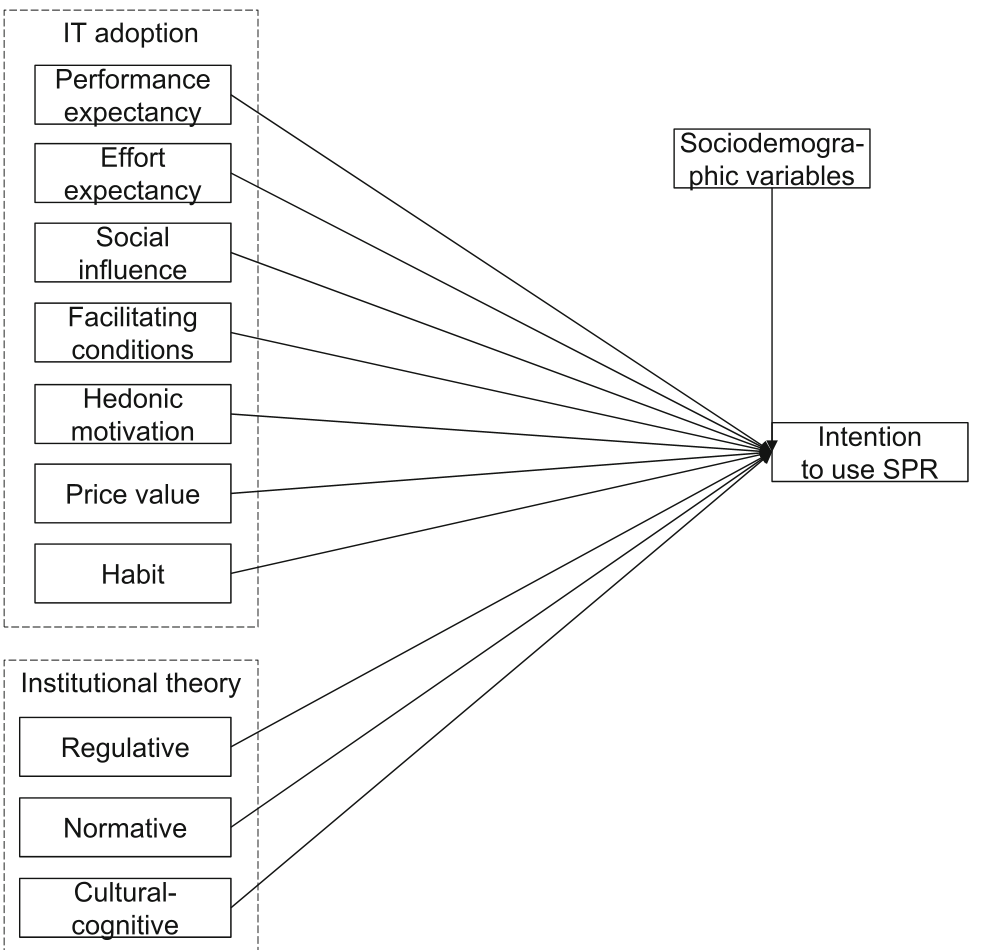
The study used PLS-SEM to analyze how factors like "Performance Expectancy" (Will it help my career?) and "Social Influence" (Are my peers doing it?) affect the intention to use SPR.
Key Findings: The Seniority Gap
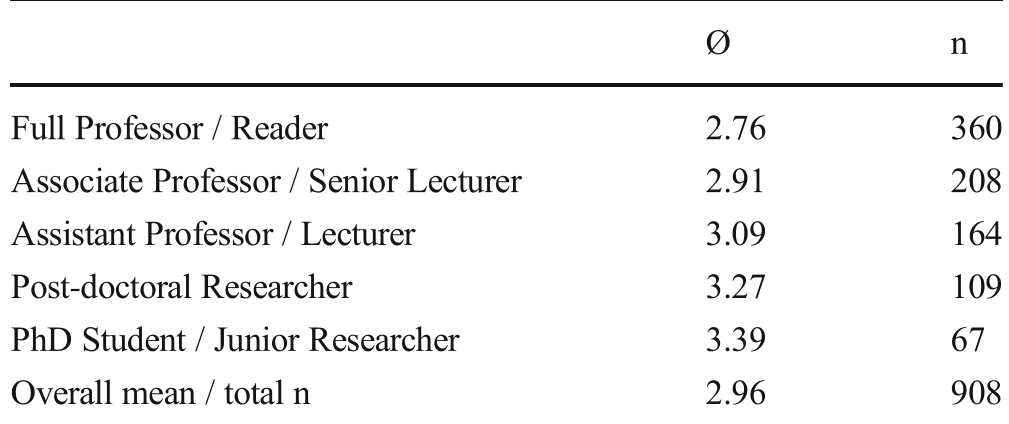
The data shows a striking divide based on academic hierarchy.
- Senior Skepticism: Full professors are the most skeptical about the quality of community-driven validation.
- Junior Optimism: PhD students and Post-docs are more willing to experiment, partly because they are "digital natives" and partly because they have less to lose in the current hierarchy.
The most significant predictor of success for an SPR platform was Anticipated Peer Use. If a scientist believes "everyone in my field is moving there," they are significantly more likely to join. This suggests that SPR adoption is a "Bandwagon Effect" mission: it needs a critical mass of early adopters to trigger a shift.
Missing the Mark on Usefulness
The redundancy analysis revealed a "Performance Gap." The factors scientists care about most—being seen as innovative and having a legitimate alternative to high-quality journals—are exactly where they feel SPR is currently failing.
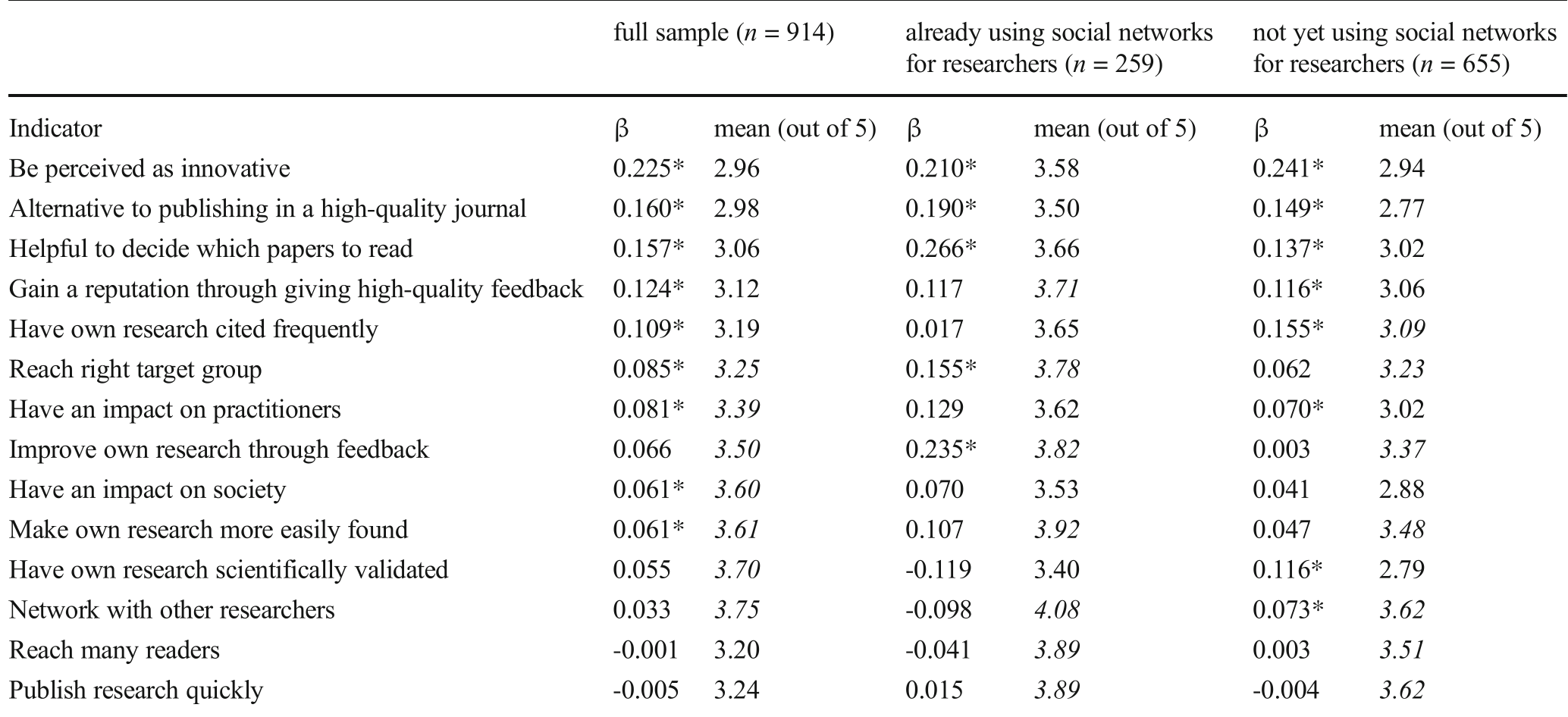
Interestingly, Price Value (saving money for the institution) had zero impact. Scientists are less worried about the "cost of knowledge" and more worried about the "cost of their own reputation."
Critical Insight & Conclusion
SPR is currently perceived not as a disruptive replacement, but as a complementary tool. The study suggests that for-profit publishers are safe for now, but only if they adapt.
Takeaways for the Future:
- Metric Reform: We need a new "currency" of reputation that values open feedback as much as citations.
- Hybrid Governance: Platforms like ResearchGate may need to introduce "verified review" tiers to mimic the "diamond-cutter" role of traditional editors.
- Target the Youth: If SPR gains a foothold among junior researchers, the "institutionalized" mode will naturally shift as they become the new department heads.
The path to open science isn't just through better code—it's through changing the high-stakes game of academic credit.
Editor's Note: This paper remains a foundation for understanding why social computing in science lags behind social computing in entertainment or commerce.