
Social Pervasive Systems: Bridging the Gap Between Social Context and Mobile Sensing
Social pervasive systems: The harmonization between social networking and pervasive systems
This paper introduces the concept of Social Pervasive Systems (SPS), a paradigm merging mobile sensor technology with social network data to create context-rich applications. It proposes two novel opportunistic forwarding algorithms, IPeR and PIPeR, which leverage user interest and power awareness to optimize data dissemination in infrastructure-less environments.
TL;DR
Social Pervasive Systems (SPS) represent a new frontier where the digital social graph meets the physical world of mobile sensors. By introducing IPeR and PIPeR, this research solves the dual problem of "information spam" and "battery drain" in opportunistic networks, achieving over 100% accuracy improvement and 22% energy savings through interest-driven and power-aware data forwarding.
Background: The Evolution of the Merger
The integration of Social Networks and Pervasive Systems hasn't happened overnight. The author identifies two distinct phases:
- Phase I (Pre-2007): Characterized by isolated attempts to use simple context (location).
- Phase II (Post-2007): The explosion of mobile sensors and robust network infrastructure allowed for a "mature merger," where bi-directional context flows seamlessly between the mobile and social worlds.
The Problem: Efficiency vs. Incentive
Opportunistic forwarding—where data "hops" from device to device in areas without Wi-Fi or cellular coverage—faces a critical bottleneck. Why should a user's phone spend battery to carry your data?
- Incentive Gap: Most algorithms (like PeopleRank) assume nodes are altruistic.
- Resource Blindness: High-rank "social" nodes are often over-utilized, leading to rapid battery death (unfairness).
- Low Precision: Flooding data to uninterested users wastes bandwidth and storage.
Methodology: The IPeR and PIPeR Framework
1. IPeR (Interest-Aware PeopleRank)
Rather than just looking at how "socially popular" a node is, IPeR introduces Interest-Awareness.
- The Logic: If a node is interested in the content it is carrying, the user is more likely to act as a willing forwarder because they gain value from the data themselves.
- Mechanism: The algorithm rewards or penalizes a node's social rank based on the alignment between the content and the user's social profile.
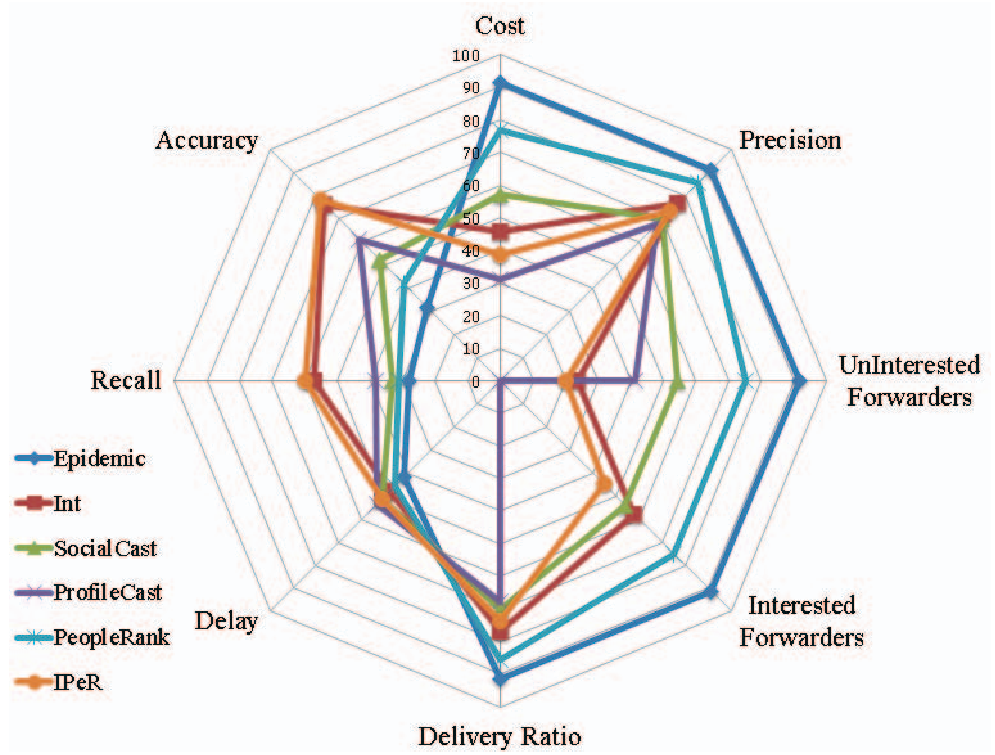 Fig 1: The 8-Metric Analysis showing how IPeR optimizes precision and contacted ratio.
2. PIPeR (Power-Aware IPeR)
PIPeR adds a physical layer to the social layer. It considers:
- Remaining Power: Do not overwhelm low-battery nodes.
- Depletion Rate: How fast is this device losing energy?
- Contact Duration: Is the encounter long enough to actually transfer the file?
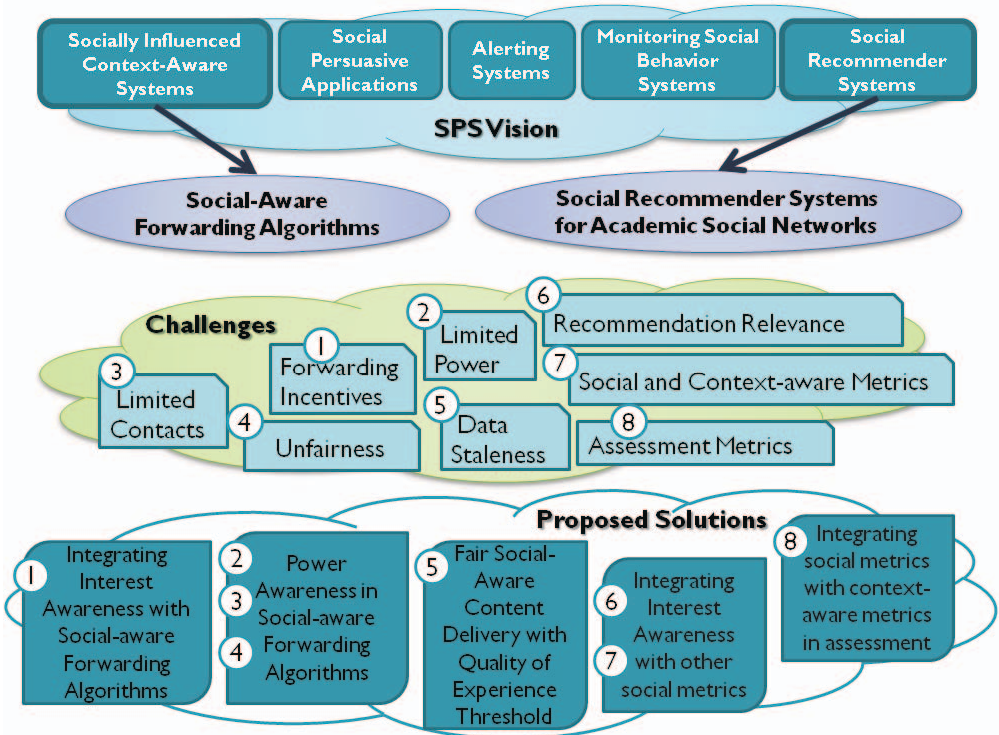 Fig 2: The hierarchy of Social Pervasive Systems challenges addressed by PIPeR.
Experimental Insights
The research utilized a custom-built Visual C# simulator with real-world mobility traces (CRAWDAD) and social graphs (Facebook/Twitter).
- Effectiveness: IPeR significantly outperformed standard SocialCast and ProfileCast by focusing on interested forwarders.
- Fairness: PIPeR’s "Adaptive Threshold" mode ensured that no single node became a "sacrificial lamb" for the network's data needs, balancing the load across power-capable devices.
- Comparison: When compared to SCAR (a power-aware but social-oblivious algorithm), PIPeR reached a similar delivery ratio but with much higher "interested node" engagement and lower delay.
Deep Insight & Conclusion
This work highlights a fundamental shift in networking: The Social-Physical Duality. A node is not just a MAC address; it is a human with specific interests and a device with physical limits.
Future Outlook: The proposed metrics for academic social networks (Common free timeslots, collaboration indices) suggest that SPS is moving toward highly specialized recommender systems. However, a remaining challenge is Privacy—how do we share these "bi-directional contexts" without exposing sensitive user behavior? As we move toward 6G and ubiquitous IoT, the fusion patterns established by IPeR and PIPeR will be foundational for decentralized, human-centric communication.