
ToMnet+: Decoding Hidden Social Networks through Machine Theory of Mind
Human social interactions are laden with behavioral preferences that stem from hidden social network representations. In this study, we applied an artificial neural network with machine theory of mind (ToMnet+) to learn and predict social preferences based on implicit information from the way agents and social targets interact behaviorally. Our findings have implications for machine applications that seek to infer hidden information structures solely from third-person observation of behaviors. We consider that social machines with such an ability would have an enhanced potential for more naturalistic human-machine interactions
The paper introduces ToMnet+, a neural network architecture based on Machine Theory of Mind, designed to infer hidden social network structures. By observing agent-target interaction behaviors in a grid-world "social game," the model successfully predicts social preferences and reconstructs the underlying topology of social support networks for both simulated and human agents.
TL;DR
Why do you ask a close friend for a loan but only discuss the weather with a colleague? Humans possess an implicit map of social networks that guides our behaviors. ToMnet+ is a new AI framework that learns to reconstruct these hidden social support structures simply by watching how individuals move toward different "targets" in a grid-world environment. It bridges the gap between raw behavioral observation and high-level social reasoning.
The Missing Link: Why Social AI Feels "Awkward"
Most current AI interacts with humans in a "contextually aberrant" way. They might suggest a formal appointment to a casual acquaintance or fail to recognize which person in a room is a user's primary source of emotional support.
The problem is that social networks are abstract constructs. They don't have a physical form; they exist only because people preferentially interact with specific others. Traditional AI sees the "what" (the action) but misses the "why" (the underlying social bond). To solve this, the researchers turned to Machine Theory of Mind (ToM)—the ability of an AI to represent the hidden beliefs and preferences of others.
Methodology: From Psychology to Neural Networks
The researchers combined a classic psychological tool, the Social Support Questionnaire (SSQ), with a deep learning architecture.
- The Social Game: Both virtual agents and humans played a game in a 12x12 grid. They had to navigate past barriers to reach one of four targets. The "reward" for reaching a target was determined by the agent's real-life (or simulated) social support relationship with that target.
- The ToMnet+ Architecture:
- Character Network: Uses a ResNet to extract spatial features and an LSTM to process the temporal sequence of a trajectory. It outputs a 1-shot "Character Embedding" () that acts as a mental model of the agent's social preferences.
- Prediction Network: Combines this embedding with a new "Query State" (a new map layout) to predict which target the agent will choose next.
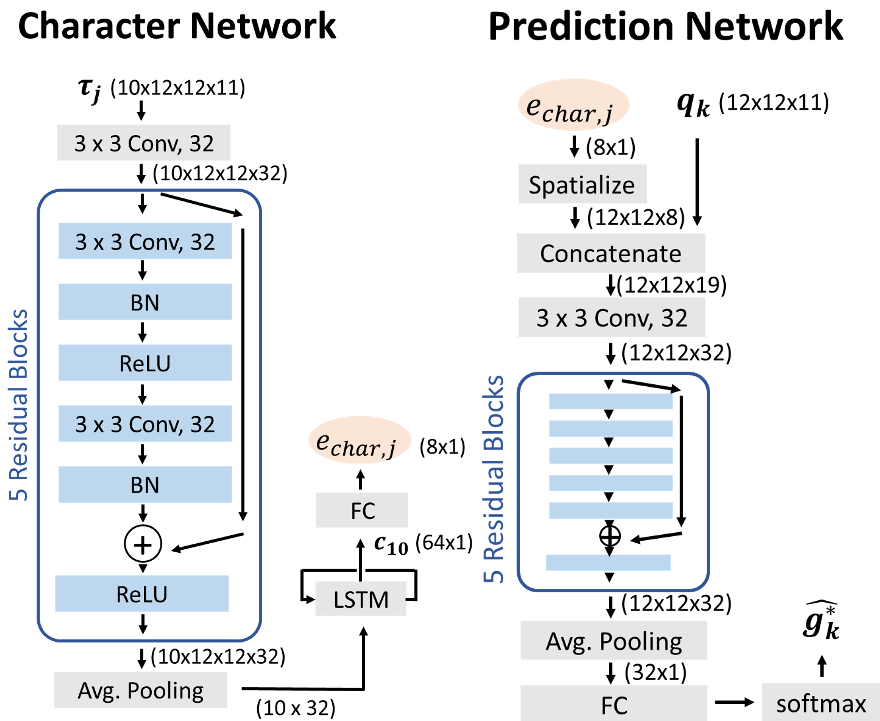 Figure 1: The dual-network architecture that transforms behavior into social embeddings.
Experimental Results: Can AI "Read" Your Friendships?
The results were striking. Even though ToMnet+ never saw the psychological scores (SSQ) of the human participants, it could reconstruct their social hierarchy just by watching them play the game.
- Prediction Accuracy: The model consistently outperformed random baselines, with accuracy scaling as more training data became available (see Figure 2).
- Topology Reconstruction: Using a specialized "inference query state" (where all targets are equidistant), the model revealed a preference ranking that significantly correlated with the participants' actual social support networks.
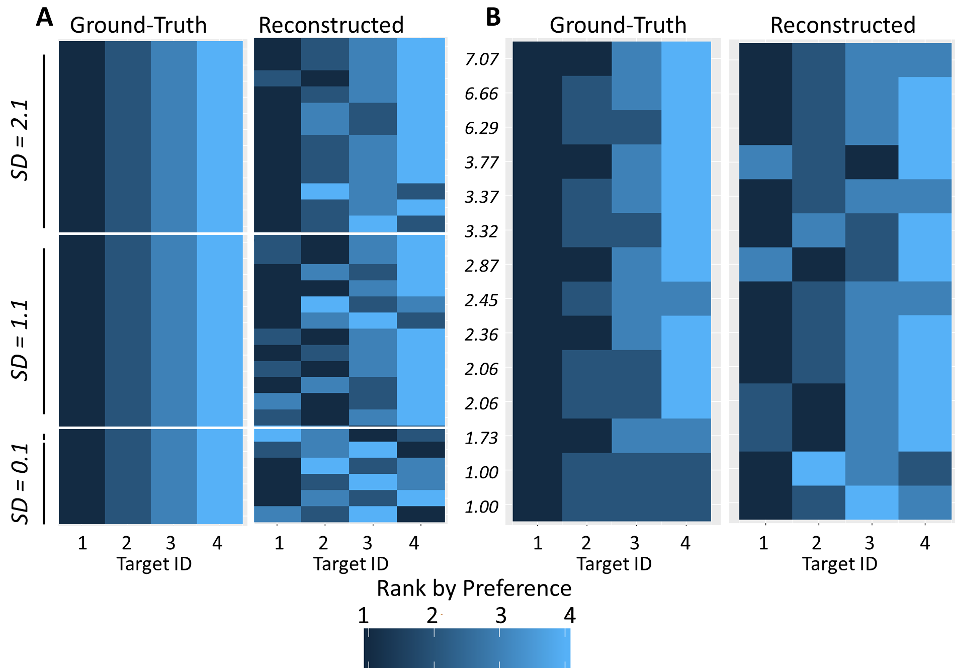 Figure 2: Performance improvement on human data as the number of observed trajectories increases.
Critical Analysis: The Road to Social Intelligence
While ToMnet+ is a powerful proof-of-concept, it operates in a simplified "birds-eye" grid world. Real social interactions are not just about walking toward someone; they involve dialogue, micro-expressions, and multi-lateral interactions where targets talk to each other.
However, the core takeaway is profound: Relational structures can be treated as latent variables in a neural network. By observing enough behavioral "shots," an AI can build a functional map of a human’s social world. This has massive implications for socially assistive robots in hospitals or homes—allowing them to understand whom a patient trusts most without being explicitly told.
Future Outlook
The shift from recognizing "explicit signals" (like a smile) to inferring "implicit structures" (like a social network) marks a new frontier in Social AI. Future iterations could move beyond grid worlds into natural video or conversational data, potentially unlocking the ability for machines to navigate the complex, invisible webs of human relationships.
Summary Table of Performance
| Agent Type | Accuracy (Avg) | Correlation with SSQ (p-value) |
|---|---|---|
| Simulated | > 80% | < 0.0001 |
| Human | 50% - 81.6% | 0.001 |