
Rorschach Test Platform: Bridging Social Network Analysis and Psychological Testing
Social Psychology Testing Platform Leveraging Facebook and SNA Techniques
The paper introduces the Rorschach Test Platform, a Facebook-integrated system that combines psychological testing with Social Network Analysis (SNA). By leveraging the OpenSesame experiment builder, it automates the extraction of structural social data to enrich traditional psychological metrics with quantitative social context.
TL;DR
The Rorschach Test Platform is an innovative integration of Facebook and the OpenSesame testing suite. It allows researchers to automatically calculate complex Social Network Analysis (SNA) metrics—like network density and node centrality—from a subject's Facebook profile to provide a richer, more context-aware dataset for social psychology experiments.
Background & Positioning
In the landscape of social sciences, there has always been a gap between "internal" psychological constructs (personality, emotion) and "external" social environments. While OpenSesame became a standard for building digital experiments, it lacked the ability to see the "social soul" of the participant. Andrea Biancini’s work positions itself as a middleware solution, turning Facebook from a mere distraction into a precise scientific instrument for quantitative sociology.
The Problem: The Cost of Context
Why do we need this? Traditional sociological research relies on self-reported surveys about social circles, which are notoriously prone to memory bias. Moreover, reaching a statistically significant "N" (sample size) for social interaction studies is costly. The author identifies that user behavior on Facebook is a reliable proxy for real-world social behavior, yet there was no seamless way to "plug" this data into standardized psychological experiment builders.
Methodology: From Friends to Graphs
The core of the Rorschach Test Platform is its ability to treat a Facebook friend list as an ego network graph.
1. Structural Decomposition
The platform breaks down the social network into three core index categories:
- Basic Indexes: Measures like Density and Diameter to understand how fast information flows through a subject's circle.
- Centrality Indexes: Using Eigenvector and Betweenness to identify if the subject is a "social bridge" or a "leader."
- Subgroup Indexes: Identifying Cliques to see how many distinct social worlds (work, family, school) the subject inhabits.
2. The Integration Loop
The methodology relies on a custom plugin for OpenSesame. When a subject starts a test, the plugin authenticates via Facebook, parses the graph data, and injects these SNA values as variables directly into the experiment's data output.
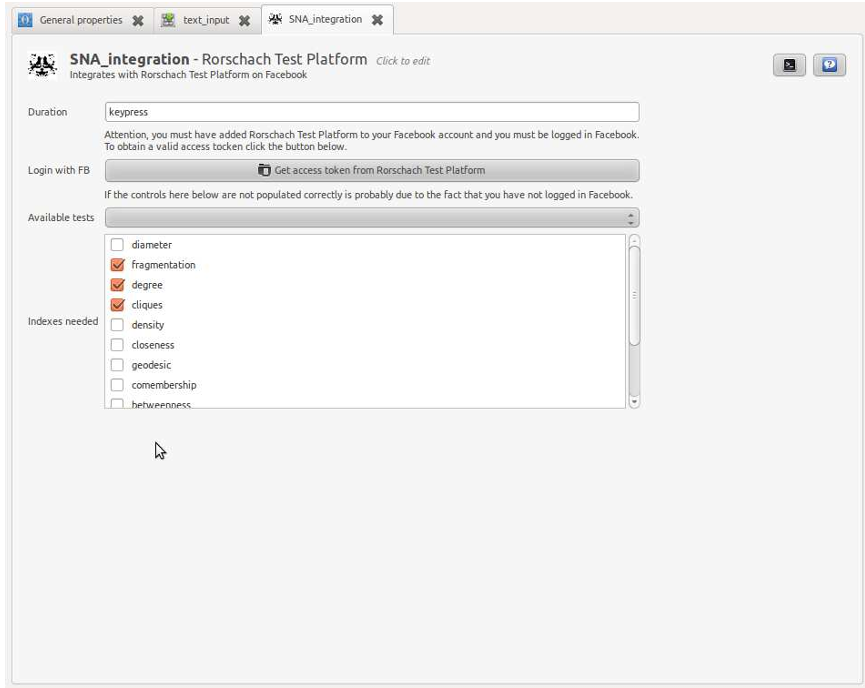 Figure 1: The configuration interface where researchers select which SNA indexes to track for their study.
Experiments & Visual Insights
The platform doesn't just collect data; it visualizes it to keep subjects engaged—a "gamification" strategy to ensure lower dropout rates. By presenting users with their "Social Profile," the platform encourages viral sharing, which in turn aids recruitment.
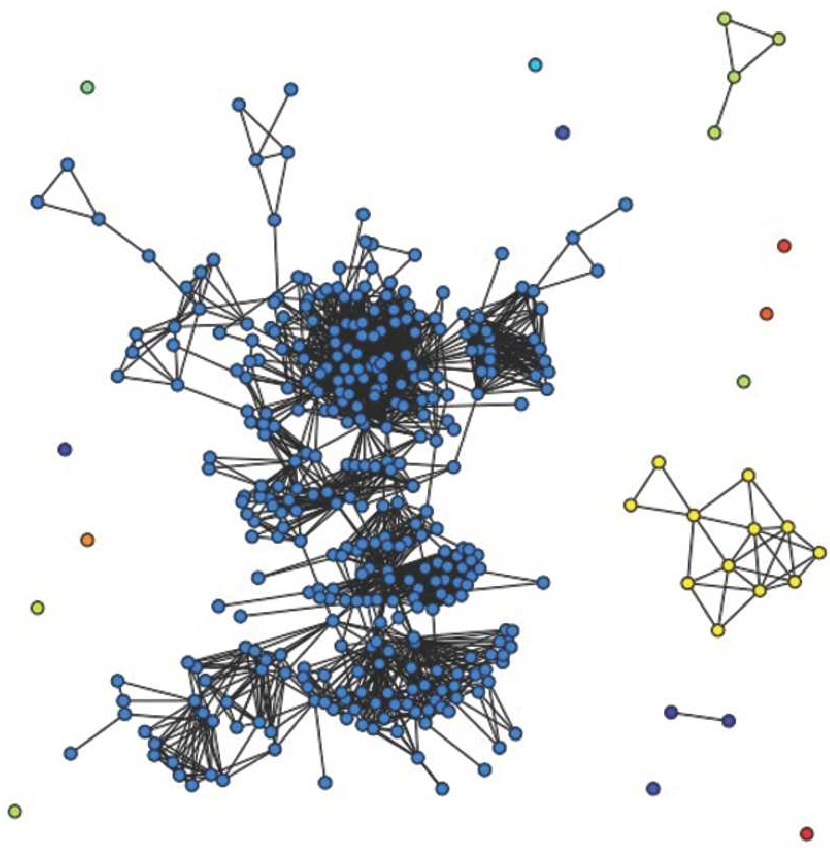 Figure 2: A visual representation of a user's ego network generated by the platform.
The paper highlights the use of the Floyd-Warshall algorithm for calculating geodesic distances. For a standard user with ~400 friends, this produces a "fragmentation index" (typically around 0.20) and a "diameter" (typically around 10), providing a high-resolution snapshot of social connectivity that was previously impossible to obtain at scale.
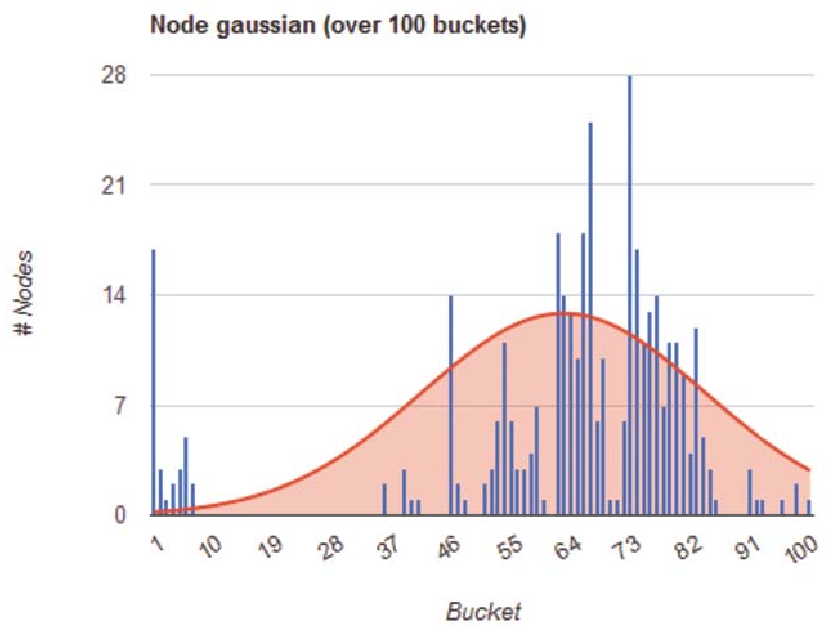 Figure 3: Gaussian distribution plots used to compare a subject's social metrics against the norm.
Critical Analysis & Conclusion
Takeaway
The Rorschach Test Platform successfully democratized high-level Social Network Analysis for psychologists who may not have the coding skills to scrape and analyze SNS data manually.
Limitations
- Static vs. Dynamic: Currently, the platform analyzes the structure of connections but ignores the content (likes, comments, sentiment).
- Privacy Constraints: As Facebook’s API policies have tightened significantly since this research, the "free comparison" features face increasing regulatory and technical hurdles.
Future Outlook
The next frontier for this platform lies in "Dynamic SNA"—incorporating temporal data to see how a subject’s social network evolves during a crisis or a major life event. By building a "sociological normative database," future researchers could predict psychological vulnerability based purely on shifts in an individual's network topology.