
Polar: Beyond Proximity – The Future of Context-Aware Social Recommendations
An approach to social recommendation for context-aware mobile services
The paper introduces Polar, a Social Recommender System (SRS) for context-aware mobile services. It integrates user preferences, social network data, and dynamic contextual factors (location, time, weather, activity) to provide personalized Point of Interest (POI) recommendations.
TL;DR
While standard Google Maps searches just look for "restaurants nearby," Polar asks: "Is it raining? Are you driving? Do you have only 30 minutes before your next meeting?" This research presents a prototype that merges social media mining with neural-network-driven context sensing to deliver POI suggestions that finally match the complexity of human life.
Background: The "Proximity Trap"
Most mobile users have experienced the "Proximity Trap": searching for "dinner" and being bombarded with 50 pins on a tiny map, ranging from cheap fast food to formal bistros, regardless of whether they are on a quick work break or a Saturday date.
The authors argue that Context is a multidimensional manifold. Location is just one coordinate. Traditional Location-Based Services (LBS) fail because they ignore:
- Environmental Factors: Weather, time of day.
- User Constraints: Transportation mode (walking vs. driving), time remaining before POI closing.
- Social Trust: The varying reliability of online reviews.
Methodology: The Polar Architecture
Polar operates through a sophisticated pipeline that transforms unstructured web data into actionable recommendations.
1. Multi-Source Data Extraction
The system crawls sites like Yelp and TripAdvisor, using Conditional Random Fields (CRF) for Named Entity Recognition (NER) to extract POI attributes and KEA-based extractors for semantic tagging.
2. Social Reliability Weighting
Not all reviews are equal. Polar calculates a reliability factor () by combining:
- User authority (number of followers, elite status).
- Review helpfulness (community upvotes).
3. The Neural Context Engine
The heart of the system is a Feed-forward Multi-layer Perceptron (MLP). It takes 12 input features (weather, distance, time-to-close, etc.) and outputs a relevance score.
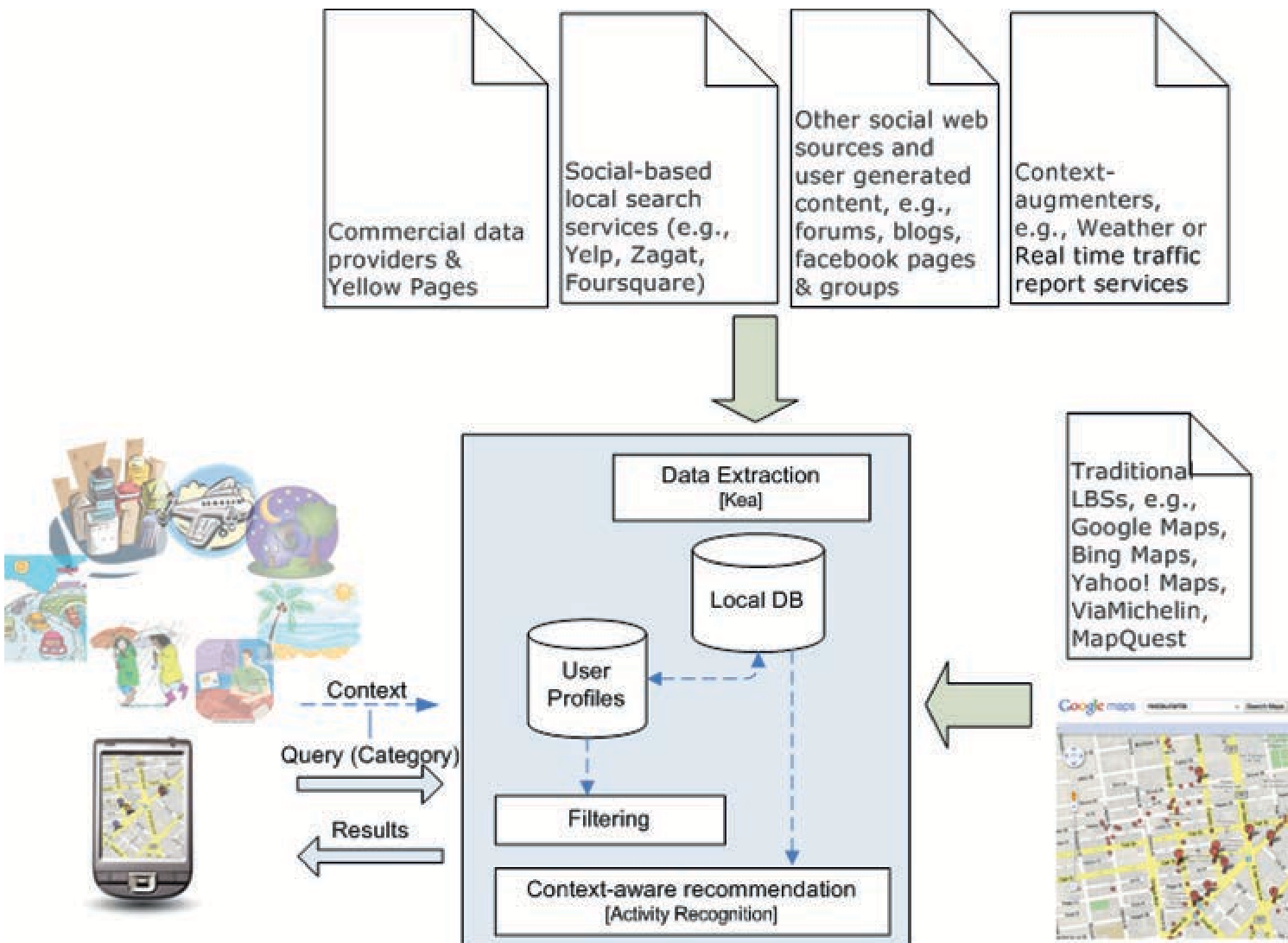 Figure 1: The Polar recommendation workflow, from data extraction to the mobile UI.
Experiments: Performance Over Distance
The authors conducted a lab study with 50 users across various scenarios (e.g., "Walking in the rain for lunch" vs. "Driving on a clear evening for dinner").
Key Findings:
- Precision at the Top: For the top-ranked item (nDCG@1), user profiling was the strongest driver ().
- List Quality: When looking at the top 10 results (nDCG@10), the combination of User Modeling (UM) and Context reached a peak of , nearly double the performance of the Yelp baseline ().
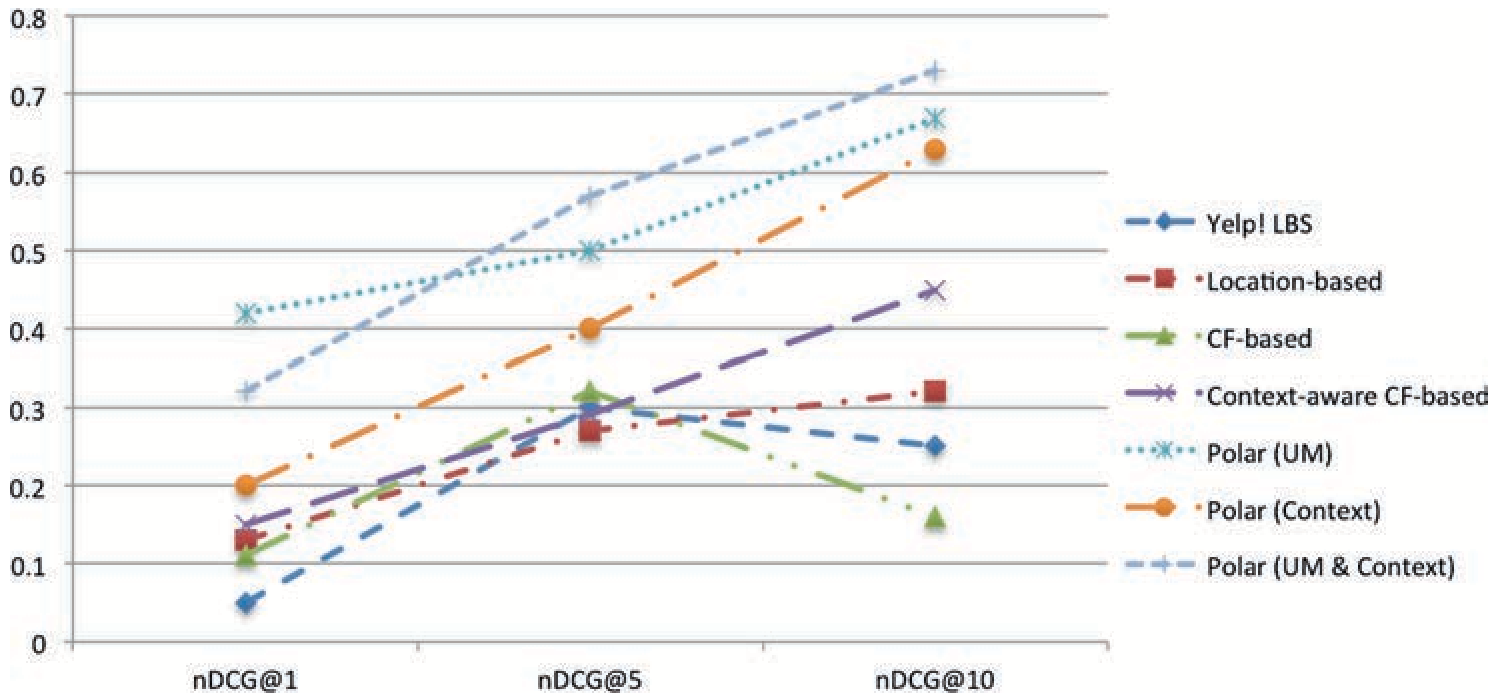 Figure 2: Comparison of nDCG scores across different recommendation strategies.
Critical Insight: Why Context Trumps Content
The most striking takeaway is the failure of traditional Collaborative Filtering (CF) in mobile settings. CF relies on "user-item" overlaps (e.g., User A and User B both liked the same 5 restaurants). In mobile scenarios, users are often in new cities where no such overlap exists. Polar’s "Cold Start" capability—matching context to POI tags—makes it far more robust for travelers than the algorithms powering Netflix or Amazon.
Summary & Future Outlook
Polar demonstrates that an intelligent assistant should act as a filter, not just a search engine. By offloading the "contextual reasoning" (checking weather, traffic, and opening hours) to a neural network, the system reduces user cognitive load.
Future Directions: The authors suggest integrating Sentiment Analysis and Latent Semantic Analysis (LSA) to better understand the "vibe" of a POI, potentially moving toward a system that understands natural language preferences like "a quiet place for a business chat."
Note: This article is based on the research paper "An Approach to Social Recommendation for Context-Aware Mobile Services" published in ACM TIST.