
Social Network Mining: The Secret Weapon for Crowdfunding Success
A Social Recommendation Mechanism for Crowdfunding
This paper introduces a novel social-based recommendation mechanism for crowdfunding, designed to help creators identify and recruit potential backers. By integrating data from crowdfunding platforms and social networks (specifically Facebook), the system employs a multi-criteria approach considering social relationships, user preferences, and economic capacity to boost project success rates.
TL;DR
Crowdfunding is a brutal game where over half of all projects fail. This paper proposes a Social Recommendation Mechanism that mines Facebook data—interaction frequency, mutual friends, and profile interests—to hand-pick potential backers for creators. By moving beyond simple "search" and into "proactive social matching," the system significantly increases the likelihood of a project reaching its funding goal.
The "Success Rate" Bottleneck
Why do great ideas fail on platforms like Kickstarter or Indiegogo? The authors identify a "trust and discovery" gap. Creators often lack the reach to find people interested in their niche, and backers are hesitant to fund strangers. Prior recommendation systems were either too generic (content-based) or ignored the vital role of Social Capital. This research argues that the bridge between a creator and a backer isn't just a shared interest in the product, but the strength of their latent social connection.
Methodology: The Four Pillars of Suitability
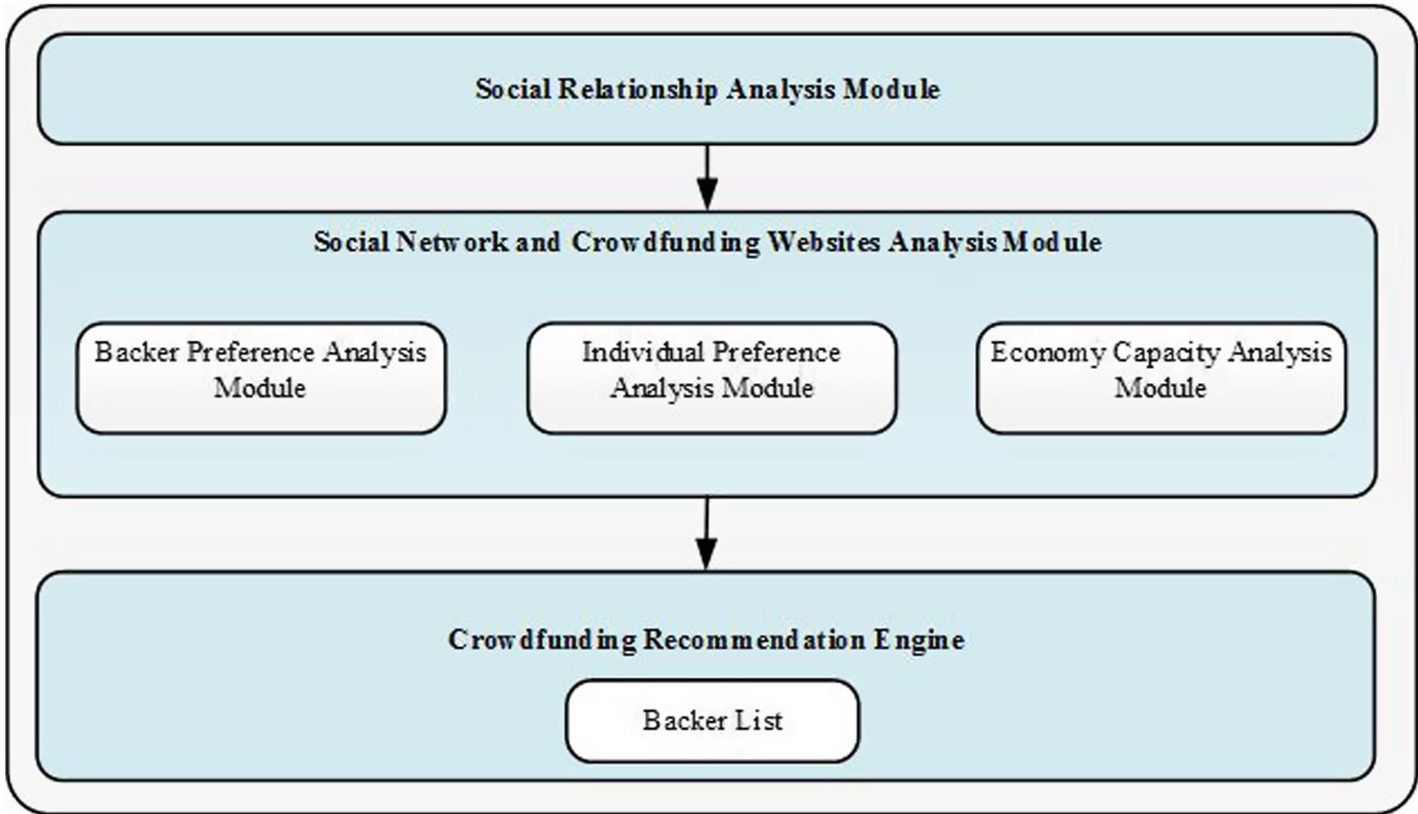
The core of the paper is the Crowdfunding Recommendation Engine, which calculates a suitability score based on four weighted modules:
- Social Relationship Analysis: Uses Facebook interactions (tags, comments, likes) and mutual friend counts to measure "Social Closeness."
- Backer Preference Analysis: Tracks previous interactions with crowdfunding content—if you share "Art" projects often, you're flagged as an Art backer.
- Individual Preference Analysis: A deep dive into Facebook's "TypeTree" (pages liked, check-ins) to infer underlying interests.
- Economy Capacity Analysis: A pragmatic filter evaluating whether a user can actually afford to invest, based on occupation and background.
The Phase-Based Insight
Unlike static systems, this model recognizes that a project’s needs change. At the early stage, the system prioritizes "Social Relationship" (friends and family) to build initial momentum. In the late stage, it shifts weights toward "Individual Preference" and "Economic Capacity" to find the "stranger-backers" needed to cross the finish line.
Experimental Validation
The researchers tested their engine against 282 users and massive amounts of social data (over 300k likes and 200k comments).
Key Findings:
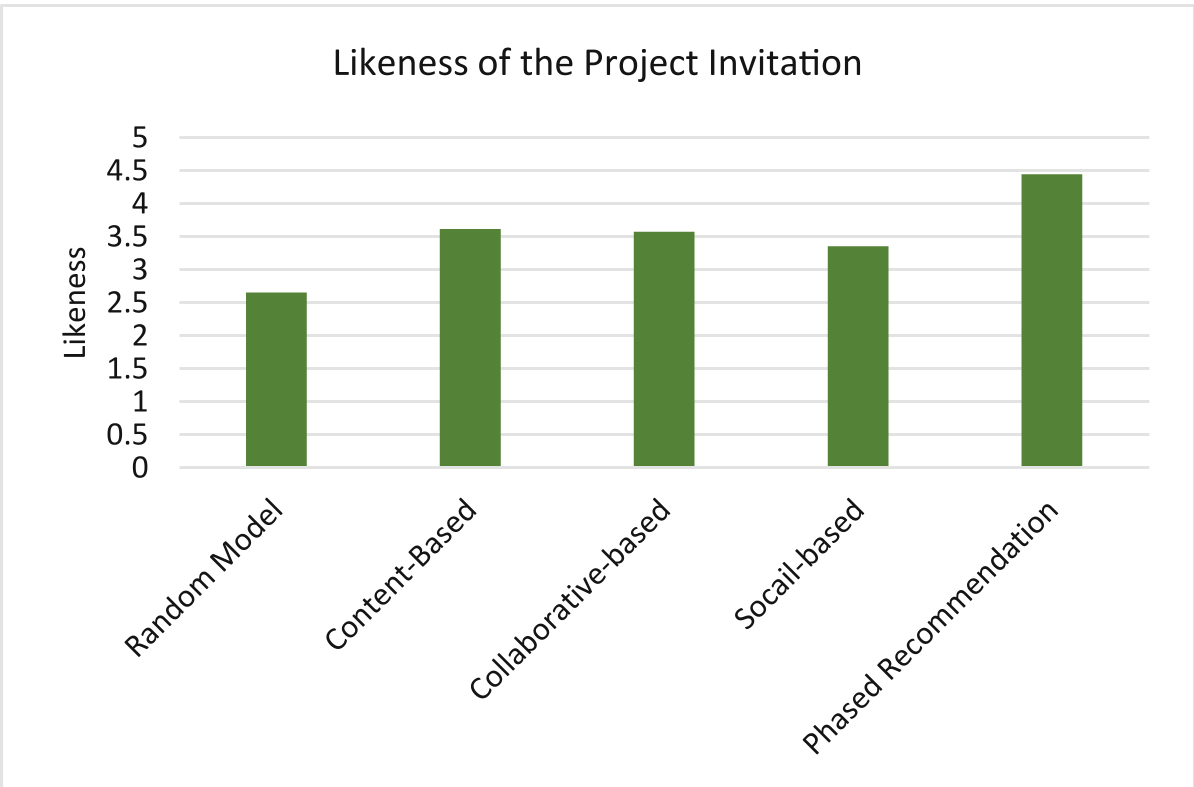
- Phase Recommendation Wins: The model that adjusted its focus based on the project phase outperformed random models and static social models in terms of "Likeness" (user satisfaction).
- Social Influence is King: The data confirmed that potential backers are much more likely to engage with a project if they have a verifiable social tie to the creator.
Critical Insight & Future Outlook
The paper’s biggest contribution is the formalization of social distance in the reward-based crowdfunding context. However, it does face a notable "Cold Start" problem—if a creator isn't active on social media, the engine has no data to mine.
As we move into an era of decentralized finance and Web3, the principles here—integrating off-chain social reputation with on-chain funding—will likely become the standard for how the "crowd" identifies the next big idea.
Limitations
- Platform Dependency: Currently heavily reliant on Facebook's API (which has become more restrictive since this study).
- Privacy Concerns: The economic capacity analysis requires questionnaires; future iterations should aim to infer this non-intrusively.