
RAMSN: Harmonizing Multi-Relational Social Networks for Superior Recommendations
Social Recommendation Based on Multi-relational Analysis
This paper introduces RAMSN, a social recommendation method that leverages multi-relational analysis by combining diverse user relationships via optimal linear regression and Principal Component Analysis (PCA). Tested on the Epinions dataset, the method significantly outperforms traditional uni-relational benchmarks like TrustWalker and MoleTrust in terms of prediction coverage and FMeasure.
TL;DR
Current social recommenders often suffer from "tunnel vision," looking only at single relationships like "Trust." This paper introduces RAMSN (Recommendation Algorithm based on Multi-relational Social Network), which synthesizes multiple interaction layers—friends, common reviews, and interaction frequency—to build a comprehensive user interest map. By applying Principal Component Analysis (PCA) to weight these relationships, the authors achieve a massive boost in recommendation Coverage (reaching 90%+) and significantly mitigate the Cold-Start problem.
Background & Motivation: Beyond the Uni-Relational Silo
Most social recommendation research treats the social graph as a monolithic entity. If User A trusts User B, that is the only signal used. However, human relationships are multifaceted: you might trust a friend's movie taste but ignore their financial advice.
The authors argue that existing SOTA methods like TidalTrust or TrustWalker fail because they don't account for the diversity of connections. This limitation leading to:
- Data Sparsity: Trust networks are often too sparse to provide enough neighbors.
- Cold-Start Issues: New users with few "trust" links are left in the dark.
Methodology: The Multi-Relational Framework
The core innovation lies in treating social recommendation as a Linear Regression and Feature Extraction problem.
1. Constructing the Multi-Relational Layers
The authors define four distinct relation networks ( to ) based on the Epinions dataset:
- Shared Review Items (): Users reviewing the same products.
- Common Friends (): Overlap in trust/distrust circles.
- Common Review Ratings (): Similar rating patterns on others' reviews.
- Interaction Frequency (): Direct engagement (rating each other's content).
2. Finding the Optimal Combination
Instead of manually assigning weights, the authors define a "Target Matrix" based on real rating similarities. They then solve for the coefficients :
To ensure stability and avoid overfitting, they apply Principal Component Analysis (PCA) to extract the most significant relational features before performing the regression.
 Figure 1: Illustration of how different conference co-authorships (KDD, SIGMOD, VLDB) represent distinct relational layers.
Experiments and Proving the Value
The team tested RAMSN against established baselines: User-based CF, Item-based CF, MoleTrust, and TrustWalker.
The Cold-Start Breakthrough
The performance for cold-start users (those with <5 ratings) was the most impressive. While traditional CF methods struggle with coverage (only ~15-25%), RAMSN-PCA pushed coverage to 50.29%.
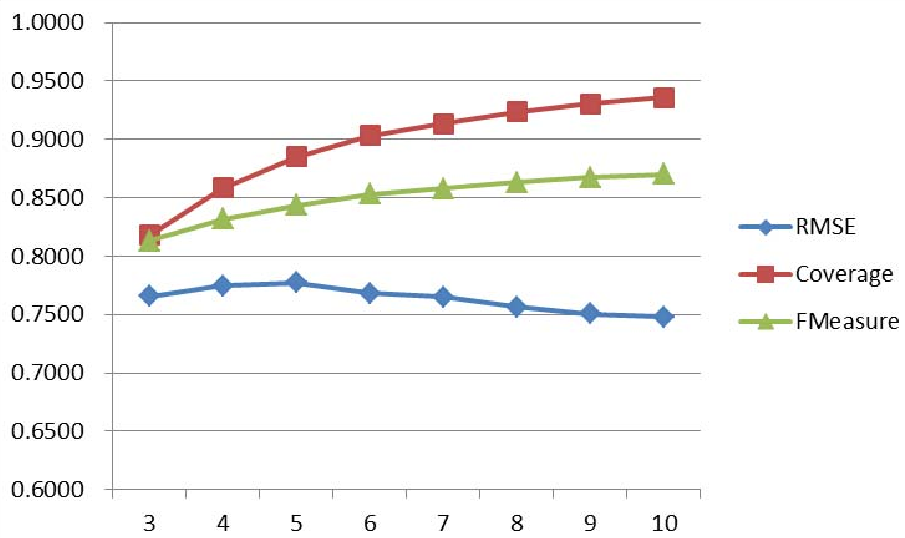 Figure 2: Analysis of the parameter Q (number of neighbors). The study found that choosing Q=6 provides the optimal balance between accuracy and computational efficiency.
Why does RAMSN-PCA win?
As shown in the evaluation tables, although RAMSN-PCA sometimes has a slightly higher RMSE (prediction error) than TrustWalker, its FMeasure (a harmonic mean of precision and coverage) is significantly higher. In real-world systems, being able to provide a good recommendation for 90% of users is far more valuable than providing a perfect recommendation for only 40%.
Deep Insights: The Takeaway
The genius of this paper isn't just in using more data; it's in the mathematical rigor of the combination strategy. By treating different social ties as dimensions of a feature space and using PCA to find the "principal" relationships, the authors provide a template for how modern Recommender Systems (RecSys) can handle heterogeneous data.
Limitations:
- Computational Complexity: Storing and computing multiple large-scale weight matrices is memory-intensive.
- Static Weights: The optimal combination is calculated globally; however, for some users, one relation might be much more important than others (individualized weighting).
Future Outlook: Putting these multi-relational layers into a Graph Convolutional Network (GCN) could potentially capture even deeper, non-linear patterns that simple linear regression might miss.