
Beyond Keywords: Leveraging Social Topology for Microblog Recommendations
Towards Social Recommendation System Based on the Data from Microblogs
This paper proposes a social recommendation system architecture specifically designed for microblogging platforms like Plurk. It integrates Social Network Analysis (SNA) with content-based filtering to create characteristic vectors for users and products, ultimately achieving more accurate target marketing.
TL;DR
With the explosion of microblogging platforms like Plurk and Twitter, traditional recommendation engines are failing to keep up with short-form, conversational data. This paper introduces a Social Recommendation System that doesn't just look at what you say, but where you sit in the social web. By combining keyword extraction with structural metrics like Centrality and Density, the authors demonstrate that different product interests (e.g., 3C gadgets vs. Food) leave distinct structural "fingerprints" in social networks.
The "Cold-Start" and Context Gap
Traditional recommendation systems usually fall into two camps: Collaborative Filtering (finding users with similar tastes) and Content-Based Filtering (matching item attributes to user history). Both face existential crises in the microblogging era:
- Data Sparsity: Users post often but briefly, making it hard to build a deep static profile.
- The Relationship Blindspot: Most systems treat users as isolated islands, ignoring the fact that our purchasing decisions are heavily influenced by our social peers.
The authors argue that the "noise" of microblogs is actually a signal. Short, real-time messages are more reflective of true daily preferences than long-form blogs.
Methodology: The Fusion of NLP and SNA
The proposed architecture bridges the gap between raw text and marketing segments through a three-stage process:
- Data Pre-processing: Utilizing TF-IDF to filter the "chatter" and extract meaningful keywords from unstructured Plurk messages.
- SNA Module: This is the core innovation. The system calculates HITS (Hubs and Authorities) to identify who leads conversations and uses Betweenness Centrality to find "bridge" users who connect different social groups.
- Vector Mapping: Every user and product is assigned a vector: This formula treats social connectivity as a first-class citizen alongside textual interests.
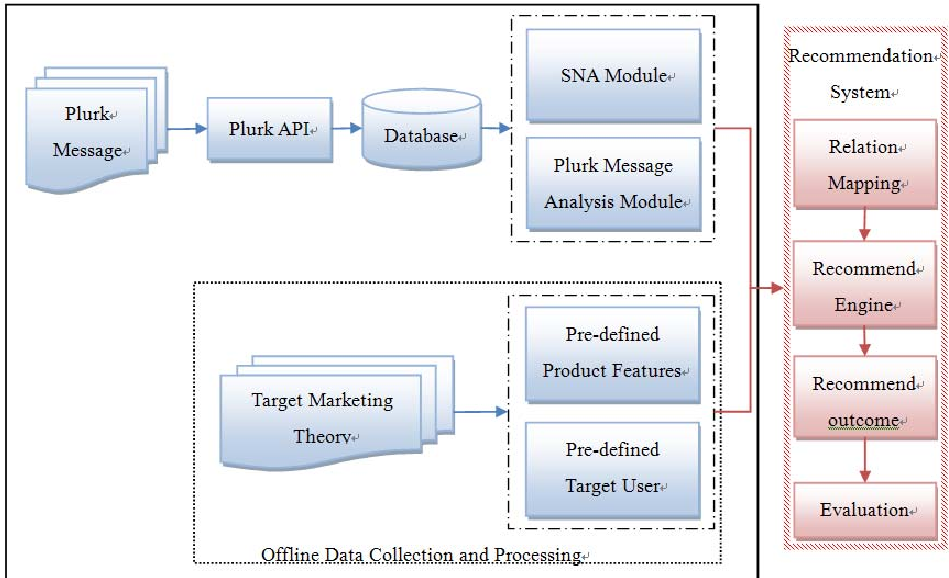 Figure 1: The architecture flow from raw microblog data to the recommendation engine.
Insights from the Case Study: 3C vs. Food
The authors applied their method to Plurk, the leading microblogging site in Taiwan at the time of the study. They tracked users interested in "Food" and "3C Products" (Computer, Communication, and Consumer Electronics).
The findings were striking:
- Homogeneity: The "3C" social network was significantly more dense (0.726 vs 0.631) and had a higher clustering coefficient.
- Interaction Speed: The Average Geodesic Distance was shorter in the 3C group, suggesting that information about tech gadgets travels faster and within a more tightly-knit community than news about restaurants.
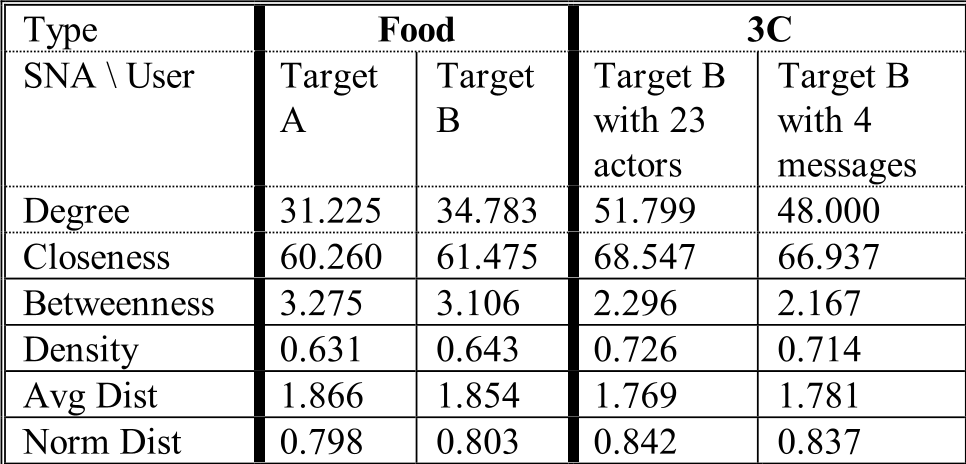 Table 1: Quantitative evidence showing that different product categories exhibit unique social structures.
Critical Analysis & Conclusion
This work highlights a fundamental shift in recommendation philosophy: Identity is defined by association. By proving that "Techies" and "Foodies" don't just use different words, but also organize their friendships differently, the authors provide a roadmap for more efficient target marketing.
Takeaway for Practitioners: If you are building a recommender for a highly social platform, your algorithm should prioritize Network Density and Centrality over simple word matches. A user surrounded by "Authorities" in the 3C niche is a high-value target for tech ads, regardless of whether their latest post explicitly mentions an "iPad."
Limitations: The study relies on manually pre-defined categories. Future iterations could benefit from unsupervised clustering to discover niche segments (e.g., "Vintage Camera Enthusiasts") automatically without prior labeling.