
SOR: Enabling Secure and Opportunistic Social Networks on the Highway
18434_Social on the road enabling secure and efficient social networking on highways.
The paper proposes SOR (Social On the Road), a distributed vehicular social network designed for highways. It utilizes infrastructureless Inter-Vehicle Communication (IVC) to enable social blogging and information sharing among passengers, achieving secure and stable connections through predictive modeling and privacy-preserving interest matching.
Executive Summary
TL;DR: High-speed travel on highways often leaves passengers in a "connectivity desert" where cellular data is expensive or unavailable. SOR (Social On the Road) is a decentralized social networking framework that turns vehicles into mobile social hubs. By using Inter-Vehicle Communication (IVC), it allows passengers to share blogs, travel tips, and media without relying on cellular towers, while ensuring interactions are both stable and private.
Positioning: This work occupies a unique niche in VANET (Vehicular Ad-hoc Network) research, moving beyond safety-critical messaging (like collision alerts) into the realm of Localized Social Networking (LSN) and opportunistic infotainment.
Motivation: The Paradox of Highway Socializing
Socializing on the road presents a fundamental technical paradox. Passengers have high "social instinct" and shared interests (e.g., traffic conditions, local attractions, or shared hobbies), but the environment is hostile to networking:
- Transient Connections: Vehicles pass each other at relative speeds exceeding 200 km/h, making traditional handshakes fail before a session even starts.
- Privacy Concerns: Unlike Facebook, where you know your friends, highway neighbors are strangers. Disclosing a "Social Interest Profile" to find a friend risks exposing sensitive personal data to potential attackers.
Methodology: Stability Meets Secrecy
The SOR architecture avoids the "always-connected" trap by being selective. It employs three main components:
1. Connection Time Prediction (The Physical Insight)
Instead of blindly attempting to connect to every vehicle in range, SOR models vehicle distance as a Wiener process.
- The Intuition: It calculates the probability that two vehicles will remain within radio range for at least seconds.
- The Result: The system prioritizes "stable" neighbors (those moving at similar speeds) for bandwidth-heavy tasks like downloading video clips.
2. Privacy-Preserving Interest Matching (The Logical Insight)
To find like-minded travelers without revealing one's identity, SOR uses a Secure Scalar Product protocol.
- Mechanism: A user’s interests are represented as a vector. Vehicle A and Vehicle B perform a cryptographic handshake where they calculate their Interest Similarity (Cosine Similarity) without ever seeing the other party's raw bit-vector.
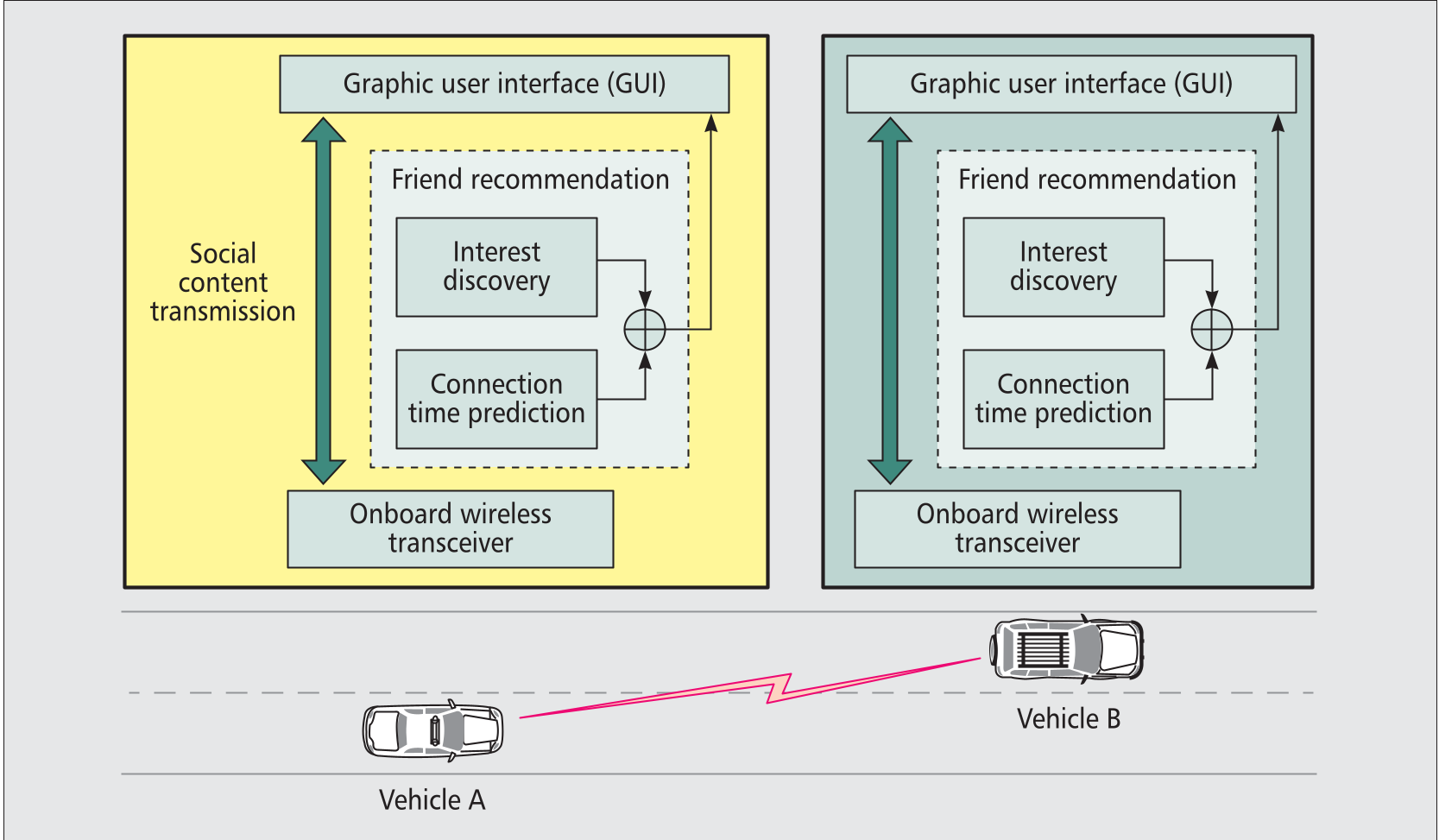 Figure 1: The logic flow of SOR, integrating GUI, Interest Matching, and Connection Prediction.
Performance Benchmarks
The authors validated SOR through extensive C++ simulations. Two key metrics stand out:
- Reliability through Mobility: As shown in the study, when the initial distance between vehicles is small and relative velocity is low, SOR can maintain a connection probability of over 0.7 for up to 50 seconds — ample time for localized content exchange.
- Computational Efficiency: Security often comes at the cost of speed. However, SOR's matching algorithm (Algorithm 1) remains efficient, taking less than 120ms to compute a match for a 100-dimensional interest vector. This makes it viable for real-time neighbor discovery as cars zoom past each other.
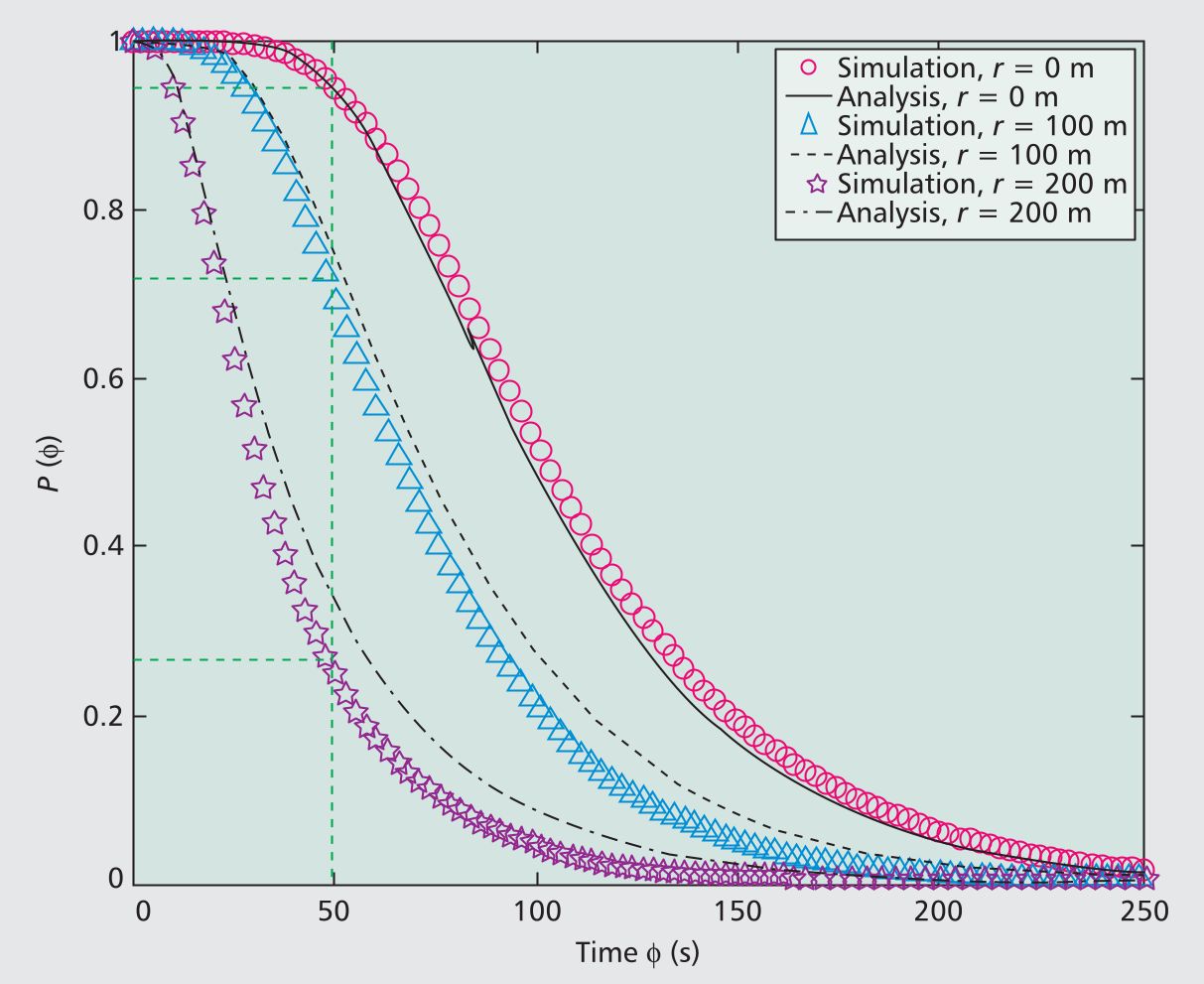 Figure 2: Execution time of the secure interest matching remains stable even as complexity (vector size) increases.
Critical Insight & Future Outlook
The brilliance of SOR lies in its Social Contact Score (), which elegantly multiplies social relevance by physical stability (). This ensures that the user is not just matched with someone interesting, but someone they will actually stay in range of long enough to interact with.
Limitations:
- The model assumes a fairly cooperative environment. As the authors admit, "over-claiming" interests (a form of Sybil attack) could lure users into connections.
- It relies on high-rate IVC (like DSRC or C-V2X), which is still seeing staggered global deployment.
Conclusion: SOR shifts the paradigm of vehicular networks from "infrastructure-dependent" to "community-driven." As we move toward autonomous vehicles where drivers become passengers, the demand for such localized, secure, and low-cost social platforms will likely skyrocket.