
Beyond Venting: How LiveJournal Replicates the Human Cycle of Emotional Sharing
8703_The social sharing of emotion (SSE) in online social networks A case study in Live Journal.
This study investigates the Social Sharing of Emotion (SSE) within online social networks using a content analysis of 540 LiveJournal blog posts. It proposes a three-phase theoretical model—initiation, feedback, and repost—demonstrating that online emotional exchanges mirror the prosocial and beneficial structures of face-to-face interactions rather than mere "venting."
TL;DR
Is expressing your feelings on a blog just "shouting into the void," or does it actually help you heal? This study confirms that online social networks—specifically LiveJournal—fully replicate the complex, three-phase cycle of Social Sharing of Emotion (SSE) previously only validated in face-to-face interactions. By analyzing 540 posts, researchers found that users don't just "vent"; they provide detailed narratives that invite empathy, support, and cognitive reframing from their digital community.
Background: The Digital "Superficiality" Myth
For years, critics have dismissed online emotional displays as superficial or "cathectic venting." However, this paper positions social media as a vital venue for Emotion Regulation. Building on the work of Bernard Rimé, the authors argue that for sharing to be beneficial, it must move beyond an outburst and into a structured exchange.
Methodology: The Three-Phase Digital Cycle
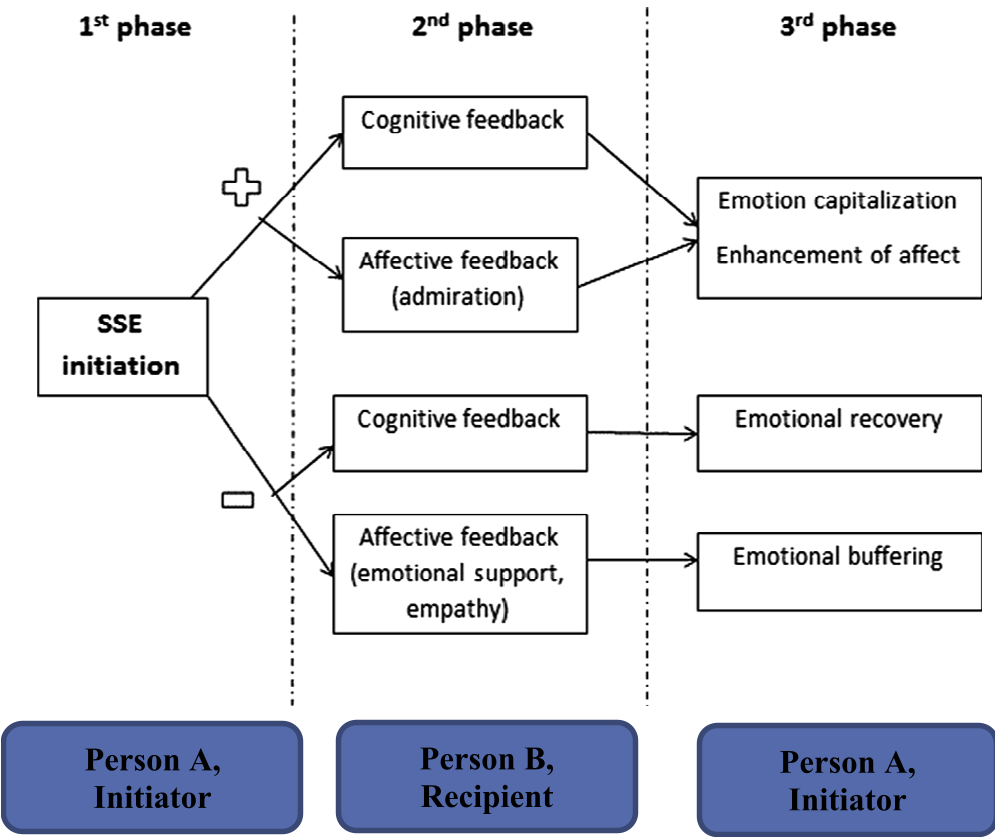
The researchers proposed a model to track how an emotion travels through a network:
- Initiation: The user posts an experience (The "What" and the "How I feel").
- Feedback: The audience responds (Affective vs. Cognitive).
- Repost: The initiator reacts to the feedback (Closing the loop).
Insights into Initiation
Interestingly, the study found that Negative Emotion dominates LiveJournal (over 53%). Unlike Instagram or Facebook, which often suffer from "positivity bias" or impression management, the diary-like nature of blogs encourages the disclosure of distress. Most importantly, 73.5% of these were "Full SSE," meaning they included both the situation and the feeling—a clear signal that the user was seeking more than just a "like"; they were seeking to be understood.
Results: The Power of Affective Feedback
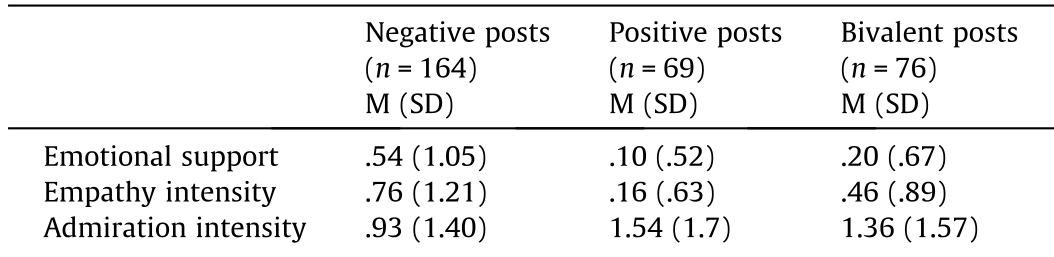
When a user posts a negative experience, how does the community react? The data shows a sophisticated "tuning" of response:
- Affective Feedback (The Buffer): Expressions of empathy and support were much higher for negative posts. This acts as an emotional "shock absorber."
- Cognitive Feedback (The Healer): While rarer (about 21%), cognitive feedback helps the initiator reframe their problem (e.g., "It wasn't your fault because...").
- Admiration: This was the dominant response to positive posts, facilitating "capitalization"—the process of reliving a joy through others' eyes.
Deep Insight: The Value of the "Mundane"
One of the paper's most surprising findings was that most shared emotions weren't about "Trauma" or "Major Life Events" (like marriage or death), which only accounted for about 10-12% of posts. Instead, the network thrives on "Mundane SSE"—sharing everyday hassles and small victories. This suggests that online networks provide a "low-stakes" safety net that offers steady, incremental improvements to daily well-being.
Critical Analysis & Conclusion
Takeaway
The study proves that digital spaces are not inherently shallow. When the platform architecture (like blogs) allows for long-form narrative, users default to a prosocial, supportive communication style that mirrors deep human psychological needs.
Limitations
- The Anonymity Variable: LiveJournal allows pseudonyms. Would these same results hold on LinkedIn, where professional identity is at stake?
- The Missing Repost: The study noted that users rarely "closed the loop" by posting a thank-you or a "feeling better now" update. This might be due to the lack of social pressure in anonymous digital spaces compared to a face-to-face conversation.
Future Outlook
As we move toward AI-integrated social platforms, understanding this SSE cycle is crucial. If an AI can identify when a user is attempting "Full SSE" vs. "Venting," it could potentially prompt more "Cognitive Feedback" from the community or provide it itself, bridging the gap when human responses are scarce.