
Digital Empathy: How Online Social Networks Replicate Face-to-Face Emotional Sharing
The social sharing of emotion (SSE) in online social networks: A case study in Live Journal
This study investigates the Social Sharing of Emotion (SSE) within the Live Journal blog network, confirming that online interactions mirror face-to-face emotional exchange processes. By analyzing 540 blog posts, the researchers demonstrate that online platforms facilitate a structured three-phase SSE cycle (Initiation, Feedback, Repost) that contributes to emotional regulation or capitalization.
TL;DR
Is online emotional sharing just "venting" into the void? According to a case study of Live Journal, the answer is a resounding "no." Research shows that online social networks facilitate a sophisticated three-phase cycle of Social Sharing of Emotion (SSE). Users don't just dump feelings; they provide context that invites deep, prosocial feedback, replicating the psychological benefits of real-world interactions.
Background: Beyond the Myth of Superficiality
In the early days of social media research, two camps emerged. One argued that sites like Facebook and Live Journal fostered "superficial" social behavior and jealousy. The other saw them as tools for social capital. This paper bridges that gap by applying SSE Theory—originally developed for face-to-face (FtF) communication—to the blogosphere. The core question: Does the "digital" nature of the medium strip away the profoundness of our emotional lives?
The Three-Phase Digital SSE Model
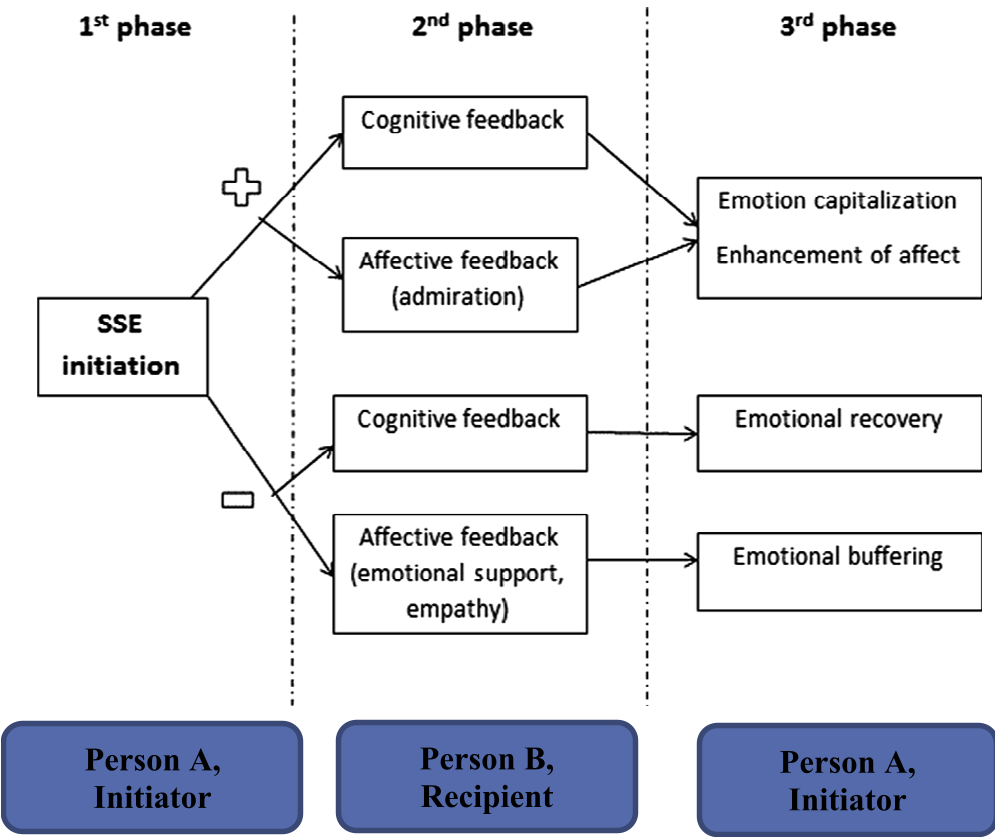
The authors propose that online sharing follows a specific, predictable cycle. Understanding this "Why" helps explain why we feel a pull to post during a crisis or success.
- Initiation: The user posts an emotional experience. The study found that "Full SSE" (describing both the situation and the feeling) is the most common, suggesting users seek to be understood, not just heard.
- Feedback: Peers respond. This is categorized into Affective (comfort/empathy) and Cognitive (reframing/advice).
- Repost: The original poster responds to the feedback, completing the loop of emotional capitalization or recovery.
Methodology: Human Intuition Meets Big Data
The researchers combined high-scale data retrieval with nuanced human coding. They used a Python "Beautiful Soup" application to pull 8.8 million posts, eventually narrowing down to a sample of 540 for deep analysis.
They categorized posts by valence:
- Negative: Fear, anger, sadness.
- Positive: Joy, achievement.
- Bivalent: Complex situations (e.g., being happy a friend got a job, but sad they are moving away).
Key Results: Negative Emotions Rule the Blogosphere
Contrary to the "highlight reel" culture often associated with Instagram, this study of Live Journal found that negative emotions were shared more frequently than positive ones.
- Emotional Prevalence: 57.4% of posts contained clear emotional content.
- Feedback Trends: Affective feedback (empathy/support) was significantly more common than cognitive feedback. This mimics real-life SSE, where we prioritize "being there" for someone over giving rational advice immediately.
- Targeted Support: The intensity of empathy and emotional support was highest when the initiator shared negative experiences, proving that online communities are "attuned" to distress.

Critical Insight: Why This Matters
The most profound takeaway is that online SSE is not just venting. Venting is a simple outburst; Social Sharing is an interpersonal bridge. Because users in Live Journal tended to provide full context (the "Full SSE" post), they were effectively signaling a need for social affiliation.
The rarity of Cognitive Feedback (around 20-30%) also highlights a human truth: even online, we struggle to help others "reframe" their problems, preferring the lower-effort but high-value path of emotional validation.
Conclusion & Limitations
This work proves that the "diary-like" nature of blogs offers a specialized affordance for deeper emotional processing compared to the performance-heavy nature of modern SNSs. However, the study focuses on Live Journal—a platform with high anonymity. Does the same prosocial "support" exist on Facebook, where your boss and grandmother are watching? That remains the next frontier for SSE research.
Ultimately, this research defends the internet as a prosocial space. In a world increasingly lived through screens, it’s heartening to know that our digital echoes can still find a sympathetic ear.