
Beyond Venting: How Online Social Networks Mirror Human Emotional Support Systems
The social sharing of emotion (SSE) in online social networks: A case study in Live Journal
This study investigates the Social Sharing of Emotion (SSE) within the online social network Live Journal, utilizing a content analysis of 540 blog posts. It confirms that online emotional exchanges are not merely superficial "venting" but follow a structured three-phase cycle (Initiation, Feedback, Repost) that replicates key prosocial features of Face-to-Face (FtF) interpersonal communication.
TL;DR
Is social media just a place for "shouting into the void"? A deep dive into Live Journal entries reveals that online emotional sharing is far from superficial. By applying the Social Sharing of Emotion (SSE) framework, researchers found that users engage in complex, three-phase communication cycles that prioritize empathy and support—mirroring the depth of face-to-face interactions.
Contextualizing the Digital Diary
In the academic discourse surrounding Social Networking Sites (SNSs), two camps often clash: one sees them as tools for social capital and community building, while the other views them as breeding grounds for jealousy and "small talk." This study bridges the gap by analyzing whether the technical structure of a blog—post, comment, and reply—actually facilitates a psychological process known as SSE.
The Problem: Is Online Sharing "Real"?
The core skepticism addressed here is whether online "venting" provides the same recovery benefits as talking to a friend. The authors argue that for sharing to be "full SSE," it must involve the situation, the cause, and the specific feeling label. Previous studies often overlooked this distinction, failing to see the prosocial intent behind digital disclosure.
Methodology: The Three-Phase SSE Cycle
The authors adapt Rimé’s face-to-face model into a digital context, identifying three distinct phases of interaction:
- SSE Initiation: The user posts about an experience.
- Feedback: Peers respond with Affective (emotional) or Cognitive (rational/reframing) support.
- Initiator Repost: The original poster reacts to the feedback.
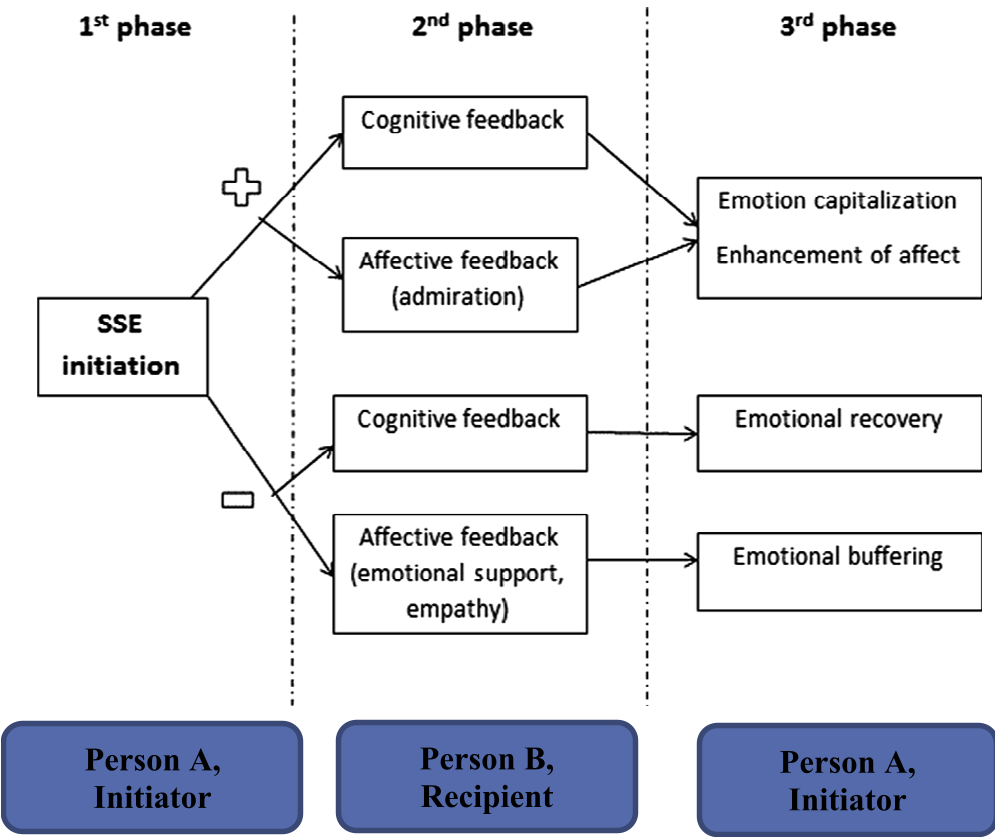
Figure 1: The proposed cycle of online social sharing in Live Journal.
Key Insights: Why Negative Emotions Lead the Way
Unlike Facebook, where "impression management" often leads to a "positivity bias," this study found that negative posts predominated (53.1%) in Live Journal.
- Full SSE is the Norm: 73.5% of emotional posts provided a full account of the event and feelings, suggesting users aren't just looking to complain—they are looking to be understood.
- Affective > Cognitive: Just like in real life, friends online prioritize "being there" (Affective Feedback) over "fixing the problem" (Cognitive Feedback).
- The Power of Empathy: The study proved that the intensity of empathy and support in comments scales directly with the negativity of the original post.
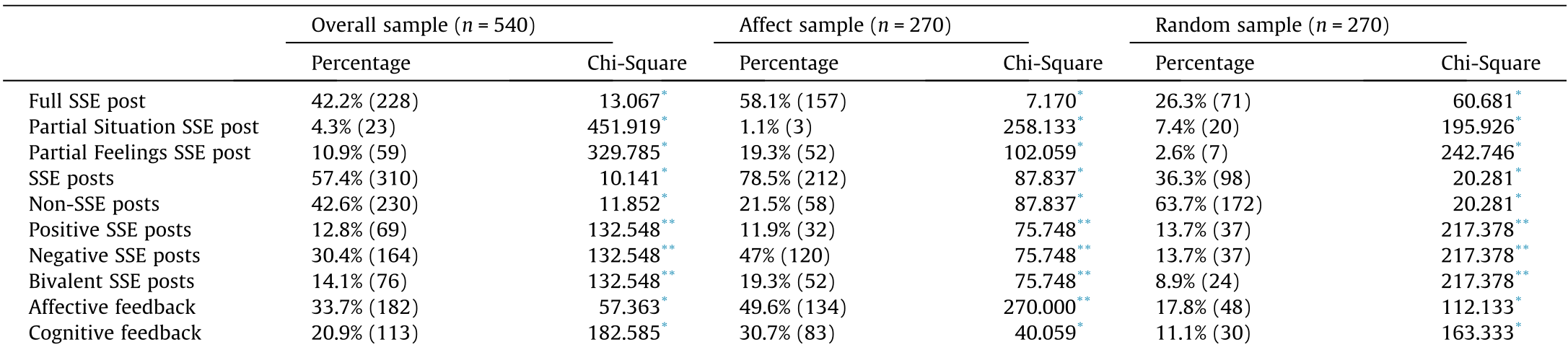
Table 1: Distribution of SSE types and feedback across random and affect-heavy samples.
Critical Analysis & Takeaways
The research confirms that the "need to share" is an invariant human trait that adapts to the affordances of the platform. Live Journal’s anonymity likely facilitates deeper vulnerability than platforms tied to real-world identities.
Limitations: The "Initiator Repost" phase was surprisingly rare. This suggests that while the initial exchange is deep, the "closure" of the loop might happen offline or simply go unrecorded due to the lack of social pressure in anonymous spaces.
Future Outlook: For developers and social scientists, this identifies a "prosocial" blueprint. If a platform's architecture supports the full SSE cycle, it can transition from a simple data-sharing tool to a vital infrastructure for public mental health and emotional capitalization.