
Decoding the Unspoken: Social Signal Processing and the Quest for Socially Intelligent Machines
Social Signals, their Function, and Automatic Analysis: A Survey
This seminal survey paper defines the field of Social Signal Processing (SSP), a multidisciplinary domain focused on the automatic sensing and interpretation of nonverbal social behaviors. It synthesizes methodologies from computer vision, speech analysis, and social psychology to decode "social signals" such as dominance, rapport, and interest in human interactions.
TL;DR
Social Signal Processing (SSP) is the bridge between human social psychology and machine intelligence. This survey outlines how computers can use microphones and cameras to "read the room" by analyzing nonverbal cues—like the tilt of a head or the rhythm of speech—to understand dominance, empathy, and social roles with surprising accuracy.
The Missing Dimension of AI: Social Intelligence
While computers have become masters of logic and formal language, they remain "socially autistic." They can process what we say but are blind to how we say it. Human interaction is governed by "Social Signals"—complex aggregates of nonverbal behaviors that leak our true attitudes and intentions.
The motivation for SSP lies in the "Honest Signal" hypothesis: while we can easily lie with words, our nonverbal "leakage" (e.g., micro-expressions, interpersonal distance) is largely unconscious and therefore more reliable. The challenge is: can we teach a machine to perceive what is subtle even for a trained psychologist?
The Framework: From Cues to Functions
The authors propose a hierarchical mapping where low-level Behavioral Cues are organized into Codes, which ultimately serve specific Social Functions.
The Five Codes of Nonverbal Communication:
- Physical Appearance: Height, clothing, and body shape.
- Gestures and Postures: Unconscious rapport cues.
- Face and Eyes: The most reliable indicators of cognitive state and interest.
- Vocal Behavior: Prosody, silences, and turn-taking patterns.
- Space (Proxemics): The physical distance between participants as a proxy for social intimacy.
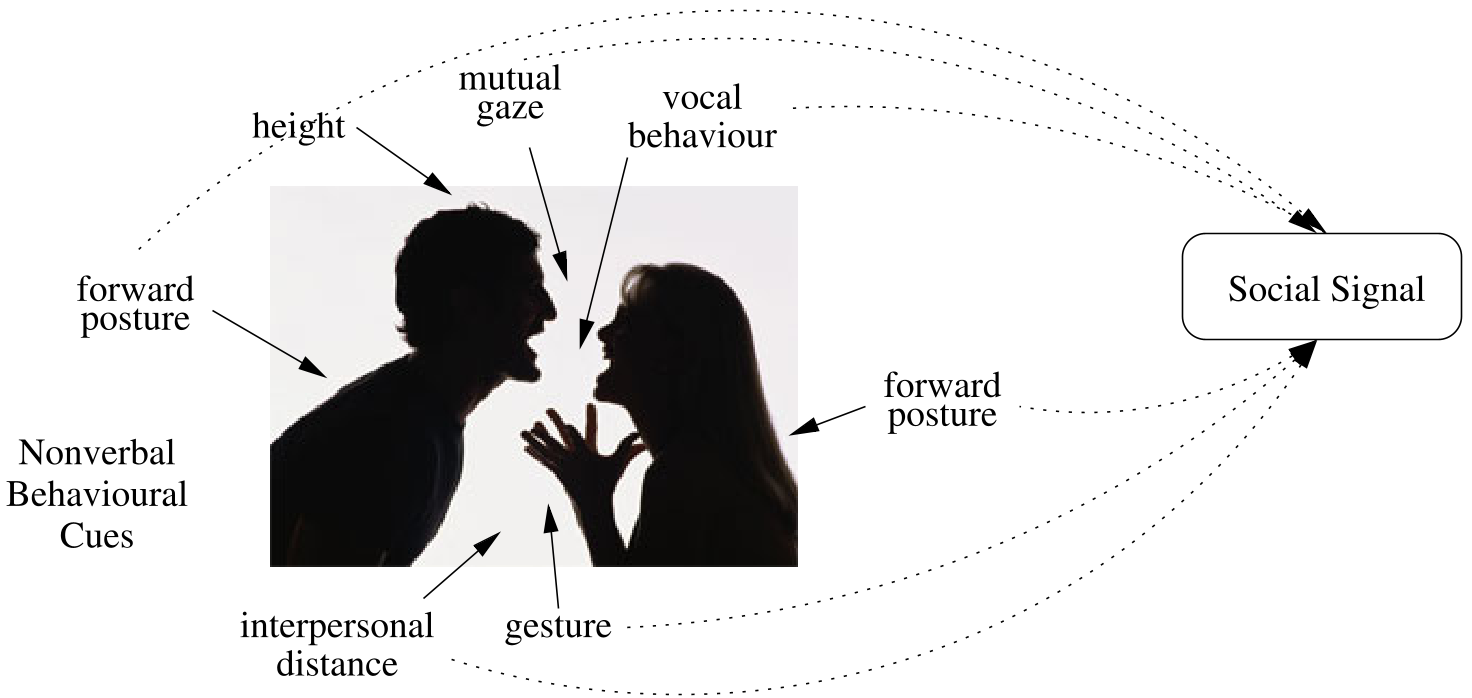 Figure 1: Even silhouetted figures convey intense social signals; 50% of observers can identify a conflict just from posture and proximity.
Methodology: The Engineering Perspective
The core insight of SSP is that these elusive signals are actually measurable. By using Multimodal Fusion (combining audio and video), researchers can overcome the ambiguity of single-mode analysis (e.g., a hand gesture might mean "hello" or "go away" depending on the face).
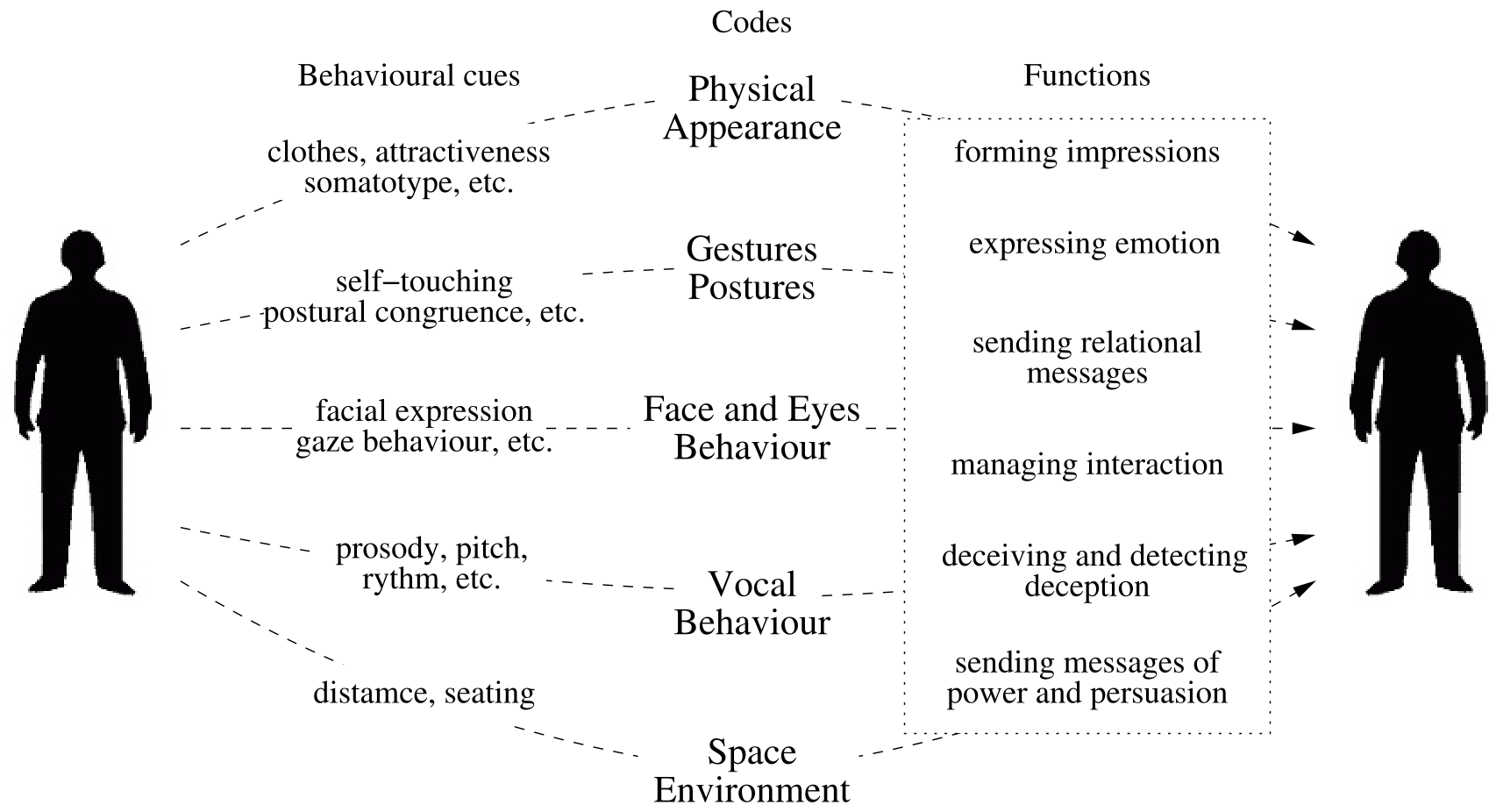 Figure 2: The structural mapping from observable changes in facial/body gestures to social goals.
Benchmarking Success
The paper synthesizes results across several tasks:
- Dominance Detection: Using speaking energy and body movement, systems can identify the "alpha" in a meeting with ~85% accuracy.
- Role Recognition: Identifying who is the 'anchor' vs. 'guest' in a news broadcast reaches 80-95% accuracy.
- Reality Mining: Using mobile sensors to map social networks and predict group productivity.
Critical Insight: The Deployment Gap
Despite the impressive SOTA results (see table below), several hurdles remain:
- The Chameleon Effect: Machines must not only recognize but also mimic social signals to be accepted (e.g., rhythmic synchronization).
- Contextual Plasticity: A smile in a business meeting has a different social weight than a smile in a bar.
- Data Realism: Moving from lab-simulated "mock meetings" to the chaotic reality of everyday social life.
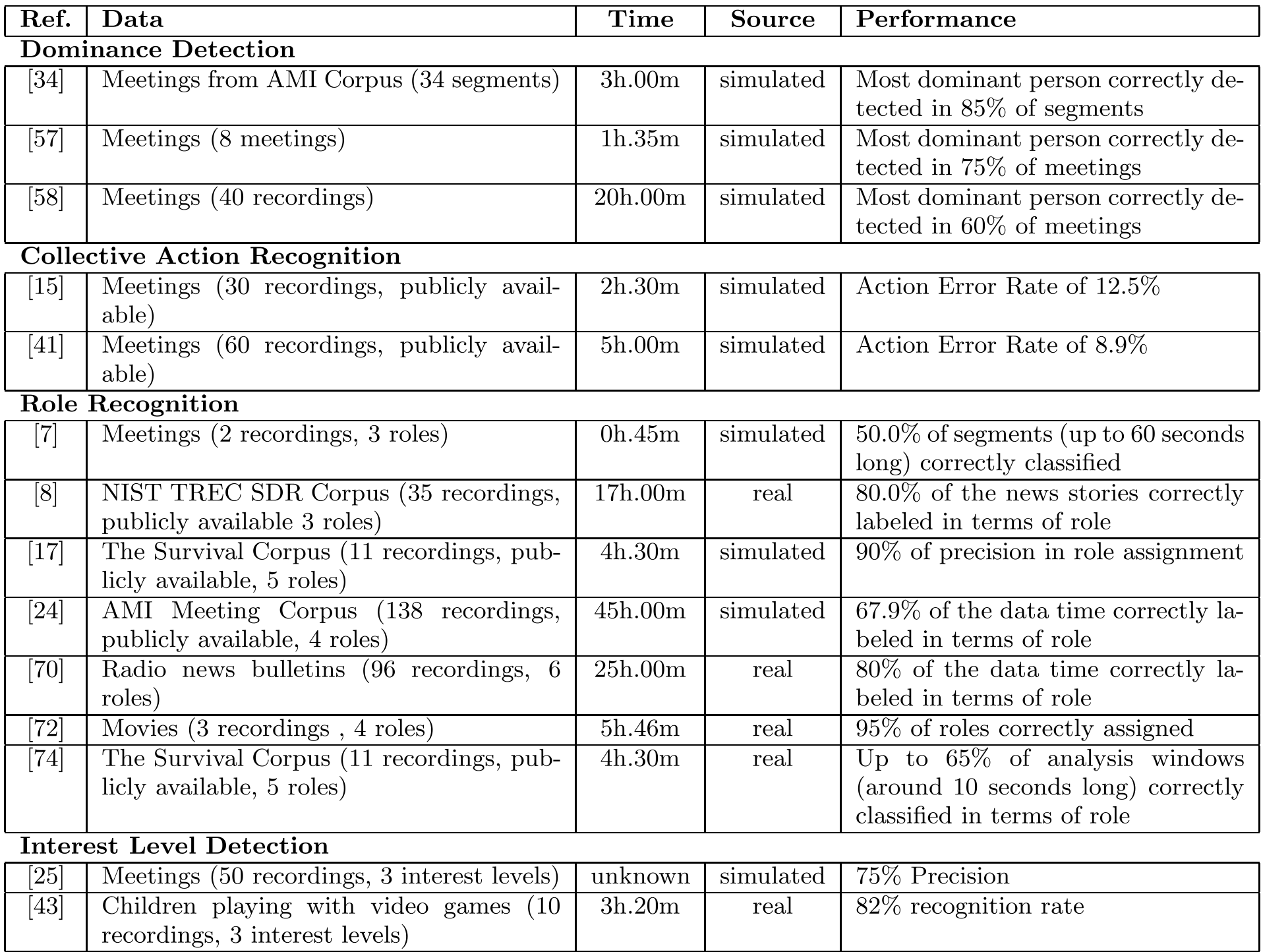 Table 1: Comparison of performance across dominance, role, and interest level detection tasks.
Conclusion: Toward Socially Aware Computing
Social Signal Processing is not just about "reading" humans; it's about building interfaces that respect the unwritten rules of human engagement. As we move toward a world of AI agents and social robots, the ability to process these "thin slices" of behavior will be the threshold between a tool and a companion.
Future Work: The next frontier lies in affective synthesis—not just recognizing the signal, but generating appropriate social signals in real-time to foster trust and cooperation.