
Social Signatures: How Robots Decode Human Pathologies Through Imitation
Learning of Social Signatures Through Imitation Game Between a Robot and a Human Partner
This paper presents a cognitive developmental robotics study where a Nao robot learns to recognize and imitate human postures through an "imitation game." Using a sensory–motor neural network architecture, the robot successfully learned social signatures from adults, typically developing (TD) children, and children with autism spectrum disorder (ASD), achieving SOTA-level autonomous learning without explicit teaching signals.
TL;DR
Researchers have developed a robot that learns how to behave by playing a simple game of "follow the leader" with humans. By using a neural network that mimics infant development, the robot doesn't just learn to move—it learns to distinguish between adults, typically developing children, and children with autism (ASD). The robot’s "difficulty" in learning becomes an objective metric for understanding human social behavior.
Background: The Mirror of Development
In developmental psychology, imitation is more than just copying; it is a primary communication tool that precedes language. However, for a robot, imitation is a nightmare of the "correspondence problem"—how does my plastic arm relate to your fleshy one? Most researchers solve this by hard-coding rules. This paper flips the script: the robot starts "naive" and learns by observing how humans react to it.
Methodology: A Bottom-Up Sensory-Motor Loop
The core of this research is a sensory-motor architecture that relies on statistical co-occurrences.
- Phase 1 (Robot Leads): The robot strikes a random pose. The human partner imitates the robot. The robot "sees" the person and associates those visual patterns with its own internal motor commands.
- Phase 2 (Human Leads): The roles reverse. The robot uses its learned associations to recognize the human's posture and moves its own joints to match.
The visual system uses Focus Point Detection (via Difference of Gaussian) to identify important areas in the image without needing a specific "human detector." These views are processed by a Self-Adaptive Winner-Take-All (SAW) neural network that recruits new neurons only when it encounters a visual feature it hasn't seen before.
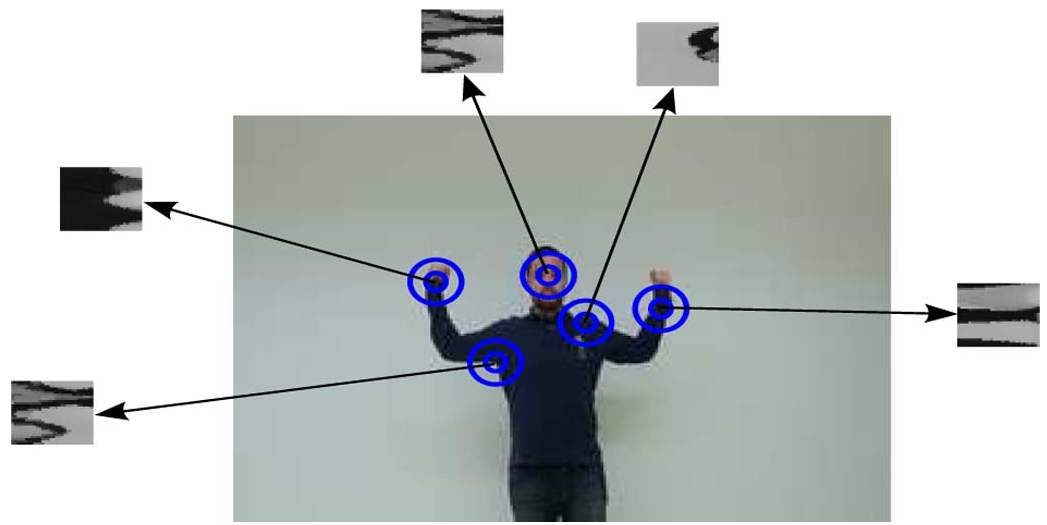 Fig 1. The sensory-motor architecture enabling autonomous learning of postures.
The "Neural Cost" of Autism
One of the most profound insights of this study is the concept of a Social Signature. The researchers found that the robot’s learning trajectory changed depending on who it played with:
- Adults: The "gold standard." High recognition success (84%) and low neuron recruitment.
- Children (TD): More variability than adults, leading to a 69% success rate.
- Children with ASD: The robot struggled the most here (61% success).
Why? It wasn't that the children with ASD couldn't imitate; in fact, human therapists rated their performance quite highly. However, the robot—analyzing 15 frames per second—detected micro-instabilities and spatial variability that the human eye missed. The robot had to "work harder," recruiting significantly more neurons to make sense of the ASD group's movements.
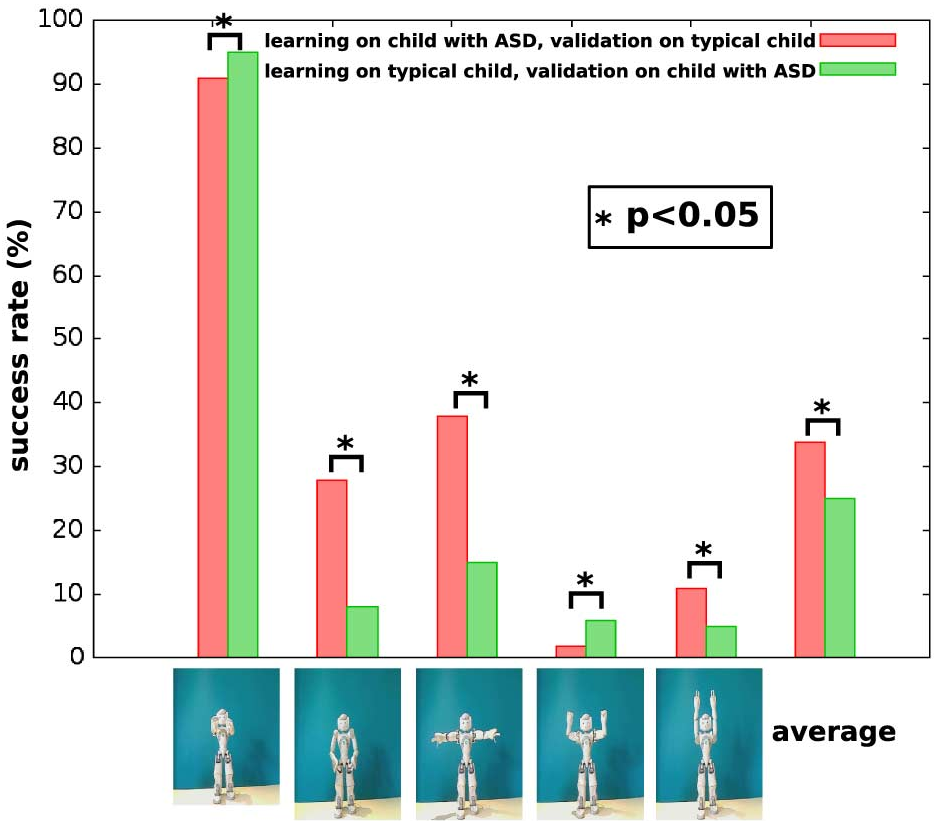 Fig 2. Success rates and generalization across different participant groups.
Surprise Discovery: The Value of Complexity
The authors discovered a "curriculum learning" effect by accident. If the robot interacted with the most complex group first (children with ASD), it performed better when testing on simpler groups (TD children) later. This suggests that the high variability of ASD postures acted as a form of robust data augmentation, forcing the robot to learn more generalized features.
Critical Insight & Future Outlook
This paper shifts the role of the robot from a mere "tool for therapy" to a "measuring instrument for pathology." By measuring the "Neural Cost" (number of neurons recruited), we can objectively quantify behavioral disorders in a way that is currently impossible for human clinicians.
Limitations: The study uses a relatively small sample (15 ASD, 15 TD) and focuses on a limited set of 5 discrete postures. Future work needs to scale this to continuous, complex motor sequences.
Conclusion: The "Imitation Game" proves that social learning is a two-way street. By observing how a machine struggles to understand us, we gain a deeper structural understanding of the subtle social signatures that define human interaction.