
SandS: Toward Subconscious Social Intelligence for the Smart Home
Social and Smart: Towards an Instance of Subconscious Social Intelligence
The paper introduces the Social and Smart (SandS) project, a novel framework for a social network of household appliance users ("eahoukers") supported by a "subconscious social intelligence" layer. It utilizes social knowledge and reinforcement learning to autonomously generate and refine appliance "recipes" (settings/procedures) based on user satisfaction.
Executive Summary
TL;DR: The Social and Smart (SandS) project proposes a paradigm shift in the Internet of Things (IoT) by creating a social network for household appliances. Unlike static smart homes, SandS introduces a subconscious intelligence layer that autonomously generates "recipes" for domestic tasks—like cooking or washing—by learning from the collective experiences and satisfaction of a community of users, termed eahoukers.
Background: This work sits at the intersection of Social Computing and the Internet of People. Specifically, it evolves the "Social Internet of Things" (SIoT) by moving beyond data sharing to autonomous solution generation, where the system innovates on behalf of the user.
Problem & Motivation: The Gap Between User Desire and Machine Settings
The current limitation of smart appliances is the cognitive load placed on the user. When a user has a specific problem—for example, "removing a mud stain from a child's jeans"—they must manually translate this into technical settings (temperature, detergent type, spin speed).
The authors identify a critical distinction:
- Conscious Computing: Explicit decisions and social interactions (sharing a recipe).
- Subconscious Computing: The background processing where the system searches, adapts, and generates new solutions without direct user intervention.
Traditional systems fail because they lack the "social intelligence" to generalize knowledge from one user to another when their equipment or specific problems don't perfectly match.
Methodology: The SandS Architecture
The core of SandS is its Networked Intelligence, which manages the relationship between tasks (), appliance settings (), and satisfaction degrees ().
1. Functional Similarity and Latent Links
The system doesn't just look for identical users; it computes a multi-dimensional distance between eahoukers based on:
- Profile Similarity: User habits and preferences.
- Appliance Similarity: Whether two different brands of washing machines share functional capabilities.
- Recipe Similarity: How similar the execution steps are.
This allows the framework to build a "Social Graph" where edges represent the probability that one user's expertise can solve another's problem.
2. The Language Bridge
A pivotal contribution is the mapping between the Eahouker Language (Natural Language) and Appliance Recipes (Formal Logic).
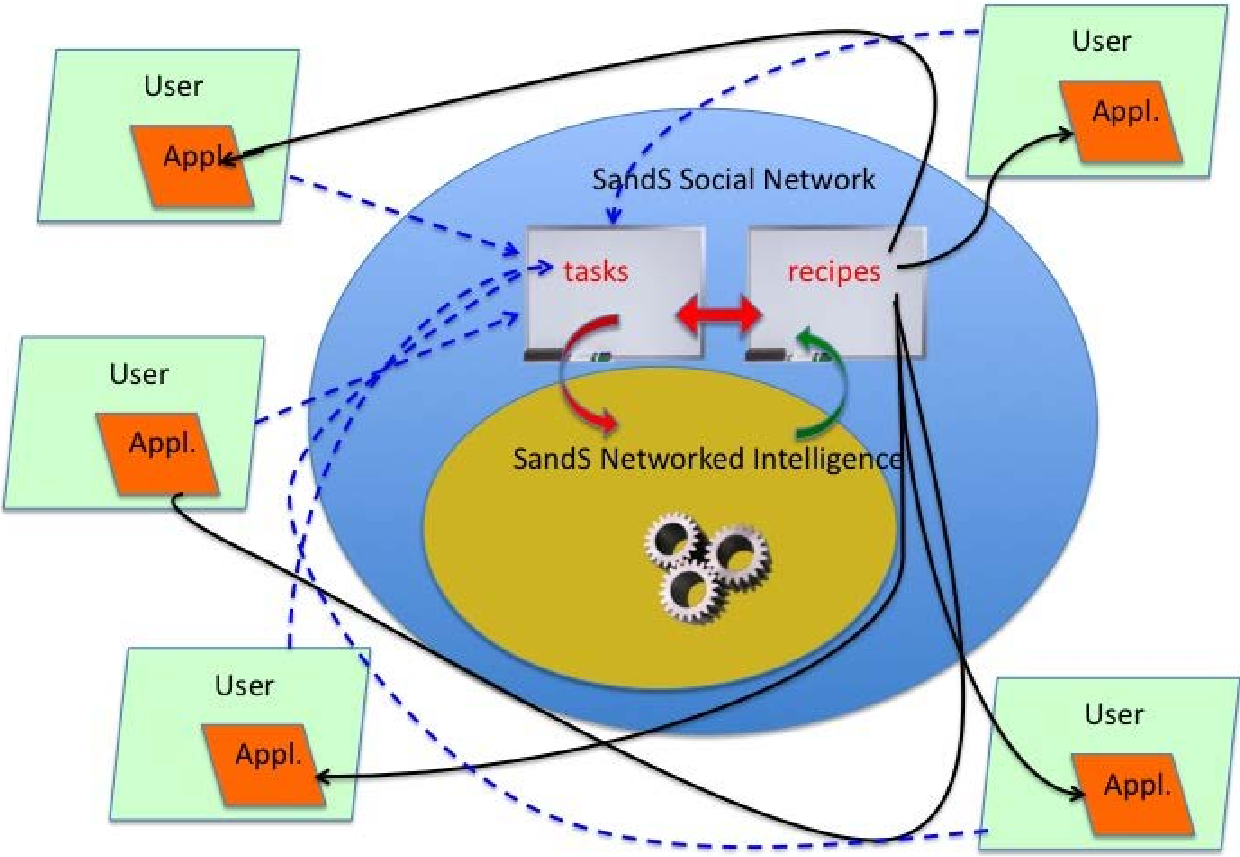 Figure 1: The SandS Architecture showing the flow from user query to networked intelligence.
The "indexer" and "query analyzer" transform vague human requests into task specifications (), which are then matched against the global repository using a Ranking Function.
Experiments & Results: Consensus and Adaptability
The authors demonstrate that by aggregating social data, the system can perform:
- Consensus Building: Determining the optimal temperature for a specific fabric by averaging high-satisfaction recipes across the network.
- Community Discovery: Automatically grouping eahoukers with similar appliance setups to facilitate faster search.
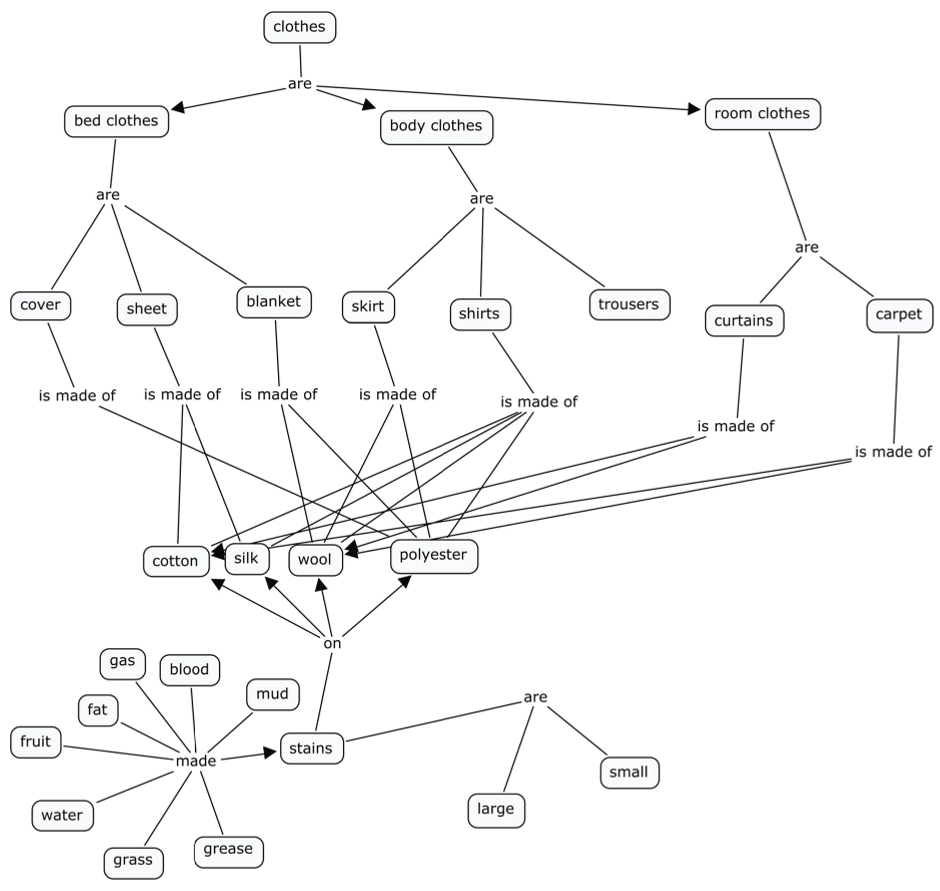 Figure 2: (a) User's conceptual view of laundry vs (b) The appliance's technical execution parameters.
The system utilizes an underground reinforcement learning process. When a user provides a satisfaction score (), the system updates the "trust" and "efficacy" weights of that specific recipe, effectively fine-tuning the global intelligence without the user ever seeing a line of code.
Critical Analysis & Conclusion
Takeaway
SandS proves that intelligence in the IoT era shouldn't just be "local" (one smart fridge) but "social" (a network of fridges learning from each other). By making the complex technical mapping subconscious, it empowers the "eahouker" to focus on outcomes rather than configurations.
Limitations
- Cold-Start Problem: The system relies heavily on an existing repository of recipes; initial users may find less utility.
- Semantic Ambiguity: While the paper claims semantic analysis is simplified by the domain focus, natural language remains notoriously ambiguous for safety-critical appliance control (e.g., oven temperatures).
Future Work
The project aims to expand this "philosophy of subconscious innovation" beyond household appliances into domains like healthcare and industrial maintenance, where social knowledge is equally siloed and underutilized.
Keywords: Social Intelligence, Internet of Things (IoT), Subconscious Computing, Reinforcement Learning, SandS Project.