
Social Snapshots: Overcoming the Cloud Forensics Wall in Social Networks
Social Snapshots: Digital Forensics for Online Social Networks
The paper introduces "Social Snapshots," a hybrid forensic tool designed to harvest comprehensive data from Online Social Networks (OSNs) like Facebook. By combining automated web crawling with a custom third-party application using developer APIs, it captures private messages, profile metadata, and media while bypassing traditional crawler limitations.
TL;DR
As our lives migrate to Online Social Networks (OSNs), traditional digital forensics—centered on hard drive images—is hitting a wall. "Social Snapshots" bridges this gap by using a hybrid approach (API + Web Crawling) to pull complete user profiles, including private messages and hidden metadata, in under 15 minutes. It turns the platform's own developer tools into a powerful forensic engine.
Background: Why Local Forensics is No Longer Enough
In the past, an investigator might seize a suspect's PC to find evidence. Today, a "techno-savvy" individual might use a diskless system or encrypted cloud storage, leaving zero local traces. OSNs like Facebook have become the new "log files" of human behavior. However, simply "scraping" a website like a search engine bot is slow, generates too much noise (leading to IP bans), and misses the rich metadata stored "under the hood."
The "Social Snapshot" Intuition
The authors realized that the most efficient way to talk to a social network isn't through its front-end website, but through its Graph API. While users see a polished UI, the API serves raw, structured data (JSON) containing exact timestamps, unique IDs (UIDs), and cross-referenced tags that never appear on the screen.
Methodology: The Hybrid Engine
The framework consists of two main pillars:
- Automated Browser (Selenium): Simulates human behavior to handle UI-specific tasks, such as getting contact details that are restricted from the API.
- Third-Party Application: A multi-threaded app that uses the victim's authentication token to suck out data at high speed directly from the API.
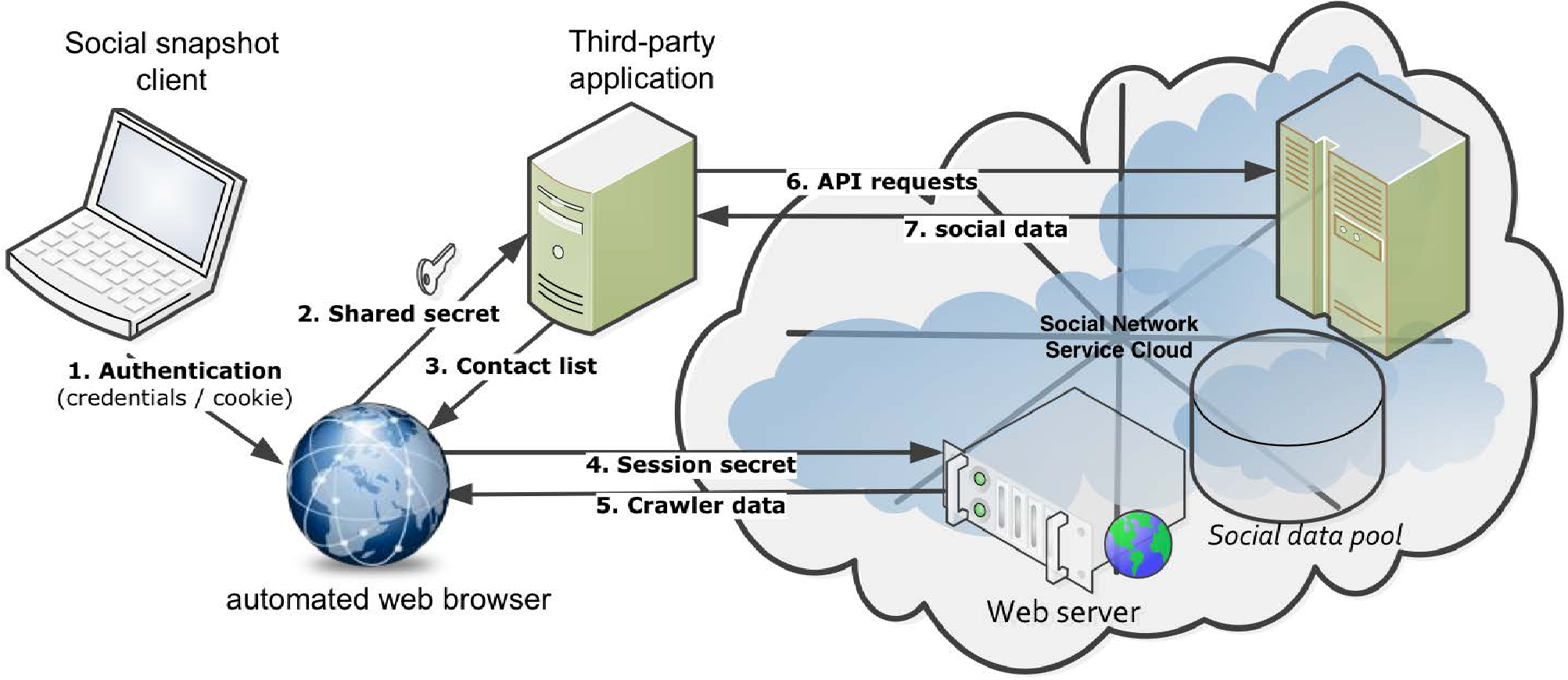 Figure 1: The Social Snapshot Collection Workflow.
The Authentication Hook
A forensic tool is only as good as its access. The researchers identified three primary vectors for gaining the initial "handshake":
- Consensual Access: For academic or voluntary legal situations.
- Session Hijacking: Sniffing unencrypted WiFi cookies (a major threat in 2011, though mitigated by modern HTTPS-everywhere, it remains relevant via MITM attacks).
- Forensic Extraction: Pulling persistent cookies from a seized hard drive's browser profile.
Experimental Results: Precision and Speed
The team tested the system on 25 volunteers. The performance was staggering compared to manual methods.
- Data Density: The tool retrieved an average of 9,802 unique elements per account.
- Efficiency: The process took roughly 12.79 minutes, a fraction of the time a traditional crawler would take.
- Visibility: Unlike the standard "Download My Data" feature offered by platforms, this method captured hidden interaction logs and full-resolution media tags.
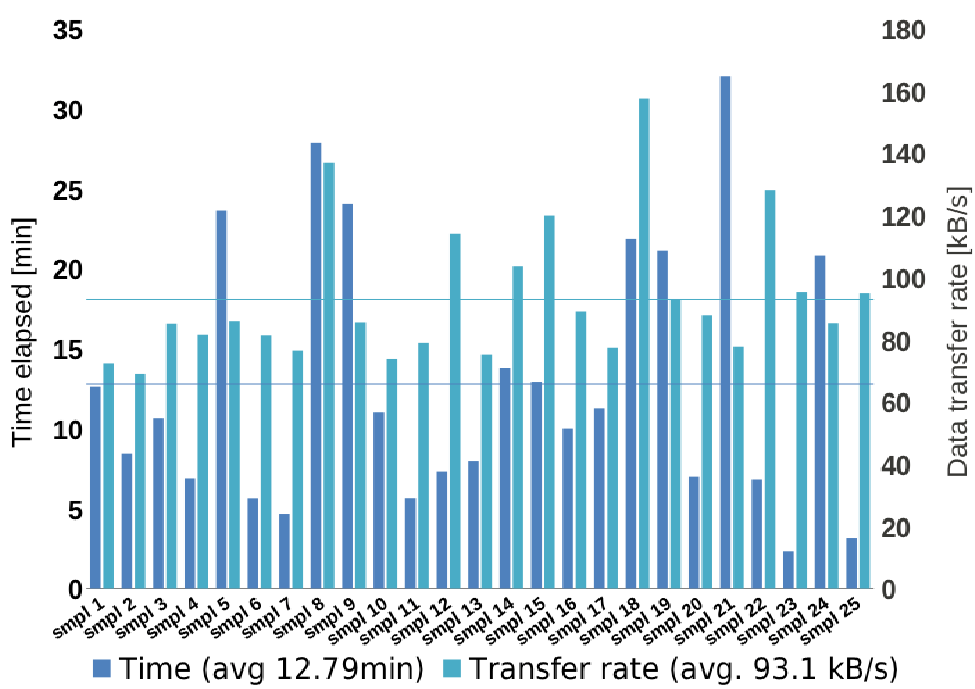 Figure 2: Transfer rates and time requirements for snapshotting accounts.
A Forensic Use-Case: The Dalton Gang
To prove the tool's value, the authors present a scenario where a group of bank robbers used a Facebook group photo as an alibi. By performing a "Social Snapshot," investigators found a private message where the suspects bragged about how "easy" the robbery was and admitted the photo was taken a week prior—evidence that would have been invisible without accessing the private message threads and the metadata of the photo upload.
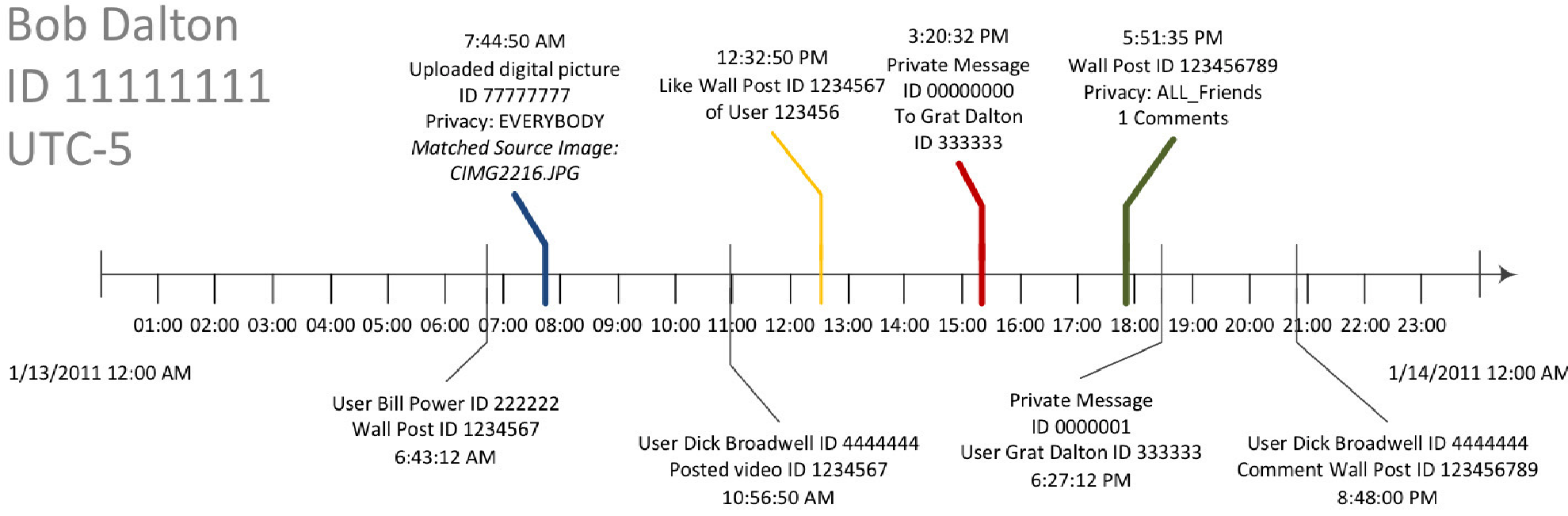 Figure 3: A generated forensic timeline correlating social activity with criminal events.
Critical Insight: The "Open Application" Loophole
One of the paper's most interesting realizations is that OSN providers (at the time) had very lax reviews for third-party apps. An investigator (or an attacker) could create a data-harvesting app that doesn't even appear in the public directory, making the "Social Snapshot" process almost invisible to the user.
Conclusion & Future Outlook
The "Social Snapshot" work was a pioneer in treating Online Social Networks as a first-class forensic target. While platforms have since tightened their API permissions (especially after the Cambridge Analytica scandal), the core methodology—combining automation with internal API calls—remains the gold standard for digital intelligence (OSINT) and forensic investigations.
Takeaway for Researchers: The battle for digital evidence has moved from the sector-level of hard drives to the permission-level of APIs. Understanding the "shadow data" behind the GUI is now a mandatory skill for any digital investigator.