Social Software and Cyber Networks: The Architecture of Digital Mobilization
Social Software and Cyber Networks: Ties That Bind or Weak Associations within the Political Organization?
This paper analyzes the role of "Social Software" (blogs, Meetup, RSS, email) in political mobilization, using the 2004 Howard Dean campaign as a primary case study. It integrates Media Richness Theory with Social Network Theory to explain how digital tools transform latent technical connections into active weak and strong ties for political action.
TL;DR
This paper explores how the "Howard Dean Phenomenon" of 2004 wasn't just a political fluke, but a masterclass in utilizing Social Software to build a high-velocity political organization. By bridging Media Richness Theory and Social Network Analysis, authors Green and Pearson demonstrate how digital tools transform passive "latent ties" into active, fundraising, and mobilizing powerhouses.
Background: The Shift from Brochure-ware to Social Platforms
In the early days of the internet, political websites were "brochure-ware"—static, one-way information dumps. The 2004 election marked a paradigm shift. The paper identifies that current social software (blogs, wikis, instant messaging) differs from old "groupware" because it supports the individual's desire to be pulled into groups for personal goals, rather than forcing them into pre-defined organizational boxes.
Problem & Motivation: The "Loss of Community" Paradox
Sociologists have long feared that the internet would erode "real" community. However, the authors argue that the internet doesn't destroy community; it liberates it from the constraints of spatial proximity. The pain point for political organizations was the high "social overhead" required to recruit strangers. How do you turn a "disconnected geek" into a "model citizen" willing to donate $50?
Methodology: The Latent Tie Framework
The core methodology involves analyzing how different types of social software provide various levels of Media Richness—the ability of a medium to change understanding and resolve ambiguity.
1. The Hierarchy of Ties
The authors build on the work of Haythornthwaite and Granovetter to map a 3-stage progression:
- Latent Ties: Technical connections that exist (e.g., being on the same email list or member of the same blog) but haven't been activated.
- Weak Ties: Occasional interactions, providing information but little emotional support.
- Strong Ties: Frequent, intimate, and reciprocal interactions that drive high commitment.
2. The Role of Social Software
The paper breaks down the "Social Software Stack" used by the Dean campaign:
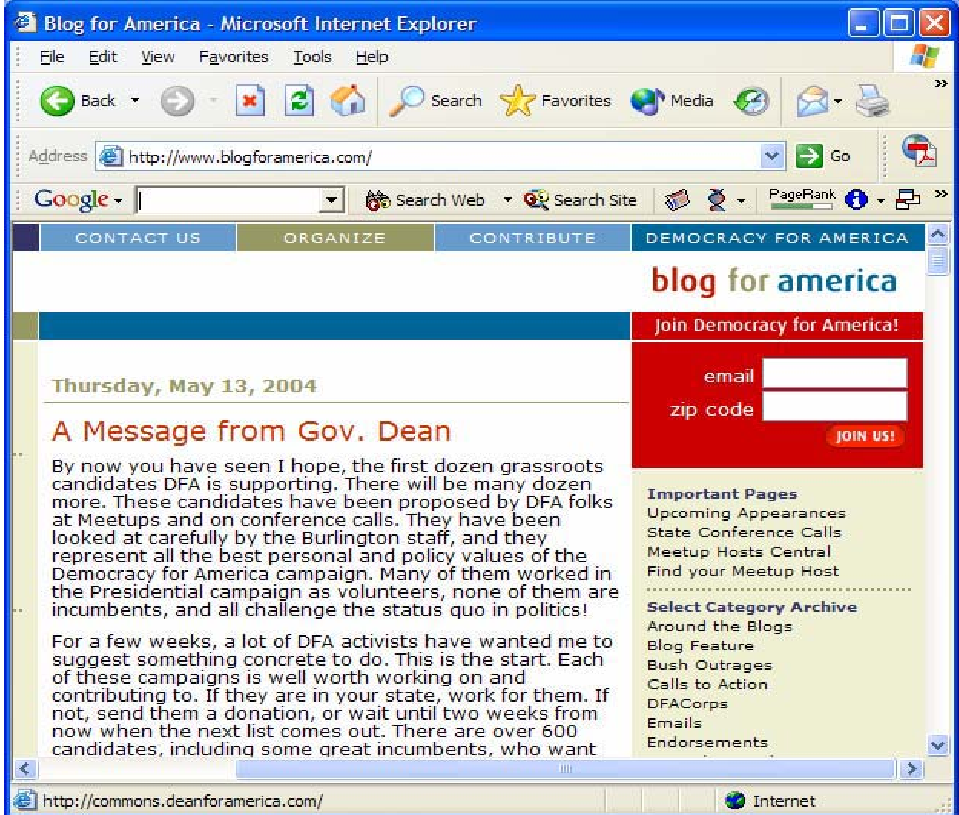
- Blogs (e.g., Blog for America): Provided a "voice" and fostered engagement.
- Meetup.com: The bridge between the virtual and the physical, turning online latent ties into face-to-face strong ties.
- RSS & Wikis: Allowed for decentralized news analysis and rapid information flow.
The "Media Richness" Propositions
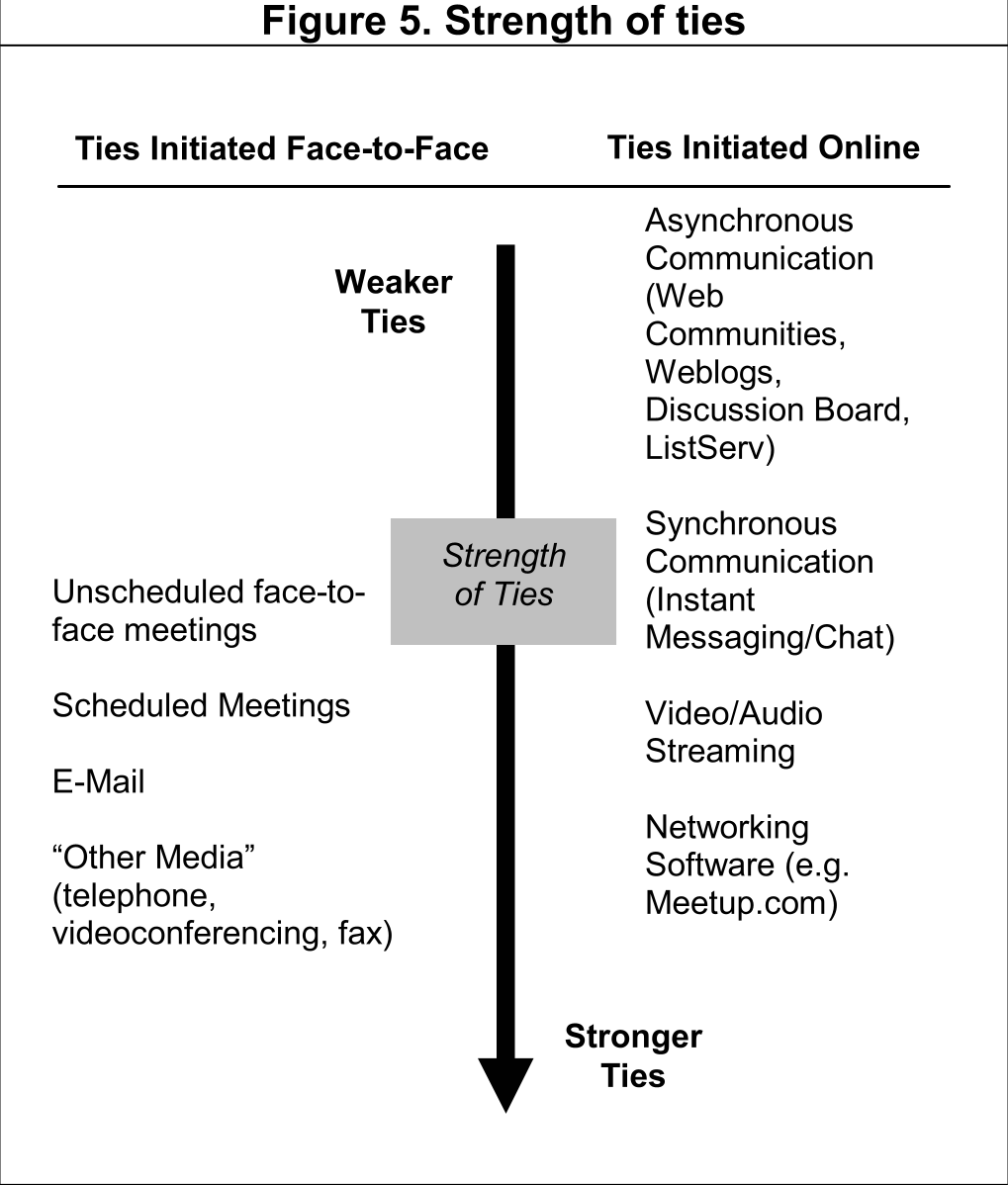
The authors propose that the speed and success of tie-building are directly linked to media richness.
- Proposition 5 & 6: Richer media (ones with more cues, like video or high-interactivity blogs) are better for moving people from "just watching" to "actively participating."
- Proposition 7: Solely online ties take longer to become "strong" than those with a face-to-face component, which explains why the physical "Meetups" were the secret sauce of the Dean campaign's success.

Results: From Obscurity to Frontrunner
The data proves the efficacy of this networked approach:
- Fundraising: Over $40 million raised via decentralized networks.
- Mobilization: 180,000+ registrations for local get-togethers.
- Efficiency: The campaign used "viral marketing" to have messages forwarded, drastically reducing the cost of outreach compared to traditional TV or mail.
While Dean did not win the nomination, the authors argue his campaign was a "revolutionary success" in demonstrating how to build a self-organizing social network through software—a blueprint used by every successful political campaign since.
Critical Analysis & Conclusion
The paper concludes that political organizations are essentially "complex networks." The internet provides an economical way to build these ties, but the richness of the medium determines the depth of the commitment.
Limitations
A key limitation noted is that "participation in online communities often provides a sense of satisfaction that actually dampens a willingness to interact with the real world"—a phenomenon we now call "slacktivism."
Takeaway for Professionals
Whether in marketing, politics, or community building, you cannot rely on "lean" media alone. To build a robust organization, you must create a pipeline that moves users from Latent Ties (Email/RSS) to Weak Ties (Blogs/Comments) and eventually Strong Ties (Face-to-face or high-richness interaction).