
Beyond the LMS: Leveraging Social Software for Interdisciplinary Service-Learning
Social Software Design To Facilitate Service-learning In Interdisciplinary Computer Science Courses
This paper introduces a specialized Online Social Networking (OSN) platform based on Elgg, designed to facilitate service-learning in interdisciplinary Computer Science courses. It integrates wikis, blogs, and discussion boards to support project management and self-reflection, successfully connecting diverse student teams with six community partners.
TL;DR
Higher education is facing a generational shift. Generation Z students, defined as digital natives, find traditional Learning Management Systems (LMS) restrictive and socially isolated. This paper presents an experience report on COMP342, a course that replaces standard LMS workflows with a customized Online Social Networking (OSN) platform. By utilizing Wikis, Blogs, and Discussion boards, the course successfully navigated the complexities of interdisciplinary service-learning, delivering real-world impact for non-profit community partners.
The Problem: The "Social Gap" in Academic Software
Current pedagogical approaches increasingly favor Service-Learning—a high-impact practice where students solve community problems. However, the authors argue that the predominant delivery mechanism, the LMS, is a bottleneck:
- Limited Interaction: LMS platforms often prioritize content delivery over peer-to-peer "friending" and profile building.
- Rigid Structures: Service-learning requires flexible project management and a "permanent artifact" that can be shared with external partners; most LMS environments are closed loops that expire after the semester.
- Gen Z Disconnect: Digital natives expect the fluidity of social media (Facebook, Instagram) in their collaborative workspaces.
Methodology: The Elgg OSN Architecture
The researchers deployed a customized installation of Elgg, an open-source social engine. The environment was architected to serve three specific pedagogical needs:
- Wiki (The Engine of Collaboration): Used for Phase 1-3 deliverables. It provided a centralized, version-controlled space for requirement gathering, user-persona construction, and strategic design documents.
- Blog (The Mirror of Reflection): Since service-learning requires frequent self-reflection, blogging allowed students to build an "intellectual identity" by documenting their personal growth and challenges.
- AOD (The Community Glue): Asynchronous Online Discussions facilitated cross-team knowledge exchange, ensuring that local project insights became global class knowledge.
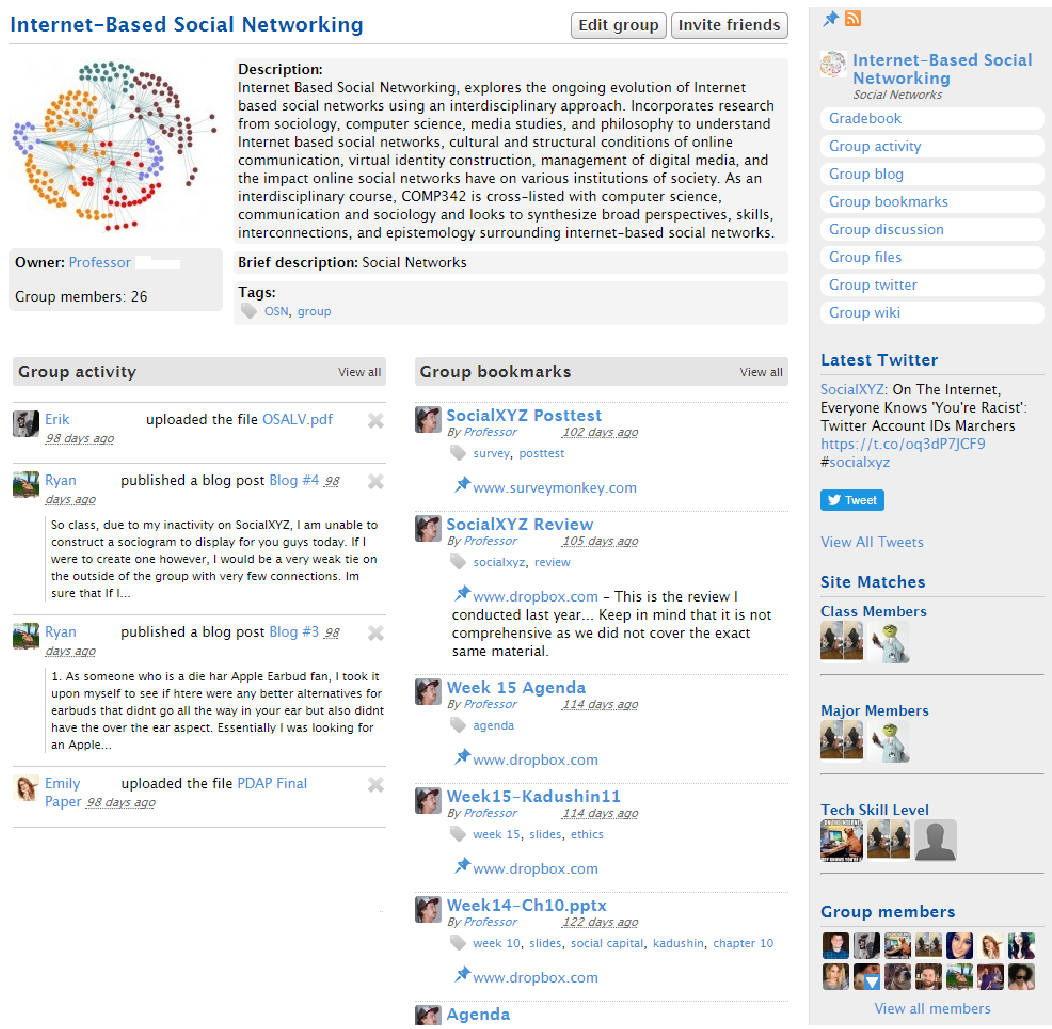 Figure 1: The customized Elgg interface showing the activity feed and group dashboard.
Real-World Intervention: Six Projects, Diverse Impact
The course was not just theoretical. Students (only 20% of whom were CS majors) were split into interdisciplinary teams (Communication, Sociology, Psychology, etc.) to assist six community partners:
- Youth Organizations: Developing Instagram campaigns for drug awareness.
- Non-profit Museums: Using surveys to re-target millennial visitors.
- Educational Outreach: Establishing Twitter-based donor engagement strategies.
The Wiki served as the primary mechanism for "Requirements Gathering," where students constructed User Personas to help non-profits understand their target audiences.
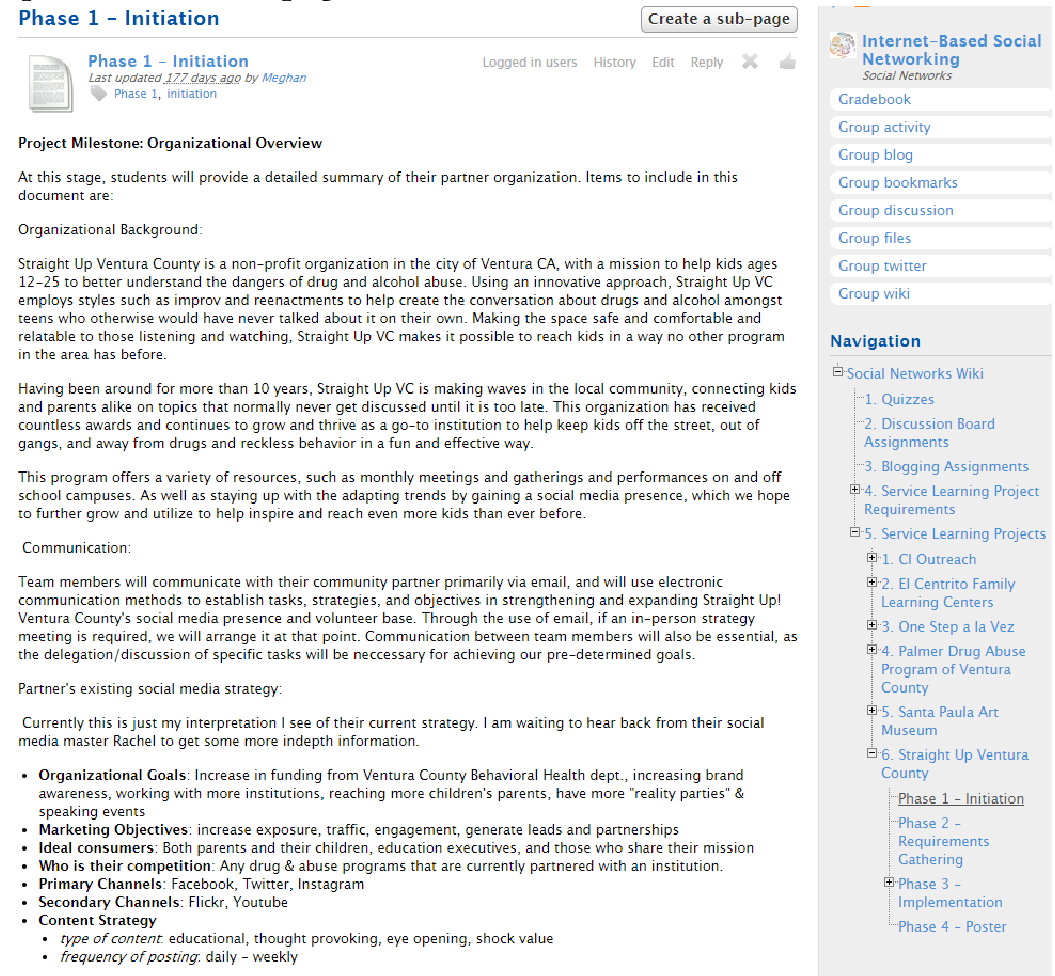 Figure 2: Example of students using the Wiki to manage project milestones and audience research.
Results & Analysis
The data suggests that the OSN approach significantly outperformed traditional LMS expectations for engagement:
- High Engagement: Over 20,000 pageviews for a class of only 23 students.
- Wiki Dominance: 25% of all activity occurred in the Wiki, proving its value as a genuine project management hub.
- Student Satisfaction: 95% of students felt the software supported "Course Community," a metric where traditional LMS platforms typically score low.
| Metric | Positive Response (%) |
|---|---|
| Supported Learning | 90% |
| Increased Interaction | 85% |
| Fostered Community | 95% |
Critical Analysis & Conclusion
This work demonstrates that interdisciplinary CS courses are most successful when the technology "gets out of the way" by mimicking the social environments students already use.
The Takeaway: Service-learning shouldn't just be about "doing a project"; it’s about creating a knowledge artifact. By using a Wiki-based social platform, the students left their community partners with a living document—a set of best practices and strategies that persisted long after the final exam.
Limitations: The authors noted communication barriers between tech-savvy students and "older demographic" management teams at certain non-profits. Future iterations might need to include "Digital Citizenship" training for the partners as well as the students.
Ultimately, this study provides a blueprint for how Computer Science departments can lead interdisciplinary efforts by providing the social infrastructure needed for high-impact educational practices.