
Social Technology in Schools: Why "Good" Systems Fail and "Simple" Ones Stick
Social technologies in education - an actor-network analysis
This paper examines the adoption and socio-technical dynamics of three educational information systems (CASES21, the Ultranet, and MySchool) in Victoria, Australia. Using Actor-Network Theory (ANT), it evaluates how these social technologies facilitate or hinder the creation of educational communities among students, teachers, and parents.
TL;DR
Deploying software in schools isn’t just a technical rollout; it’s an intervention into a complex power web. This paper investigates three Australian systems—CASES21, The Ultranet, and MySchool—through the lens of Actor-Network Theory (ANT). It discovers that the success of educational technology depends less on many "features" and more on how the system shifts the balance of power between teachers, parents, and the government.
Academic Positioning: This work moves beyond traditional learning theories (like Connectivism) to provide a socio-technical post-mortem of large-scale E-government initiatives in education.
The "Obviousness" Trap
We often assume that because students and parents are "digital natives," they will naturally embrace social platforms in schools. The authors challenge this, citing that adoption is never automatic. The real friction lies in the Socio-Technical Order: a state where administrative needs, teacher autonomy, and parental consumer rights constantly collide.
Methodology: Treating Software as an "Actor"
To understand these dynamics, the study employs Actor-Network Theory (ANT). In ANT, a piece of software (non-human) is just as important as a school principal (human). An "actor" is defined by its interactions. If a system changes how a teacher reports to the government, it has "intervened" in that relationship.
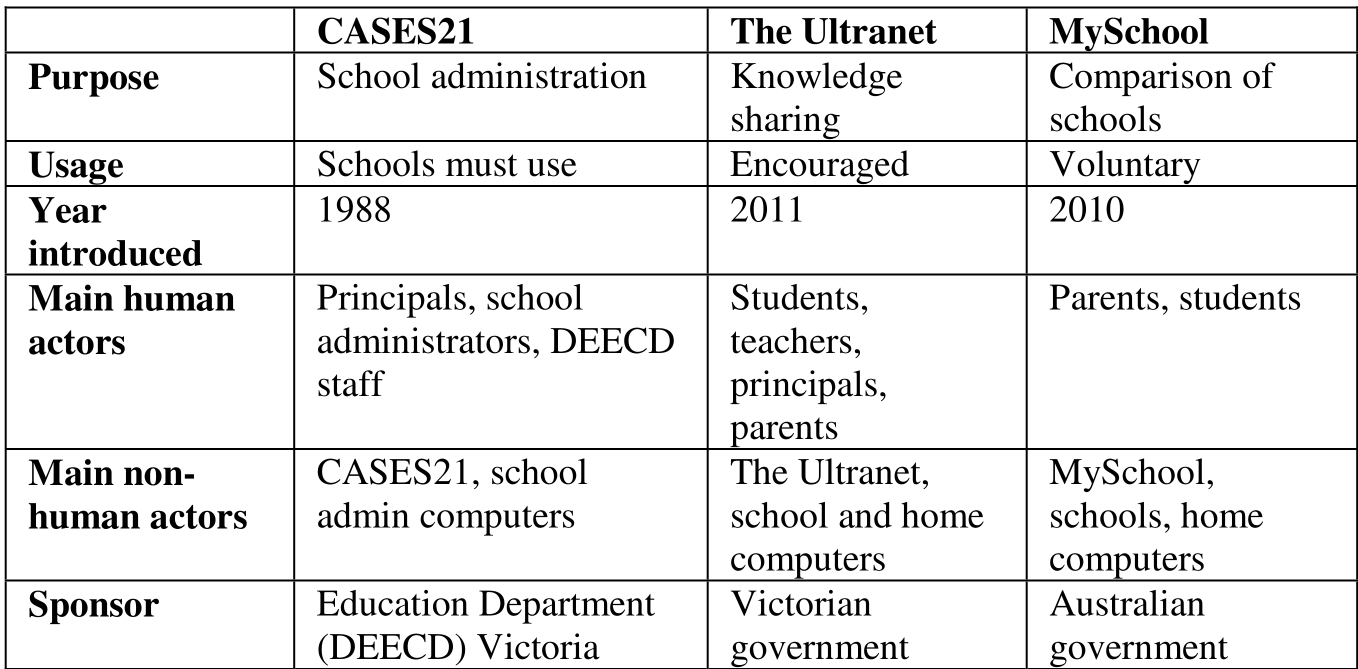
A Tale of Three Networks
1. CASES21: The Administrative Backbone
- Purpose: Accountability and reporting.
- The Insight: Despite being a "top-down" mandated system from the late 80s, it persisted because it "co-operated" with schools. It integrated modules that helped local staff manage medical records and timetables, making itself indispensable to the school's daily survival.
2. MySchool: The Disruptive Outsider
- Purpose: Public transparency (League Tables).
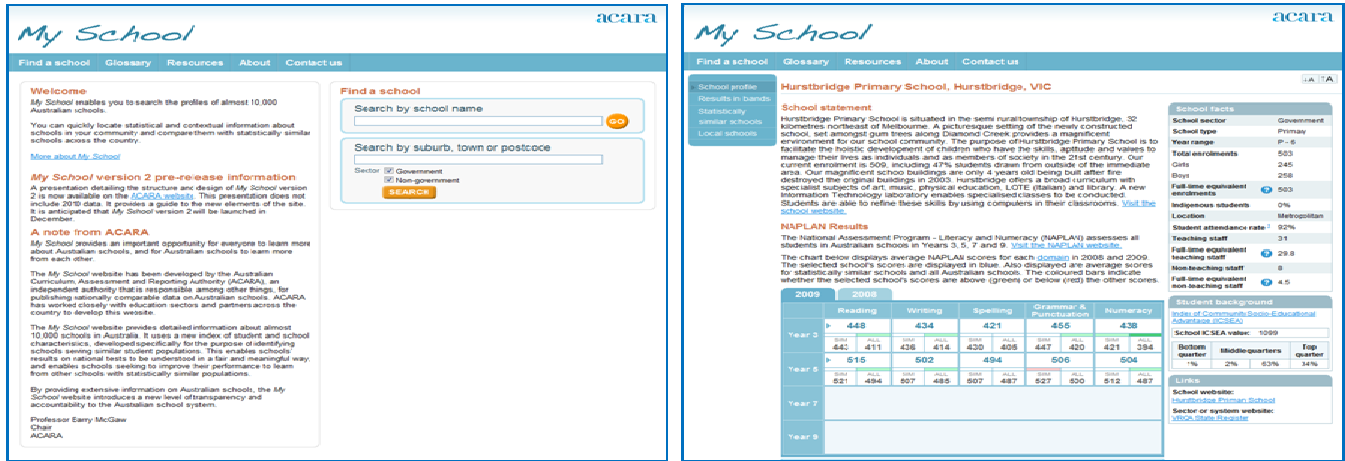
- The Insight: MySchool performed a "strategic bypass." By putting student performance data (NAPLAN) on a public website, it ignored teachers' desire for privacy and talked directly to parents. This forced teachers to react (by "teaching to the test") even if they hated the system.
3. The Ultranet: The Failed Community Dream
- Purpose: A student-centered social learning environment.
- The Insight: On paper, the Ultranet was the most "social." It featured wikis, blogs, and portals. However, in the ANT analysis, it represented a threat to teachers—it exposed them to constant parental scrutiny and increased their workload without providing a "value-add" for their classroom practice.
Critical Findings: The Power of Interaction
The paper highlights a sharp disconnect in how different actors view each other:
- Teachers vs. Parents: Teachers often see themselves as the "domain experts" and parents as "support staff" (canteen workers/reading help).
- Technology as a Barrier: While the Ultranet sought to make boundaries "porous," teachers perceived it as an "extra workload burden."
- The "Brick Wall": Parents reported that even with digital access, they hit "brick walls" when trying to influence real school decisions.
Conclusion & Future Outlook
The takeaway is clear: Value is in the eye of the actor.
- Accountability systems (CASES21) survive through mandatory use and local utility.
- Information systems (MySchool) survive by creating public pressure.
- Social systems (Ultranet) often fail because they demand high "collaboration energy" from actors (teachers) who feel their professional authority is being undermined rather than supported.
For future EdTech developers, this paper serves as a warning: A feature-rich "social" platform will fail if it does not negotiate the complex "mechanics of power" within the existing educational network.
Keywords: Actor-Network Theory, EdTech Adoption, Social Technologies, Educational Policy.