
Navigating Trust: A Contextual Social Trust Path Recommendation System
A Social Trust Path Recommendation System in Contextual Online Social Networks
This paper presents a Social Trust Path Recommendation System designed for Contextual Online Social Networks (COSNs). It integrates three path selection strategies—Shortest Path, Maximum Trust (Max T), and an Optimal Social Trust Path based on Monte Carlo simulations—to help users evaluate the trustworthiness of unknown participants.
TL;DR
Trust is the "currency" of social interaction. This paper introduces a sophisticated recommendation system for Contextual Online Social Networks (COSNs) that moves beyond simple connectivity. By utilizing Monte Carlo methods and integrating three key dimensions—Social Trust (T), Intimacy (r), and Role Impact (Rou)—the system allows users to find the most reliable "bridge" between themselves and a stranger in a complex network.
Problem & Motivation: Why is Trust Hard to Solve?
In a world of billions of connected nodes, finding a path from User A to User B is easy (the "Six Degrees of Separation" theory). However, finding a trustworthy path is much harder.
Previous works often treated social networks as simple graphs where every link is equal. In reality, a link to a close friend is different from a link to a casual acquaintance. Furthermore, selecting the "best" path while considering multiple constraints (like minimum trust levels or specific expert roles) is an NP-Complete problem. Most current systems fail to provide users with the flexibility to define what "trust" means in their specific context—whether they are looking for a loyal customer or a reliable new employee.
Methodology: The Three Dimensions of Trust
The core innovation of this system lies in its multi-contextual approach. Instead of calculating a single score, it evaluates three distinct social attributes:
- Social Trust (): The direct reliability of a participant.
- Social Intimacy (): The strength and frequency of interactions between two parties.
- Role Impact Factor (): The authority or expertise of a participant in a specific domain.
Path Selection Strategies
The system offers three distinct selection modes:
- Shortest Path: Minimizes the number of hops (classical BFS/Dijkstra approach).
- Max T Path: Propagates trust values along the path to find the one with the highest cumulative reliability.
- Optimal Social Trust Path: The state-of-the-art method. It uses Monte Carlo simulations to handle stochastic optimization, ensuring that the selected path satisfies user-defined end-to-end constraints (e.g., "I need a path where everyone is at least an expert () and the average trust is high").
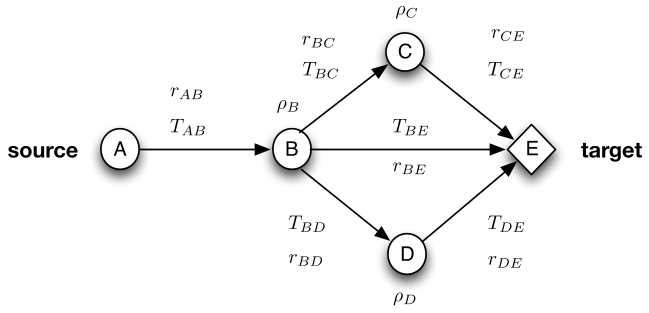 Figure 1: The underlying system architecture based on Struts and Hibernate frameworks.
Experiments & Results: Visualizing Trust
The researchers implemented the system with a web-based interface (Mxgraph) to visualize how these paths vary depending on user constraints.
In a demonstration between a source (ID=18) and a target (ID=41), the system successfully visualized:
- Links labeled with and values.
- Nodes labeled with values (Role Impact).
- The ability to filter nodes based on indegree and outdegree, effectively pruning "noisy" or unimportant nodes from the trust evaluation.
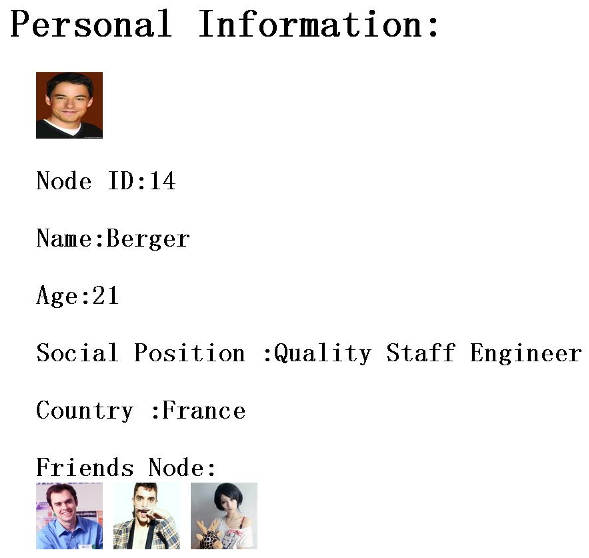 Figure 2: The Input Area where users define Monte Carlo simulation parameters and context constraints.
The results confirm that adding context constraints significantly changes the recommended path compared to a simple shortest-path algorithm. For example, the shortest path might contain a "weak link" (low trust), whereas the Optimal Social Trust Path might be longer but significantly safer.
Critical Analysis & Conclusion
Takeaway
This work provides a bridge between theoretical trust models and practical recommendation tools. By allowing users to tune parameters like , , and , the system acknowledges that trust is subjective and domain-dependent.
Limitations
- Scalability: While Monte Carlo methods are effective, the paper acknowledges the NP-Complete nature of the problem. As networks grow to billions of nodes, the computational overhead may require more aggressive heuristic pruning.
- Data Cold Start: The system relies on , , and values calculated via data mining. For new social networks or sparse graphs, these values might be unavailable or inaccurate.
Future Outlook
The integration of such trust paths into CRM (Customer Relationship Management) and Electronic Employment systems is a logical next step. Moving forward, we expect to see these trust models integrated with Large Language Models (LLMs) to provide natural language explanations for why a certain contact is being recommended as "trustworthy."