
ResNet.TV: Beyond the EPG—How Social Awareness Revolutionizes Content Navigation
Social TV : toward content navigation using social awareness
ResNet.TV is a social IPTV system developed at Lancaster University that leverages social networks (e.g., Facebook) and context-awareness to facilitate content navigation. It introduces a mechanism where real-time viewing habits of a user's social graph influence the prioritization and recommendation of live TV and on-demand content.
TL;DR
ResNet.TV is a pioneering IPTV research project from Lancaster University that addresses "information overload" by injecting social intelligence into the TV-watching experience. By integrating a user's Facebook social graph directly into the content navigation interface, the system allows viewers to see what their friends are watching in real-time. The results show that social awareness not only increases the variety of channels users explore but also makes their navigation more goal-oriented and efficient.
The "Lean Back" Burden: Why Search Ruins TV
Watching television is traditionally a "lean back" experience—passive, relaxing, and recreational. However, the transition to IPTV has brought a "lean forward" burden. With hundreds of channels and vast Video-on-Demand (VoD) libraries, the traditional grid-based Electronic Program Guide (EPG) has become a bottleneck. Users spend more time "channel hopping" or scrolling through meta-information than actually watching content.
The authors argue that the missing ingredient is Social Awareness. In the physical world, we discuss shows at work or watch with family. ResNet.TV attempts to bring this "social closeness" into the digital interface to guide navigation.
Methodology: The Social TV Architecture
The researchers built a web-based IPTV system (ResNet.TV) that sits atop a robust campus hardware infrastructure.
1. The Core Infrastructure
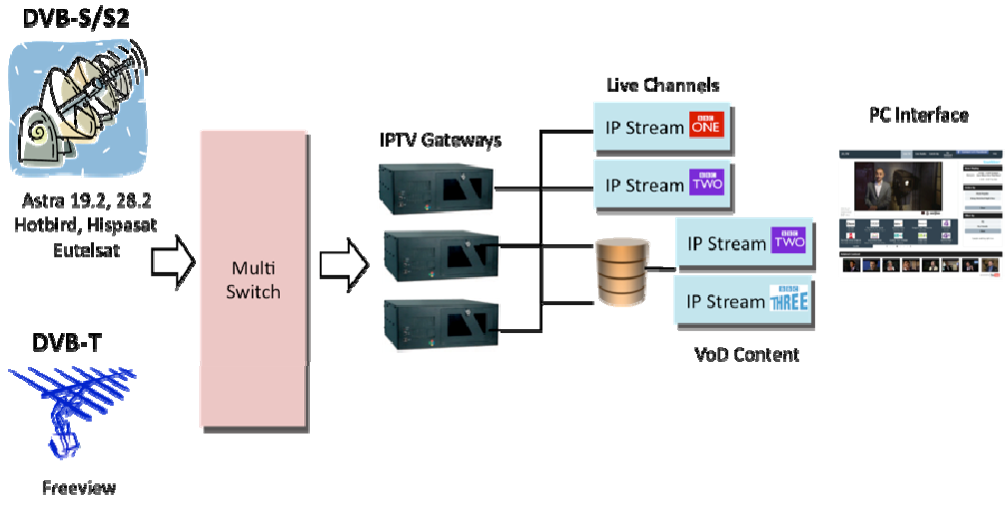
The system uses a Snap TV IPTV Headend with DVB-IPTV Gateways to ingest live signals and redistribute them via IP Multicast across the university network.
2. Social Navigation Mechanisms
The innovation lies in the Content Filter and Social Widgets:
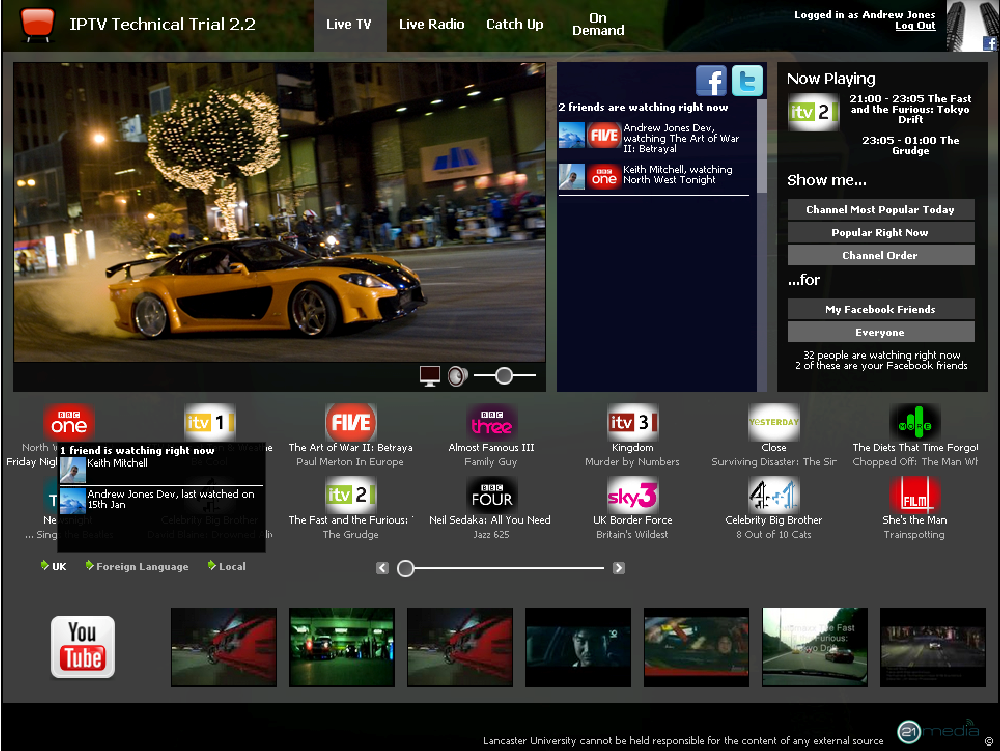
- The Filter: Unlike static lists, theResNet.TV "Content Carousel" can be reordered based on popularity (clicks + duration + ratings).
- Social Graph Integration: By connecting to Facebook, the interface displays pop-up dialogs showing which friends are currently watching a specific channel.
- Context Aggregator: The system tracks "Who, When, Where, What, and How" to build implicit user profiles without requiring manual input.
Insights from the Field: Do Friends Influence Choices?
The study compared a traditional "Technical Trial" (non-social) against the new ResNet.TV (social) implementation. Several key metrics emerged:
- Channel Exploration: In the non-social system, frequent users actually watched fewer channels over time (sticking to habits). In the social system, frequent users watched more unique channels, suggesting that social cues encouraged them to explore content they wouldn't normally find.
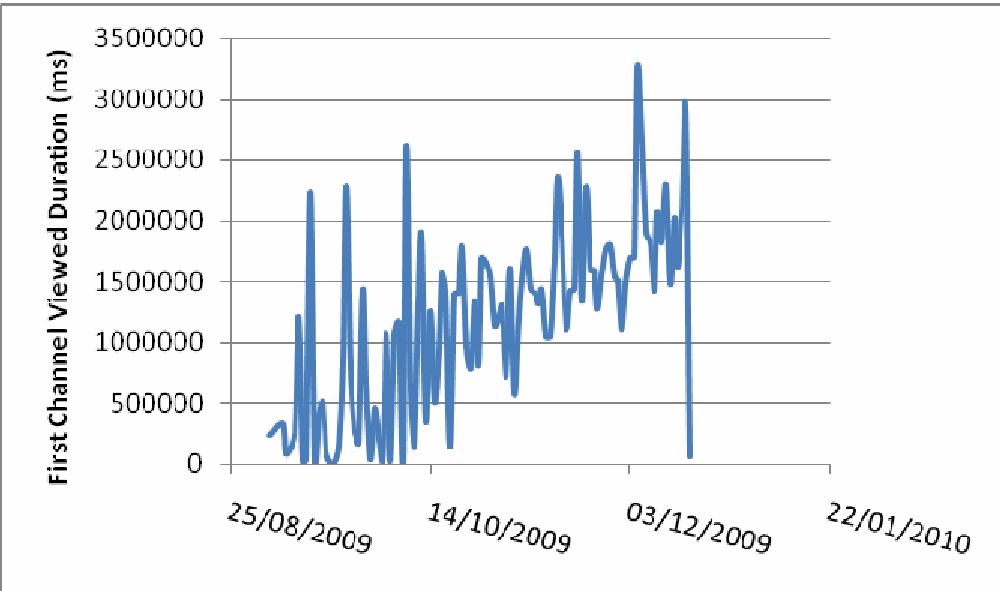
- Efficiency: The average viewing time of the first channel selected increased. This suggests users weren't just "surfing" aimlessly; they were using social recommendations to find exactly what they wanted immediately.
Deep Insight: From Navigation to Network Optimization
As a Senior Academic Editor, I find the most profound takeaway to be the potential for Network Awareness. While this paper focuses on the UI/UX of social navigation, the authors hint at a deeper symbiotic relationship: if we know "socially close" users are watching the same stream, we can optimize the underlying network protocols (e.g., switching from Unicast to Multicast or P2P) to save bandwidth.
Conclusion & Future Work
ResNet.TV successfully demonstrates that social awareness is a viable cure for the "paradox of choice" in digital media. While the current study is limited by the campus environment and a 19% Facebook login rate, the trend is clear: Navigation is a social act.
Future iterations aim to include contextual keyword searches and deeper "collaborative filtering" to refine recommendations even further, potentially moving toward a system that predicts what you want to watch before you even open the carousel.