
Social TV: Decoding the Synchronicity of Content and Conversation
Abstract-We have constructed a Social TV system called "teleda" on the cloud, and conducted a trial with user participation. Teleda combines video-on-demand (VOD) television programs with a social networking service (SNS) that enables users to share program reviews and comments. This trial revealed that user viewing behaviors when combining VOD and SNS. Based on detailed analysis of trial results, we here report on how viewing behavior in Social TV differs from conventional broadcast viewing particularly in regards to biased viewing among program genres, word-of-mouth effect, and long-tail characteristics
This paper presents "teleda," a cloud-based Social TV system developed by NHK that integrates Video-on-Demand (VOD) with Social Networking Services (SNS). Through a large-scale user trial involving over 1,000 subjects, the study identifies critical behavior patterns in Social TV, specifically the word-of-mouth (WoM) effect and long-tail distribution of content consumption.
TL;DR
Researchers at NHK (Japan Broadcasting Corporation) developed "teleda," a cloud-integrated platform that merges VOD with SNS. Their analysis reveals that social interaction acts as a fundamental driver for program discovery, creating a "word-of-mouth" cycle that sustains viewing longevity, particularly for niche "long-tail" content.
Contextual Positioning
In the landscape of media evolution, television has transitioned from a social "living room" hub to an isolated mobile experience. NHK's "teleda" serves as a bridge, re-injecting sociability into the digital age. This work is a pivotal empirical study that quantifies exactly how social layers influence VOD consumption patterns.
The Problem: The Isolation of On-Demand Content
While VOD offers convenience, it often destroys the collective timing of television. Without a shared viewing schedule, the "social glue"—the ability to discuss a show with peers—evaporates. Traditional VOD interfaces rely heavily on search or algorithmic recommendations, often ignoring the organic, human-centric discovery known as Word-of-Mouth (WoM).
Methodology: The "teleda" Cloud Architecture
The researchers constructed a cloud-native system using REST APIs to separate the client UI (web, STB, smartphones) from the back-end logic (video streaming, logging, and SNS).
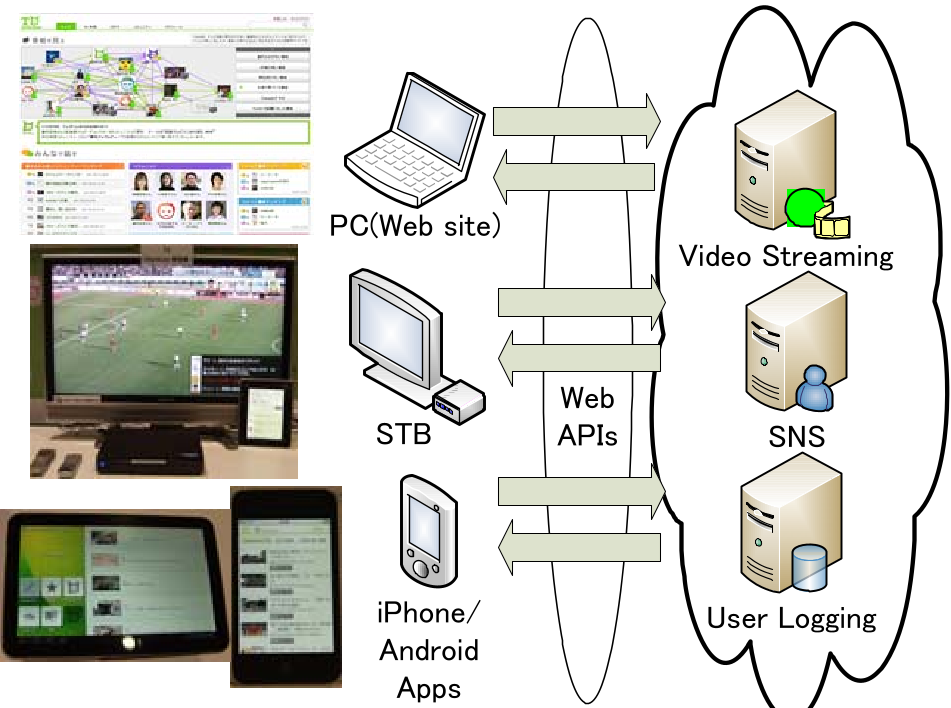
The core of the methodology lies in the User Logging mechanism, which tracks not just what was watched, but the path taken to find that content—whether it was through a manual search or a social prompt (e.g., a friend's review).
Key Insights from Experimental Data
1. Genre-Specific Behavioral Dynamics
The study found a stark contrast in how viewers consume different genres.
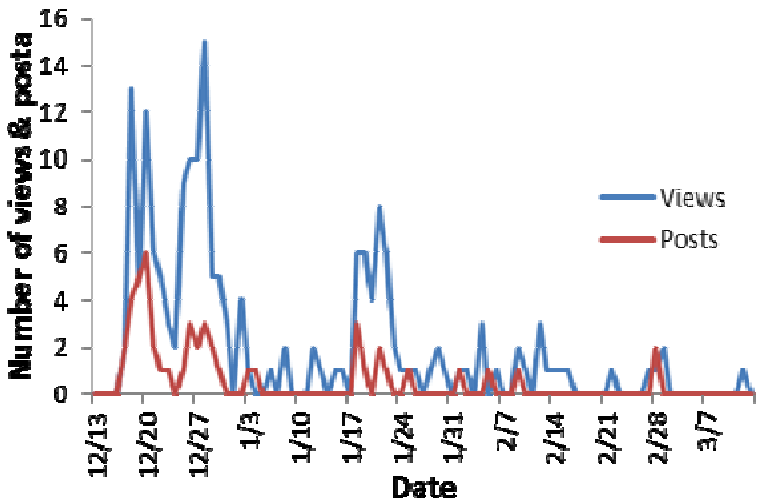
- Dramas: High initial peak in views and posts, followed by a sharp decline.
- Documentaries: Lower initial peaks, but exhibited a "recursive" pattern where comments triggered new viewing waves, extending the program's lifespan.
2. The Power of the Social Path
The most striking finding is the dominance of "social paths" in high-ranking content. For the top 100 programs, more than 50% of the audience arrived via social recommendations rather than search engines. This validates the "social system" as the primary discovery mechanism for premium content.
3. Long-Tail Characteristics
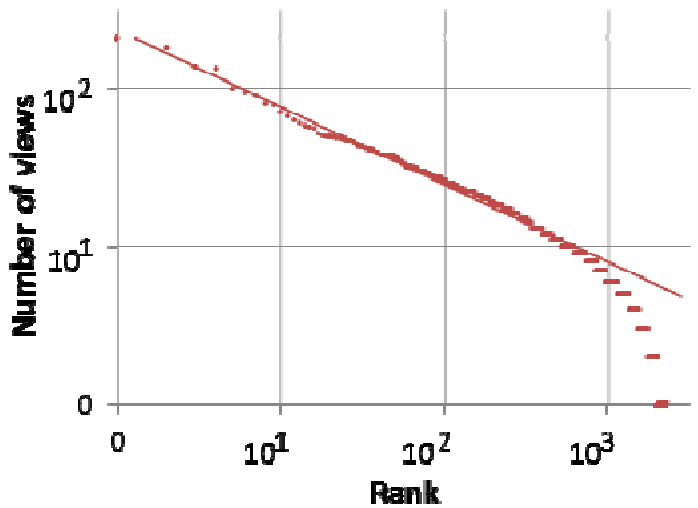
By plotting views on a log-log scale, the researchers confirmed that Social TV viewing follows a Power Law. The SNS functions allow niche programs to maintain a "long tail" of visibility that they would otherwise lose in a purely broadcast or search-based environment.
Deep Insight & Conclusion
The NHK study demonstrates that Social TV is the antidote to choice paralysis in the VOD era. By integrating SNS, platforms can leverage "word-of-mouth" to not only boost popular content but also breathe life into niche genres like documentaries and educational programs through sustained discussion cycles.
Limitations: The study primarily focuses on asynchronous viewing (VOD). The authors acknowledge that the next frontier is "real-time social functions" for live broadcasts, where the synchronicity of the "social TV" experience is at its highest intensity.
Takeaway for the Industry: Future streaming platforms must prioritize social discovery over simple metadata search. The "Social Path" is the most effective way to navigate the ever-expanding long-tail of digital content.