
Acropolis: Escaping Plato’s Cave through Collaborative News Curation
Exploring ocial alidation on ollaborative uration latform
The paper introduces Acropolis, a social computing platform for collaborative news curation designed to engage citizens with complex stories. Through a 14-day experiment during the 2018 Brazilian Presidential Election, the authors analyze the impact of "social validation" and "cognitive mediation" on user interaction and narrative building.
TL;DR
In an era of digital fragmentation, the Acropolis project investigates whether a collaborative curation platform can move users beyond "echo chambers" towards critical thinking. By analyzing a 14-day experiment during the 2018 Brazilian elections, the researchers found that while technology provides the tools for diverse knowledge construction, users frequently default to "social validation"—seeking comfort and agreement rather than the intellectual conflict necessary for true learning.
Background: The Modern Allegory of the Cave
The authors invoke Plato’s Allegory of the Cave to describe our current information crisis. Despite having unrestricted access to global knowledge, many citizens remain "chained" by superficial consumption and algorithmic personalization. The core issue is Social Validation: the psychological boost in self-esteem and happiness we feel when our views are confirmed, which leads us to avoid "Social Invalidation"—the discomfort of opposing views.
The Pain Points: Why We Disengage
Journalism typically follows an "inverted pyramid" structure, focusing on the immediate "what" rather than the historical "why." This creates two major hurdles:
- Fragmentation: Continuous streams of news make it difficult for citizens, particularly younger ones, to track complex, long-term stories.
- Cognitive Blunting: A trend towards reading only headlines, which prevents the deep elaboration required for critical argument and long-term learning.
Methodology: The Acropolis Curatorial Model
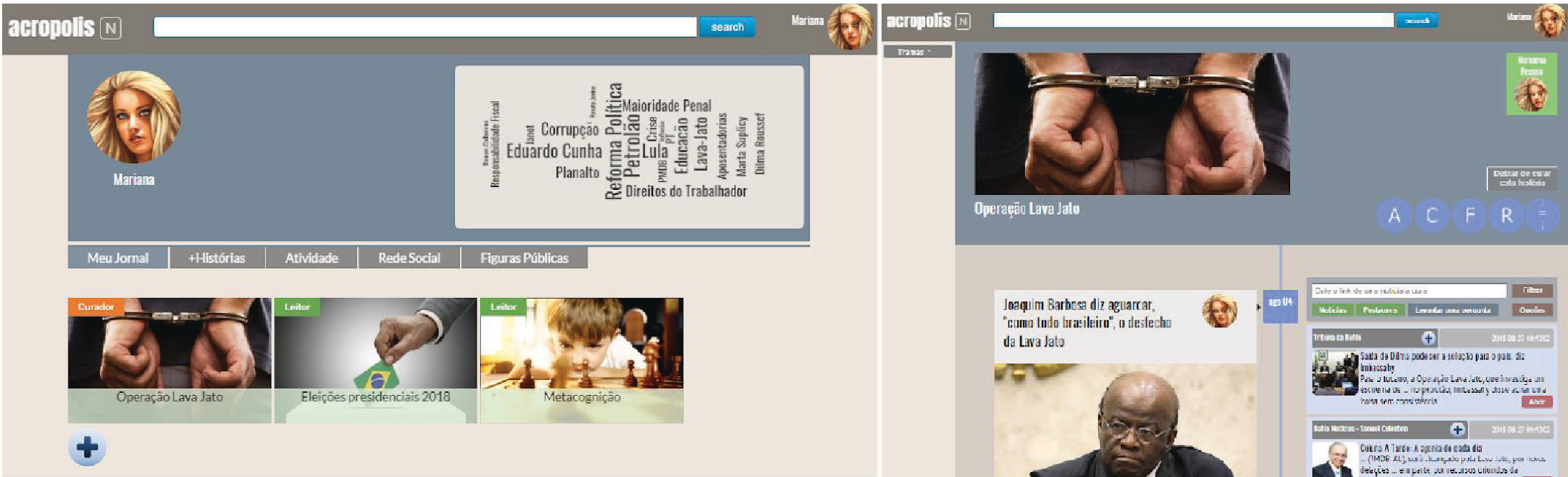
Acropolis is not just a news aggregator; it is a sociotechnical platform designed for narration. It utilizes an Action-Design Research (ADR) approach, treating the software as a living artifact that evolves through intervention and evaluation.
Key Features:
- Remixable Narratives: Users can "recurate" content from others, giving credit while building their own personal perspectives.
- Multi-Dimensional Timelines: Information is organized both horizontally and vertically to provide context over time.
- Metacognitive Intervention: During the experiment, users were taught about how they learn, aiming to shift them from passive "read-only" modes to active knowledge curators.
Experimental Analysis: Reality vs. Potential
The researchers conducted a 49-student pilot during a highly polarized presidential election. The results highlighted a stark contrast between what the platform could do and how users actually behaved.
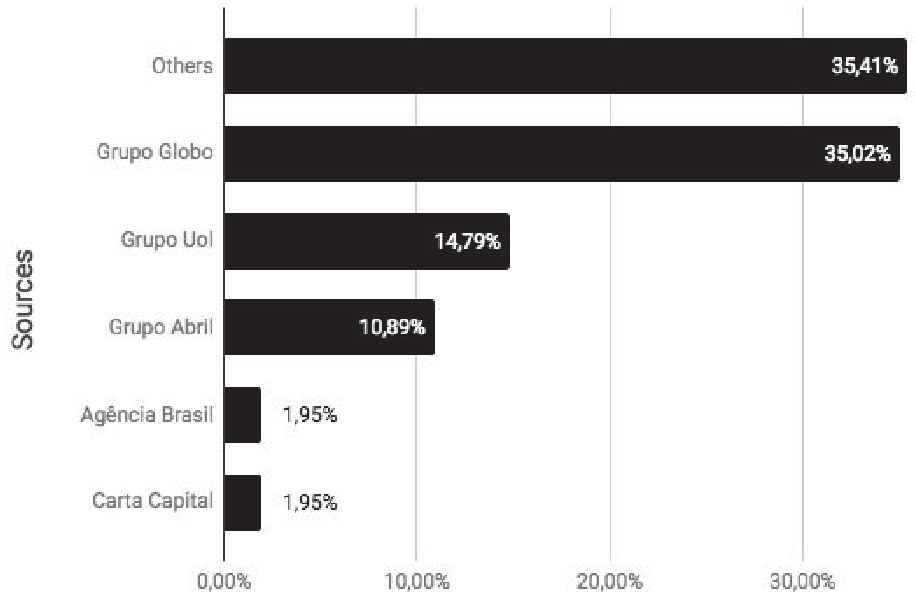
- The Source Bias: Even with a tool designed for diversity, over 35% of curated content came from a single major news agency. Users defaulted to "social comfort" by sourcing from mainstream entities that didn't challenge common sense.
- The Bubble Effect: Interaction was highly restricted. Most comments (only 38 total) were used for agreement rather than debate. The "upvote/downvote" features—standard in most social apps—were barely touched, suggesting a fear of social confrontation.
- The Headline Trap: A significant number of participants created stories with titles only, neglecting the content and images entirely, leading to "superficial interaction."
Deep Insight: Beyond the "Like" Button
The most profound takeaway is that human-computer interaction (HCI) design must change. To foster critical thinking, platforms should not just be "cozy" or "convenient." Instead, they need:
- Virtual Cognitive Mediation: Active prompts that guide users toward deeper analysis.
- Diversity of Exposure: Design that rewards the search for diverse solutions rather than just confirming existing biases.
- Managed Conflict: Alternating between "sensations of comfort" and "conflicting ideas" to prevent cognitive stagnation.
Conclusion
Acropolis demonstrates that collaborative curation is a powerful lens for observing social behavior, but technology alone is not a "magic bullet" for the post-truth era. To truly help users "leave the cave," we must design environments that value the internal transformation of knowledge over the instant gratification of social validation. Future work will focus on integrating automated cognitive mediators to push users toward more diverse and critical narratives.