
The Art of Stealth: Modeling Social Worm Propagation for APTs
Modeling social worm propagation for advanced persistent threats
This paper introduces the first formal propagation model for social worms tailored to Advanced Persistent Threats (APT), utilizing a novel "proactive give-up factor." The method enables stealthy, targeted, and long-term intrusion across social networks, achieving significantly lower infection footprints compared to traditional mass-propagation models.
TL;DR
Researchers have moved beyond "blind" mass-infection models to create the first formal framework for APT Social Worms. By introducing a proactive give-up factor, the model prioritizes reachability to a specific target while actively suppressing unnecessary infections, effectively trading speed for ultimate stealth and persistence.
Motivation: Why "Fast" is the Enemy of "Persistent"
In common cybersecurity lore, a worm is successful if it spreads like wildfire. However, for an Advanced Persistent Threat (APT), a wildfire is a failure. APTs aim for high-value targets (e.g., power grid administrators) and must remain undetected for months or years.
The core conflict in modeling these threats is that:
- Stealthiness requires a minimal infected footprint.
- Long-term duration usually provides more "parallel" windows for accidental infection, which increases the footprint.
Existing models (SI, SIR) cannot balance this. The authors argue that APTs don't just "infect"; they strategically choose when to give up on a potential victim to stay under the radar.
Methodology: The Proactive Give-up Factor
The heart of the paper is the proactive give-up factor (). This isn't just a random drop-off; it is a calculated decision-making tool based on the worm's "Global Reconnaissance."
1. Identifying "Targeted Paths"
The worm first identifies all feasible paths between its current source and the target.
- If a node is NOT on a targeted path: The factor (the worm active stops infection).
- If a node IS on a targeted path: The worm uses a deterministic delay () to stall the infection, slowing down the "clock" without losing the path.
2. Architecture of a Calculated Delay
The authors transform the stochastic probability into a deterministic delay. This ensures that the connectivity () to the target is never compromised, while the propagation speed is throttled.
 In Figure 1, notice how the APT version (b) takes 6 epochs vs 4 for the blind version (a), but leaves peripheral nodes 4, 8, and 9 uninfected, significantly reducing the detection surface.
Experiments: Quantitative Stealth
The researchers tested their model against "Blind Social Worms" across four real-world social graphs, including Facebook and Enron email networks.
Key Findings:
- Footprint Reduction: In the Facebook dataset, the APT model reached the target while infecting 85% fewer nodes than the blind counterpart.
- Temporal Persistence: The propagation duration () increased by up to 245%, successfully simulating the "persistent" nature of these threats.
- Parameter Control: By tuning the and parameters, an attacker can precisely control the trade-off between how long they stay in the network and how many nodes they risk infecting.
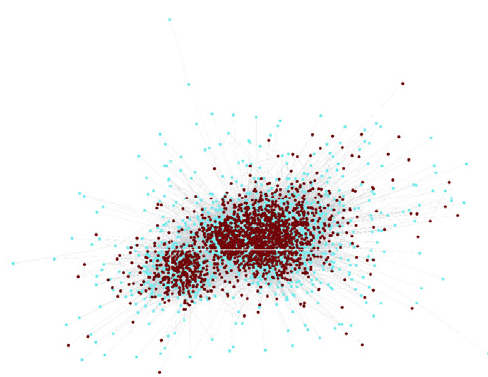 Figure 4 visually demonstrates the stark difference: the red dots (infections) are a dense cloud for blind worms, but a surgical, thin line for the APT model.
Critical Insight: The "Global Knowledge" Assumption
One major detail is the Threat Model. The authors assume the APT champion has "complete knowledge" of the social network graph. While this seems high, in the era of massive data breaches and social engineering, a sophisticated actor having a curated map of an organization's internal social trust is a realistic, albeit terrifying, baseline.
Conclusion & Future Outlook
This work shifts the paradigm of worm modeling from Epidemiology (how many are sick?) to Topology (how do I reach point B?).
Limitations: The current model uses a static "SI" (Susceptible-Infected) approach. Real APTs might use "SIR" logic, actively cleaning up their traces (Recovery) once they move to a deeper node.
For defenders, the takeaway is clear: Anomaly detection must move beyond volume. If a worm is designed to look like a single, slow-moving connection that purposefully "gives up" on most users, our current epidemic-style traps won't catch it.