
Socialbots: The Sophisticated Evolution of Digital Deception in Social Networks
11133_Socialbots Impacts, Threat-Dimensions, and Defense Challenges.
This paper provides a comprehensive analysis of "Socialbots"—automated OSN profiles that mimic human behavior to conduct deceptive activities. It establishes a taxonomy for detection methods, evaluates threat dimensions like political astroturfing and fake news, and identifies critical defense challenges across platform, user, and detection layers.
Executive Summary
TL;DR: Socialbots are no longer just simple automated scripts; they are sophisticated entities that mimic human behavior to manipulate public opinion, spread fake news, and infiltrate high-profile networks. This paper explores the "Socialbot" ecosystem, comparing them to traditional Web bots, analyzing their infiltration potential through real-world experiments on Twitter, and detailing the multi-layered challenges in defending against them.
Positioning: This work serves as a critical survey and empirical study that bridges the gap between early bot detection theories and the modern era of weaponized information (including COVID-19 infodemics and political interference).
The Core Problem: Why Traditional Defenses Fail
Traditional botnets (Web Botnets) focus on host hijacking and DDoS attacks via software vulnerabilities. However, Socialbots exploit the "Human Element."
The authors argue that the difficulty in detection stems from the Reputation Building Process. In the early stages of injection, a socialbot behaves like a normal user—liking posts, following others, and building a "clean" history. Once trust is established, it switches to its malicious intent (astroturfing, phishing, or rumor spreading).
Methodology: The Anatomy of an Infiltration
To understand how these bots operate, the authors executed a socialbot injection experiment.
1. Architectural Difference
Socialbots utilize the OSN itself as a Command and Control (C&C) channel, unlike Web bots which use protocols like IRC or P2P.
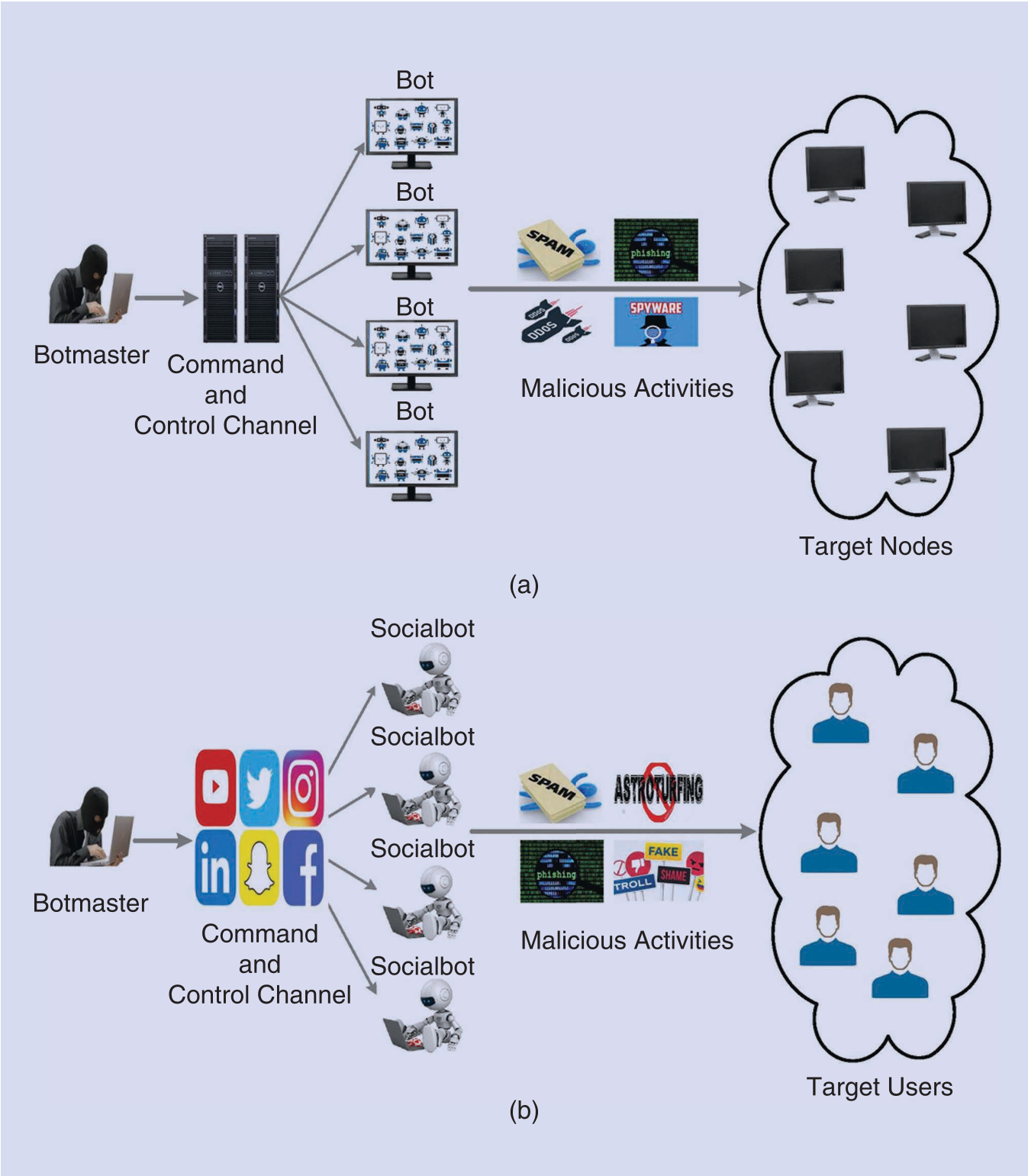 Figure: The structural difference between a Web Botnet and a Social Botnet.
2. Experimental Insights
The study deployed 98 bots across different geographies. The results were startling:
- Infiltration Rate: Each bot successfully trapped an average of 29 users.
- The "Verified" Fallacy: High-influence "Verified" users (celebrities/prominent actors) were among those who followed the bots, significantly amplifying the bots' perceived credibility.
- Geographic Sensitivity: Infiltration success varied by country, suggesting that cultural tendencies toward "friend request acceptance" play a role.
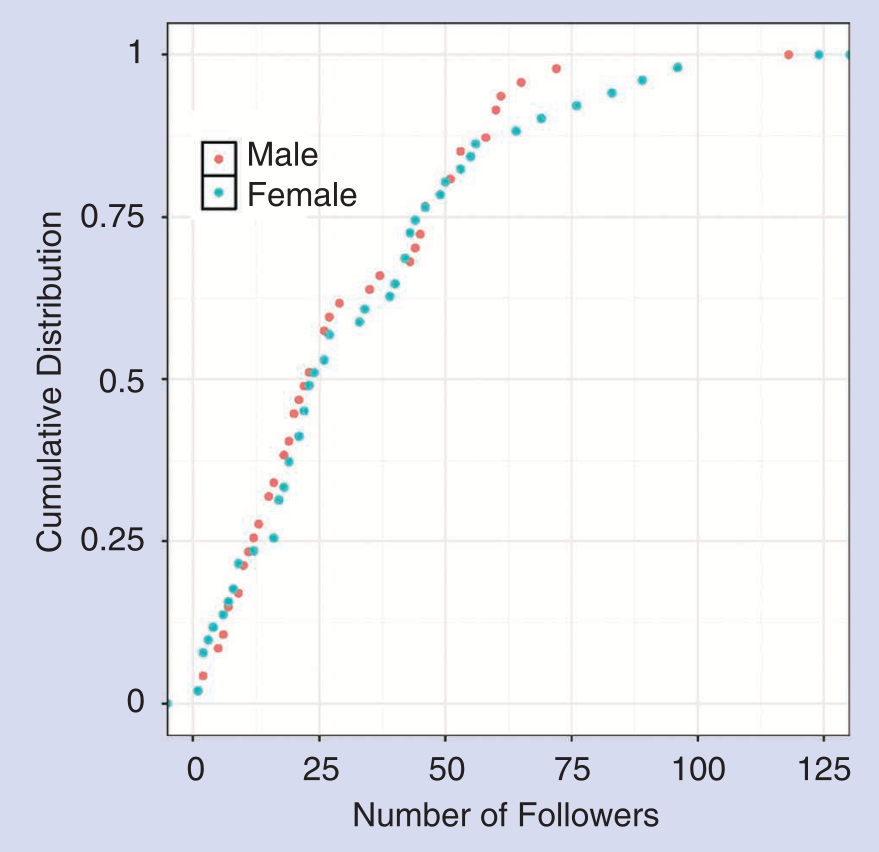 Figure: Infiltration success (average followers) across different target countries.
Threat Dimensions: The "Swiss Army Knife" of Adversaries
The paper categorizes socialbot threats into four main silos:
- Political Tools: Used for "Astroturfing" (creating fake grassroots support) and distorting electoral campaigns.
- Fake News Distributors: Scaling the "infodemic," especially highlighted during the COVID-19 pandemic and the 2016 US Elections.
- Sophisticated Spammers: Moving beyond simple links to spear-phishing and identity theft.
- Influence Manipulators: Artificially inflating "Klout" or influence scores to become authoritative voices in niche communities.
Defense Challenges: A Triple Threat
The authors identify three levels of defense bottlenecks:
- Platform Challenges: OSNs are in a "user-base arms race." Implementing strict identity binding (like SSN verification) risks losing users and raising privacy concerns, while open APIs—necessary for developers—provide the perfect doorway for botmasters.
- User Challenges: "Follower-hungry" users accept requests from anyone, facilitating bot reputation. Social engineering tactics like Triad Closure (friending a friend of a friend) make bots appear legitimate.
- Detection Challenges: Machine learning models rely on "handcrafted features." As soon as researchers define a feature (e.g., tweet frequency), botmasters adjust their algorithms to stay under the radar, leading to the perpetual "cat and mouse game."
Critical Analysis & Conclusion
Takeaway
The paper effectively demonstrates that socialbots are not a static threat. They are dynamic, context-aware, and increasingly use advanced AI to evade detection. The most effective current defense lies in Behavioral Synchronization—detecting groups of accounts that act in a coordinated, non-human manner rather than looking at individual account traits.
Limitations & Future Work
While the paper covers the landscape up to 2020/COVID-19, the rise of Large Language Models (LLMs) since then has likely made the "content generation" fear (which the authors' bots avoided) obsolete. Modern bots can now generate high-quality, unique text that bypasses traditional NLP-based detection. Future research must focus on the "Intent" and "Temporal Coordination" of bot swarms rather than just pattern matching.
Final Thought: As digital and physical identities continue to merge, the battle against socialbots is no longer just a technical challenge—it is a fundamental necessity for protecting the integrity of public discourse.