
SocialBrowsing: Breaking Social Data Out of the Silo
SocialBrowsing: Integrating Social Networks and Web Browsing
SocialBrowsing is a Firefox extension that integrates social networking data directly into the web browsing experience by overlaying social context onto arbitrary web pages. It utilizes external services like FilmTrust and FOAF (Friend Of A Friend) networks to provide real-time recommendations and social path visualizations through tooltips and term highlighting.
TL;DR
SocialBrowsing is a pioneering Firefox extension that injects your social network's "intelligence"—such as movie recommendations from friends or your relationship path to a blog author—directly into any website you visit. Rather than social networks being isolated destinations, this work positions them as a context layer for the entire web, using the FilmTrust and FOAF networks as primary data sources.
The Problem: The "Social Silo" Effect
By 2007, social networking had already become a global phenomenon with nearly half a billion accounts. However, a significant gap existed: the hours users spent building profiles, rating content, and connecting with friends offered zero benefit once they left the specific social site.
The authors identified that social capital is non-portable. If you trust a friend’s taste in movies on a niche site, that information isn't available to you when you are browsing a random movie blog or a news site. The challenge was to bridge the gap between "social data" and "general browsing" without requiring every website on the internet to update its code.
Methodology: Social Intelligence as a Service
The researchers developed a lightweight architecture that balances client-side parsing with server-side heavy lifting.
1. Architecture & Parsing
Since social graphs (especially FOAF networks) are massive and trust algorithms are computationally expensive, the extension acts as a "thin client." It scans the Document Object Model (DOM) of a webpage for specific triggers:
- Links: Using Regular Expressions to find IMDb links (to trigger movie recommendations).
- Emails: Using
mailto:tags to identify people (to trigger social path searches).
2. The Backend Modules
The extension communicates with specialized modules:
- FilmTrust Module: Fetches personalized movie ratings based on a "Web of Trust."
- FOAF Spider Module: Searches a crawled network of over 15 million users to find the shortest social distance between the user and the person mentioned on the page.
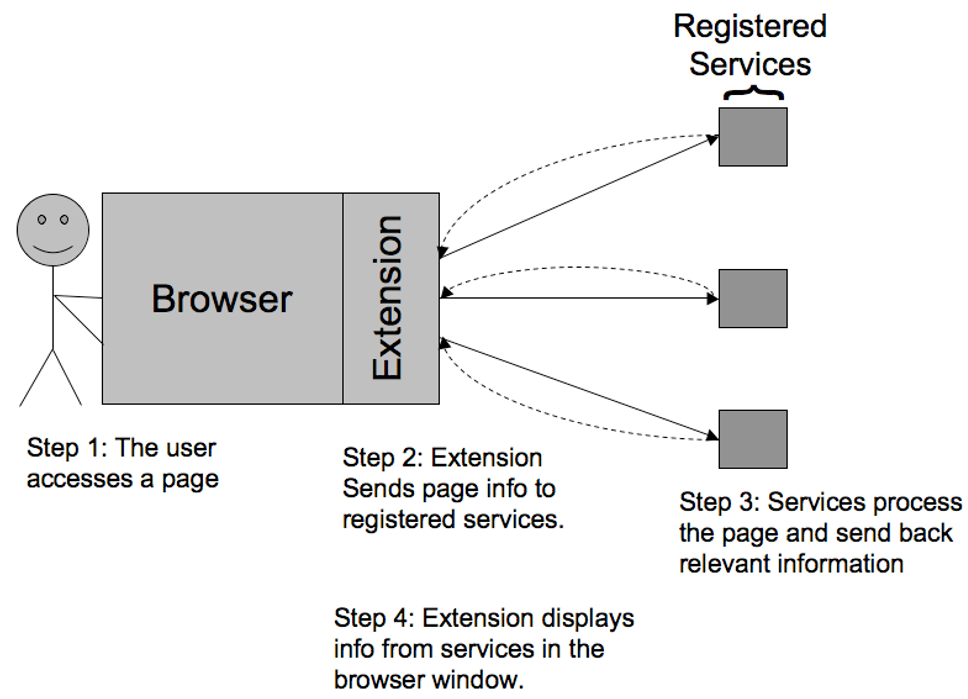 Figure 1: The system architecture showing the interaction between the browser extension and centralized social service modules.
User Experience: Social Context via Tooltips
The most vital contribution of SocialBrowsing is its obtrusive-yet-integrated UI. Once the backend returns data, the extension highlights the relevant terms on the page. When a user hovers over a highlighted movie title or author names, a tooltip appears with the social data.
For example, a user browsing a blog might see a movie title highlighted. The tooltip doesn't just show a generic rating; it shows a recommended rating calculated specifically for that user based on their social circle's preferences on FilmTrust.
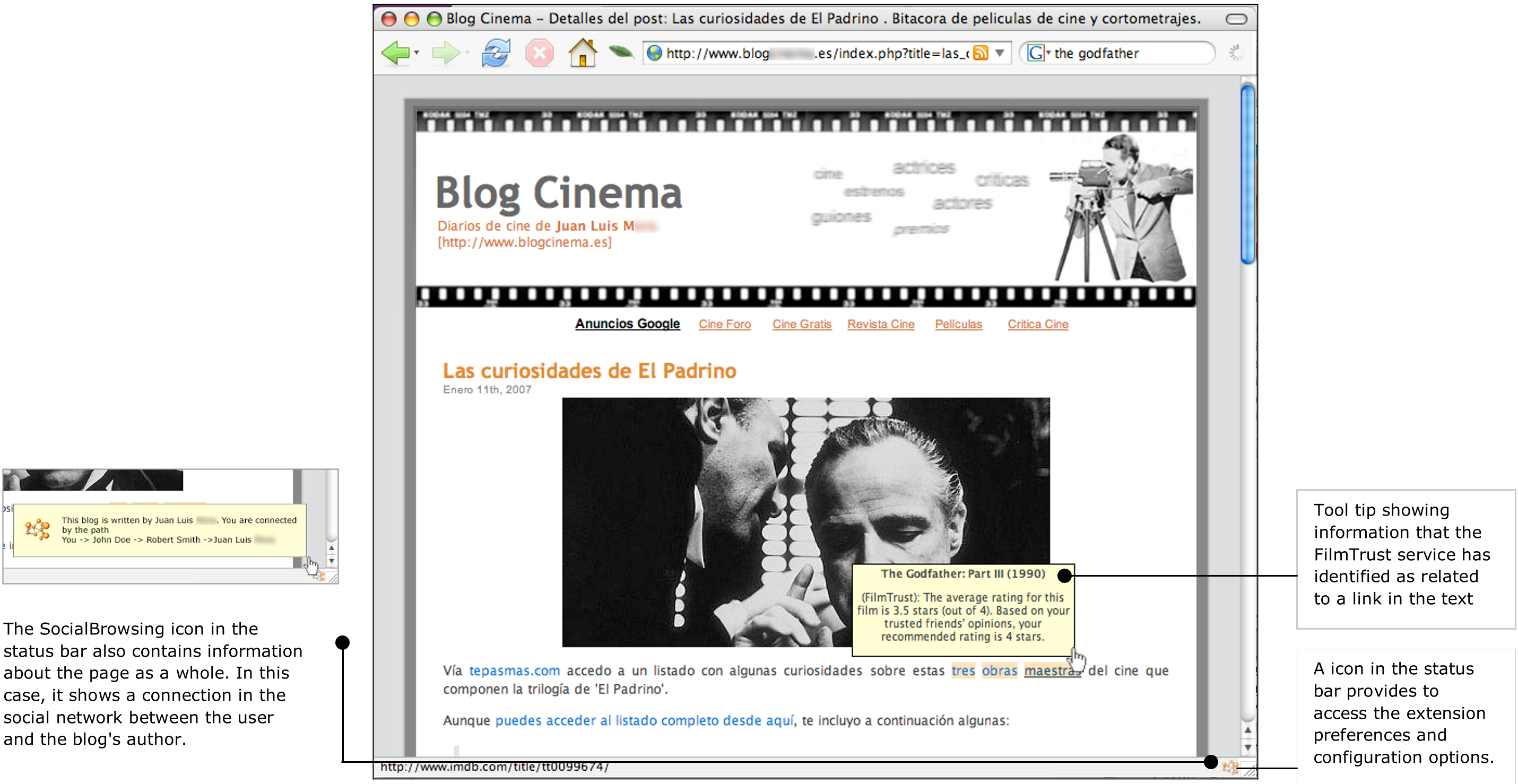 Figure 2: Example of the interface where social contextual information is displayed via tooltips.
Critical Analysis & Conclusion
The SocialBrowsing project was a visionary precursor to the modern "Social Graph" concepts used by companies like Meta, but with a crucial difference: it was built on open standards (Semantic Web) and decentralized data (FOAF).
Limitations
- Parsing Accuracy: Relying on regex for IMDb links or email tags is brittle. Modern approaches would likely use NLP or Named Entity Recognition (NER) to identify context.
- Privacy: Sending page content (even metadata) to a central server raises significant privacy concerns that were less scrutinized in 2007 but are paramount today.
Final Takeaway
This work shifted the paradigm of social networking from a place you go to a lens you see through. It remains a foundational concept for how we might one day achieve a truly decentralized, portable social layer for the internet, where your "reputation" and "friends" follow you regardless of which platform you are currently using.