
Socializing Multimodal Sensors: Bridging the Gap Between Physical Vision and Social Intelligence
Socializing Multimodal Sensors for Information Fusion
This paper introduces a unified framework for Socializing Multimodal Sensors, integrating physical cameras with social media streams (Twitter) for robust event detection. It features a "Tweeting Camera" architecture and a "Cmage" (Concept Image) representation to fuse spatio-temporal-semantic data across heterogeneous sources.
TL;DR
Current event detection systems often miss the "big picture" because they treat video feeds and social media as separate entities. This paper proposes a unified framework that turns cameras into "social entities" that "tweet" their findings. By fusing visual signals with real-time Twitter data into a unique "Cmage" representation, the system can not only detect that a crowd is forming but also understand why—identifying specific events like the "CBGB Music Festival" or "Saint Patrick’s Day Parade."
Problem & Motivation: The Silo Effect in Sensing
We live in an explosion of big data, yet physical sensors (CCTV, GPS) and social sensors (Twitter, Weibo) rarely talk to each other.
- Physical Sensors are great at "what" and "where" (e.g., "There are 500 people at 5th Ave") but fail at "why."
- Social Sensors excel at context and semantics (e.g., "The parade is amazing!") but are noisy and lack precise geographic/temporal anchors.
The author argues that without aggregating these, we cannot achieve true Situation Awareness. The goal is to move from machine-oriented low-level features to a Social-Cyber-Physical paradigm where humans and sensors collaborate.
Methodology: Tweeting Cameras and the "Cmage"
The core of the approach is a three-tier fusion strategy:
- Tweeting Cameras: Cameras process video locally and generate "camera tweets"—probabilistic detections of concepts (e.g., "Marching," "Crowd").
- PST & Cmage: To handle the heterogeneity, all data is mapped to a Probabilistic Spatio-Temporal (PST) structure. This is visualized as a Cmage (Concept Image), where each "pixel" represents a semantic signal. This allows sensors to use image-processing-like operators to filter noise and fuse data.
- Human-Sensor Social Network: A framework where users "follow" sensors to receive alerts, and sensors learn from human labels to become "smarter."
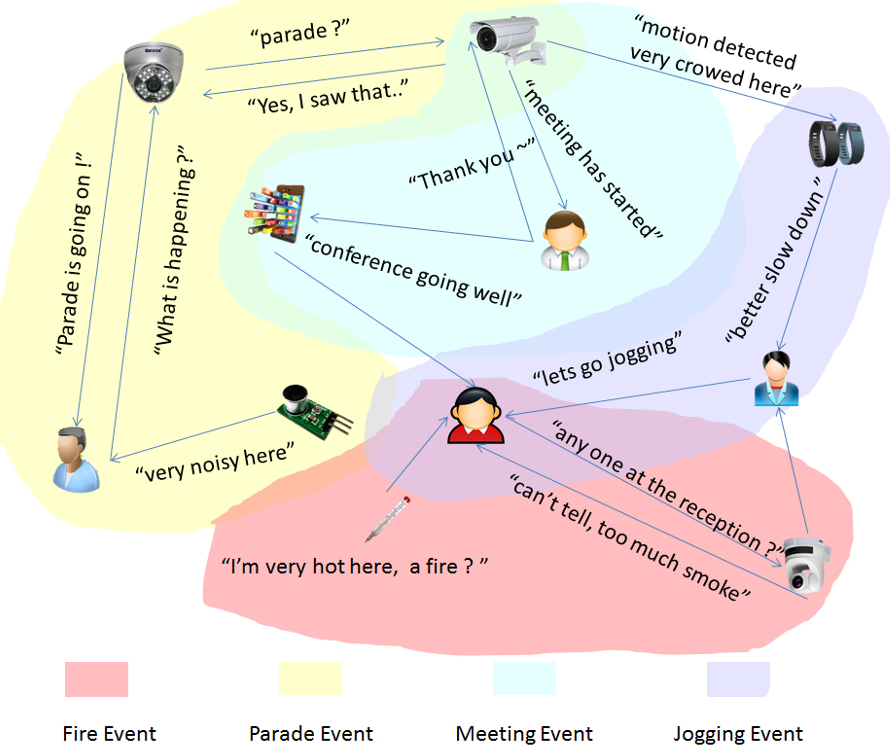 Figure 1: The conceptual paradigm of fusing social and physical sensors for event detection.
Experiments: Real-World Testing in Manhattan
The system was tested using 150 live CCTV feeds from New York City and geo-tagged tweets. By applying analytic functions like "smooth" (to remove intermittent detection errors) and "trend" (to see if a crowd is growing or dispersing), the framework demonstrated high accuracy in tracking urban events.
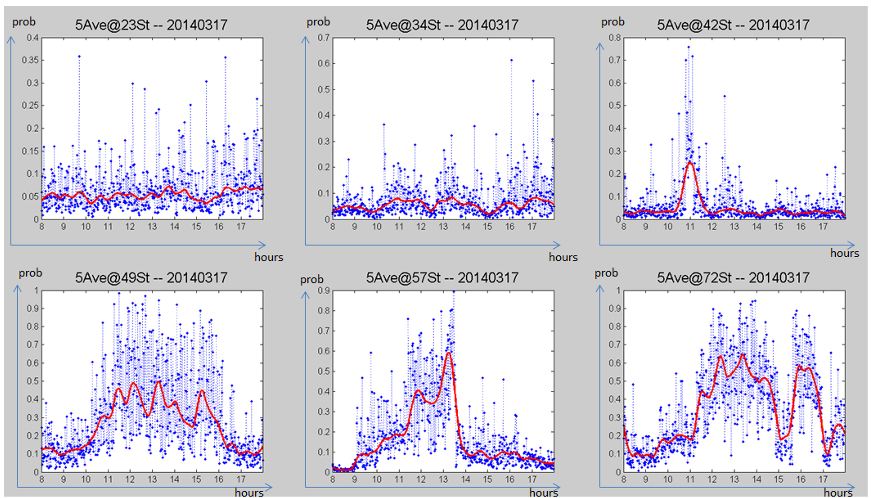 Figure 2: Detection of people marching during the Saint Patrick's Day Parade using visual concept detectors.
The fusion of social data proved vital. While the camera could see "Crowd" and "Music," the Twitter stream provided the specific semantic bridge: "CBGB Music Festival."
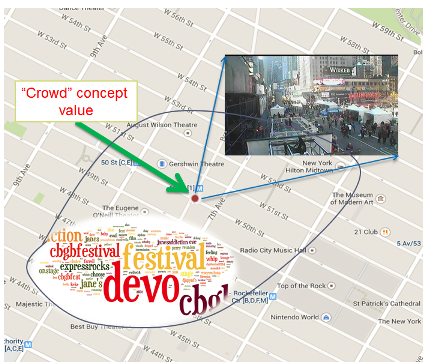 Figure 3: Semantic topic words extracted from Twitter providing context to visual detections.
Critical Analysis & Conclusion
Takeaway: This research provides a robust blueprint for the "Social Internet of Things." By treating a sensor as a social participant rather than a passive data-logger, we can leverage the collective intelligence of both humans and machines.
Limitations:
- Scalability: Processing hundreds of live video streams for "concept detection" was computationally heavy for 2015-era hardware.
- Reliability: Social media is prone to "rumors" or irrelevant noise which can lead to false positives in event detection if not filtered aggressively.
Future Outlook: With the advent of modern LLMs and Multimodal Large Language Models (MLLMs), the "camera tweets" described here could transform into sophisticated natural language descriptions, allowing even deeper interaction between urban infrastructure and citizens.