
Social Internet of Things: Why Your Toaster Should be Friends with My Coffee Maker
Making things socialize in the Internet — Does it help our lives?
The paper introduces the Social Internet of Things (SIoT), a paradigm where smart objects establish autonomous social relationships comparable to human social networks. By leveraging social-like ties (e.g., parental, co-location, co-work), the authors propose a decentralized, navigable structure to solve scalability and service discovery issues within the global IoT ecosystem.
TL;DR
The Social Internet of Things (SIoT) proposes a revolutionary architectural shift: instead of objects being passive tools, they should be "socialized" into a network. By allowing inanimate objects to form autonomous friendships, researchers aim to solve the massive scalability and trust issues that haunt the traditional Internet of Things.
Problem & Motivation: The Scalability Wall
As we hurtle toward a world with billions—eventually trillions—of connected devices, our current methods of finding and using services are breaking.
- Centralized servers become bottlenecks and single points of failure.
- Broadcasting service requests creates a "broadcast storm" that eats bandwidth.
- Walled gardens prevent your smart home from talking to a smart city sensor unless they share the same manufacturer.
The authors argue that the missing ingredient is Structure. Without a navigable structure, the IoT is just a heap of disconnected nodes. By mimicking human social networks, we can apply "Small World" graph theory to find any service in the world through a chain of "friends."
Methodology: The Five Laws of Object Socialization
The core innovation lies in defining how objects "socialize." It’s not about their owners; it's about the objects themselves. The authors define five social ties:
- Parental Relationship: Objects from the same production batch/manufacturer.
- Co-location Relationship: Objects that always live in the same place (e.g., your smart fridge and oven).
- Co-work Relationship: Objects that collaborate for a specific task (e.g., sensors in an emergency response system).
- Ownership Relationship: Different objects belonging to the same human user.
- Social Relationship: Established when objects come into contact because their owners interacted (e.g., your smartphone meets a friend's smartphone).
Architecture Decomposition
The proposed architecture bridges the gap between raw hardware and social networks.
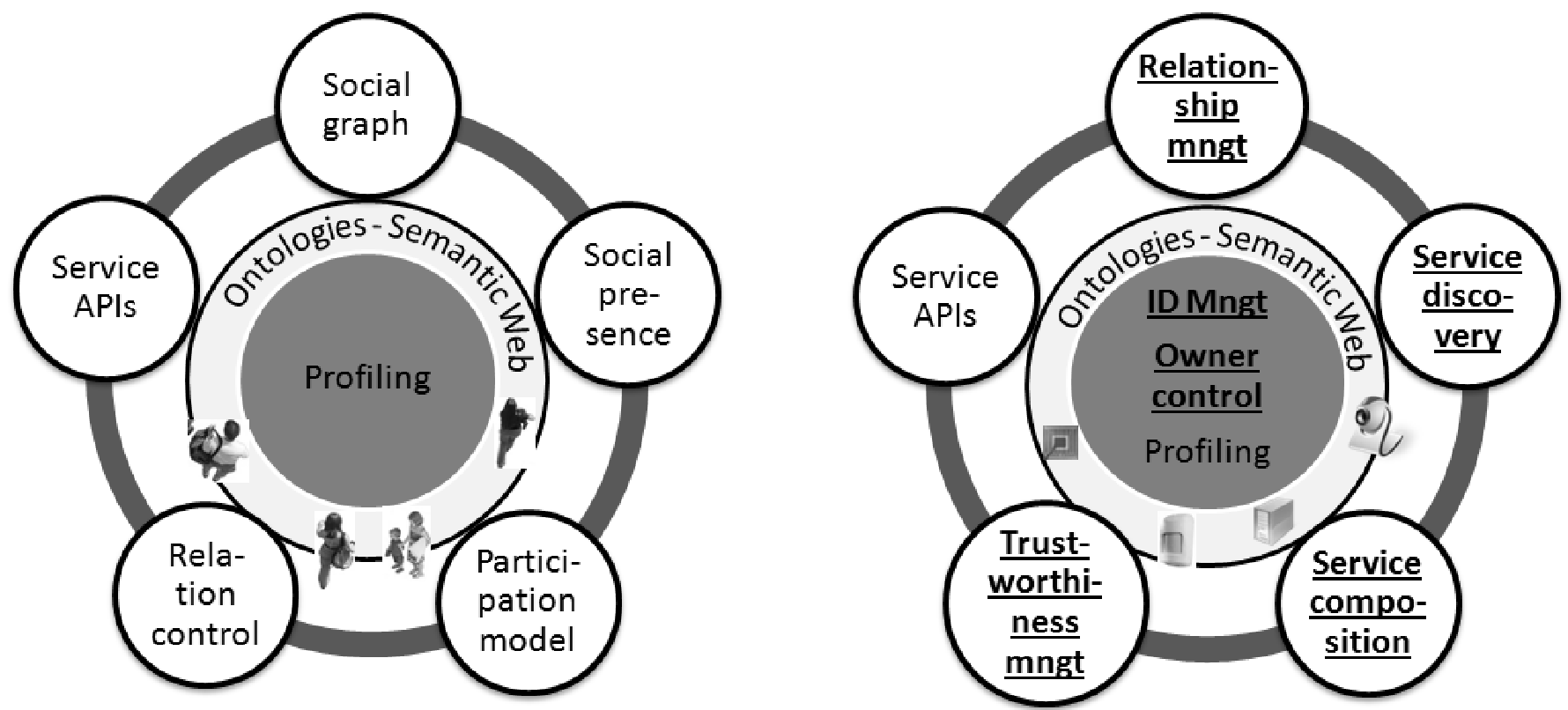 Figure 1: Comparison between human SNS components and the proposed SIoT architecture.
At the heart of the system is the Relationship Management module. Unlike humans, objects don't have feelings; they follow policies set by the Owner Control module. A "Social Agent" on the device or a proxy server manages these ties, ensuring the device only makes "friends" that are useful or trustworthy.
Deep Dive: Relational Models
The authors don't just use technical terms; they borrow from Sociology (specifically Alan Fiske’s Relational Models Theory).
- Communal Sharing: Objects in a "swarm" where the group's service matters more than the individual.
- Authority Ranking: Hierarchical relations, like an RFID reader (Master) and its tags (Slaves).
- Market Pricing: Cooperative sharing where objects interact only if the "cost-benefit" ratio (like battery life vs. data gained) is favorable.
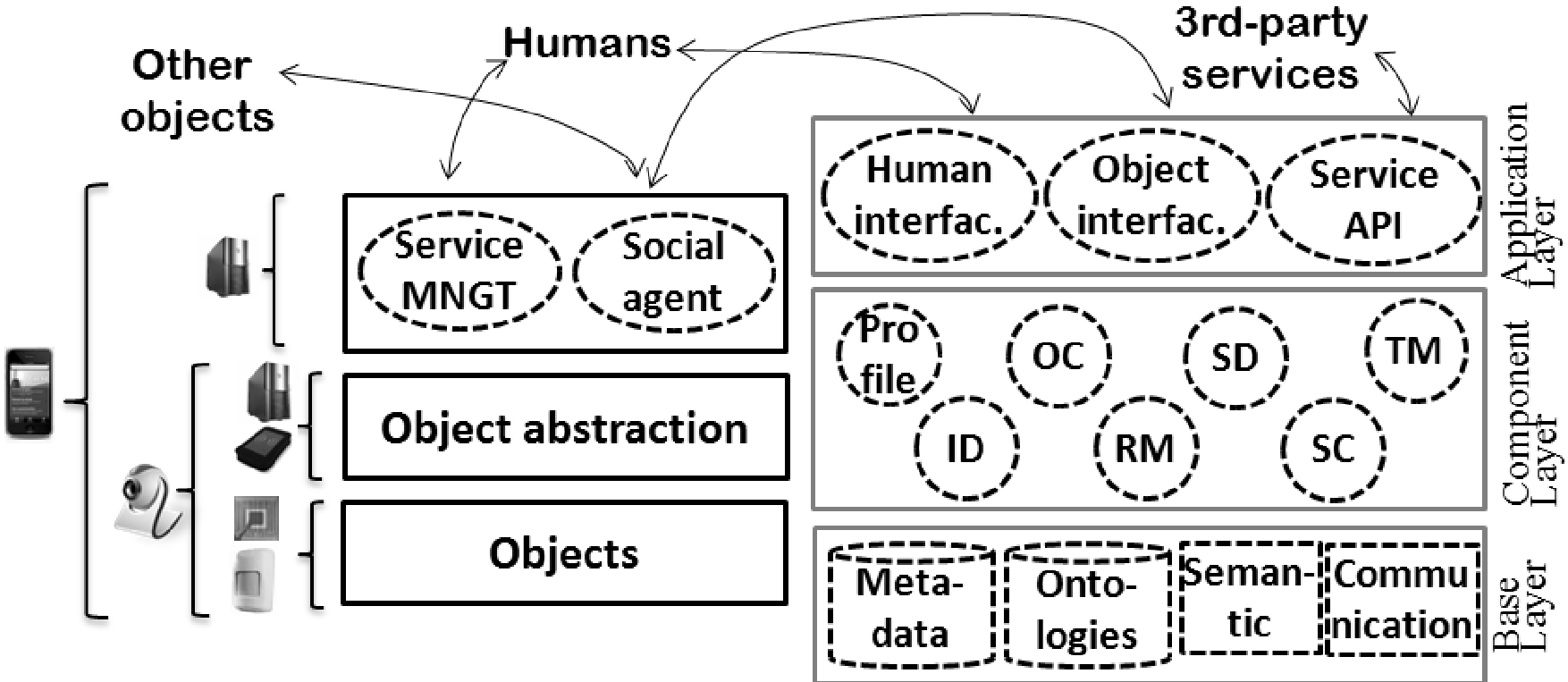 Figure 2: The layering of SIoT from the Physical Object Layer to the Application Layer.
Experiments & Future Outlook
While this paper is conceptual and architectural, it sets the stage for a new way to measure IoT efficiency: Navigability. If an object can find a temperature sensor in another city by hopping through only 6 social links (the "Six Degrees of Separation"), the IoT becomes truly global.
Critical Analysis
- Trustworthiness: By using social metrics like centrality and prestige, a "malicious" sensor would eventually be unfriended by the network, automatically isolating threats.
- Standardization: The authors warn that without standards like OpenSocial for Things, we will end up with "Facebook for Toasters" and "LinkedIn for Cars" that cannot communicate.
Conclusion
The SIoT is more than just a catchy name; it’s a strategy for survival in a world of billions of devices. By decoupling the object's social life from the human user's direct intervention, the authors provide a pathway to an autonomous, self-organizing, and trustworthy smart environment.
Takeaway: Future IoT devices won't just be "smart"; they'll be "social," and their value will be determined not by their hardware, but by who—or what—they are connected to.