
E-Box: Bridging the Gap Between Data Forwarding and Energy Harvesting in Mobile Social Networks
Socially-aware E-Box deployment schemes for joint data forwarding and energy harvesting
The paper introduces "E-Box," a multi-functional node combining data forwarding (throwbox) and RF-based energy harvesting (RF-EH) capabilities. To address propagation loss in RF-EH, the authors propose three socially-aware deployment schemes (D-deployment, E-deployment, and T-deployment) optimized via a continuous-time Markov chain mobility model.
TL;DR
To combat the dual challenges of battery exhaustion and data delivery in Mobile Social Networks (MSNs), this paper proposes the E-Box—a hybrid node that acts as both a data relay and an RF energy source. By modeling user mobility through a continuous-time Markov chain, the authors design deployment schemes that optimize where to place these nodes to maximize both data throughput and energy harvesting efficiency based on human social behavior.
Background: The Power-Data Dilemma
In the era of Device-to-Device (D2D) communication, mobile devices are no longer just consumers; they are active relays. However, this social participation drains batteries rapidly. While Radio Frequency Energy Harvesting (RF-EH) is a promising solution, its efficiency is severely hampered by propagation loss. The authors suggest that if we can't bring the energy to the user perfectly, we must strategically place energy sources where users naturally "linger."
Methodology: Perception of Social "Sojourn"
The core innovation lies in moving beyond simple social centrality (how many people visit a spot) to Sojourn Time (how long they stay).
1. Mobility Modeling
The authors model user movement as a continuous-time Markov chain.
- States: Various "hot spots" (potential E-Box locations) and an "elsewhere" state.
- Transition: Inter-contact times follow an exponential distribution.
- Goal: Calculate the steady-state probability () to determine the total time a user spends at location .
2. The Three Deployment Flavors
- D-deployment: Purely focused on the success ratio of data forwarding.
- E-deployment: Focused on energy, utilizing a threshold function to acknowledge that once a battery is full, additional harvested energy has zero marginal utility.
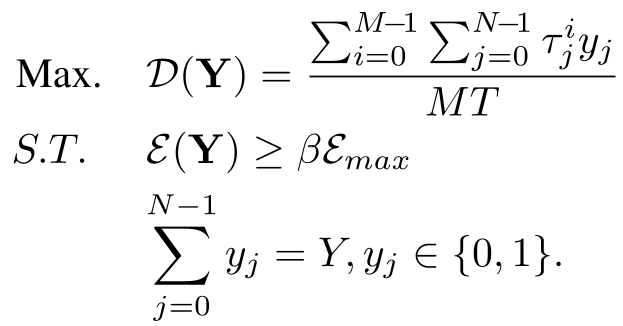
- T-deployment (Trade-off): Maximizes data forwarding efficiency while ensuring that energy harvesting meets a minimum threshold (defined by a factor ).
Experimental Insights
The researchers conducted Matlab simulations with 100 users and 15 hot spots.
Performance vs. Node Count
As the number of E-Boxes () increases, both DF and EH efficiency improve. However, EH efficiency plateaus once the number of boxes is sufficient to fill most users' batteries during their sojourn.
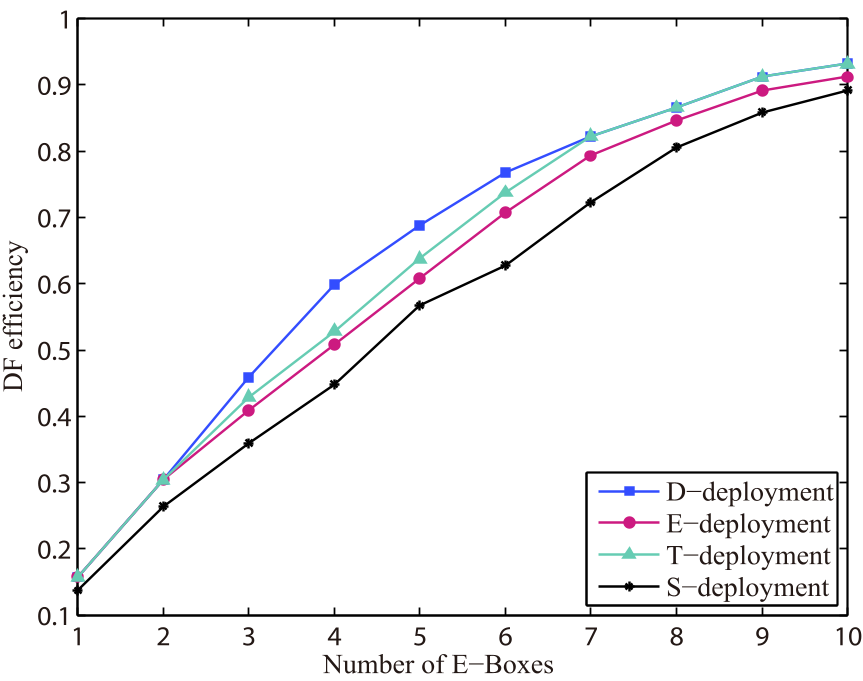 Fig 1: Proposed schemes consistently beat the traditional S-deployment (centrality-based) because they account for the actual duration of stay () rather than just the frequency of visits.
The Factor
The parameter acts as a "tuner." When is low, the network behaves like a data-first system. As approaches 1.0, the system prioritizes charging, even if it means placing E-Boxes in locations that are less optimal for data relaying.
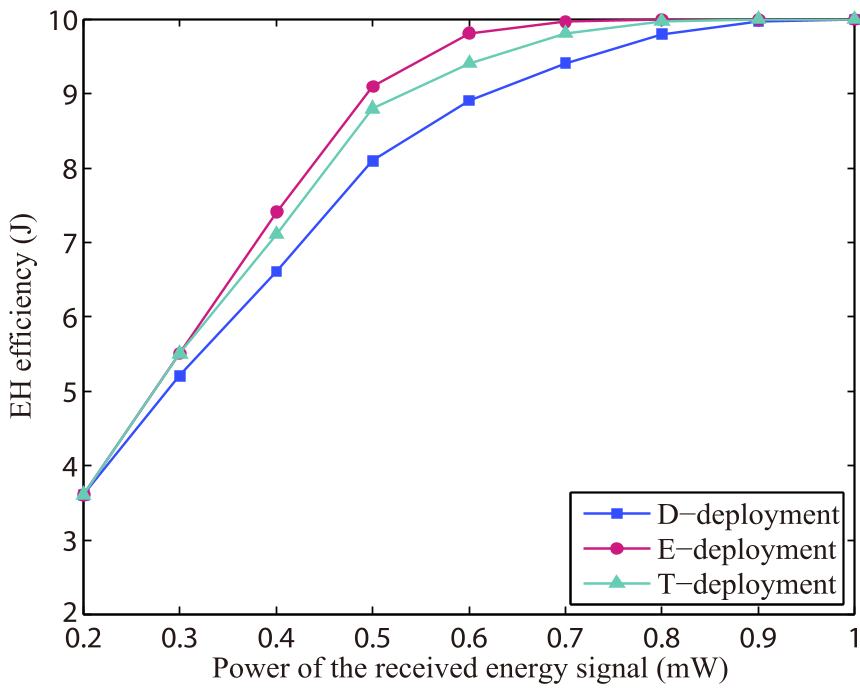 Fig 2: As the power of the energy signal () increases, users reach their battery capacity threshold faster, allowing for more flexibility in deployment locations.
Critical Analysis & Conclusion
Takeaway
The E-Box deployment strategy proves that spatial intelligence—knowing not just who is where, but for how long—is essential for the feasibility of RF-EH. By co-locating data and energy functions, network operators can minimize deployment costs while maximizing user utility.
Limitations
- Static Deployment: The model assumes E-Boxes are stationary. In dynamic urban environments, mobile E-Boxes (e.g., on buses or drones) might be more effective.
- Inter-user Communication: The paper ignores direct user-to-user data forwarding to focus on E-Box efficiency, which may simplify actual MSN dynamics.
Future Outlook
Future research could integrate these deployment schemes with Dynamic Spectrum Access (DSA) to harvest energy from ambient white spaces, further improving the sustainability of the Mobile Social Network ecosystem.