
Socially-Aware UIs: Beyond the Illusion of Machine Empathy
5376_Socially-Aware User Interfaces Can Genuine Sensitivity Be Learnt at all
This keynote paper explores the transition from task-based systems to Socially-Aware User Interfaces (SAUI). Prof. Elisabeth André evaluates the limitations of Deep Learning in achieving "genuine sensitivity" and proposes Hybrid AI as a path toward empathetic, transparent multimodal interaction.
TL;DR
In her ICMI keynote, Prof. Elisabeth André challenges the current trajectory of AI development. While Deep Learning has mastered the "sensing" of human signals, it lacks "sensibility." To bridge this gap, André argues for Hybrid AI—a fusion of data-driven models and Theory of Mind—to ensure that socially-aware interfaces are not just convincing illusions, but transparent and reliable partners.
The Problem: The High Cost of the "Social Illusion"
Current multimodal interfaces are increasingly anthropomorphic. Thanks to Deep Learning, they can recognize facial expressions, tone of voice, and gestures with superhuman accuracy. However, this creates a dangerous "Social Illusion."
Users tend to attribute human-like understanding and empathy to systems that look or act human. But because these systems are often black boxes, they lack a true comprehension of the why behind human behavior. When the AI inevitably fails to grasp a complex social nuance, the breakdown in trust is far more severe than a simple technical error; it is perceived as a social betrayal.
Methodology: Why Deep Learning is Not Enough
The core insight of the keynote is that genuine sensitivity cannot be "learnt" through pattern recognition alone. André argues that we must look toward a Hybrid AI paradigm shift:
- Sensing vs. Reasoning: Deep learning handles the "low-level" perception (Sensing).
- Theory of Mind (ToM): Symbolic or structural models are needed to represent the user's mental states, goals, and social norms (Reasoning).
- Transparency: By incorporating a rationale-based approach, the UI can explain why it reacted in a certain way, maintaining user trust even when a social interaction goes awry.
 Figure 1: The shift from task-based interaction to socially-aware, anthropomorphic interfaces.
From Black Boxes to Plausible Behavior
The methodology focuses on making the complexity of the AI transparent. Instead of just predicting the "next best social action," a Hybrid system uses a Theory of Mind to simulate how its actions will be perceived. This is not just about mimicry; it is about plausibility.
If an AI companion understands that a user is stressed not just by "detecting a frown" but by understanding the situative context (e.g., a looming deadline), its intervention becomes significantly more effective and authentic.
Critical Analysis: Can Sensitivity Be Learnt?
André leaves us with a provocative conclusion: While we can learn to simulate sensitivity better using hybrid models, the quest for "genuine" sensitivity remains a philosophical and technical frontier.
Key Takeaways for R&D:
- Trust is Fragile: The more "human" we make our interfaces, the higher the penalty for social ignorance.
- Hybridity is Key: Future SOTA systems in affective computing will likely not be pure transformers or CNNs, but systems that integrate social-cognitive architectures.
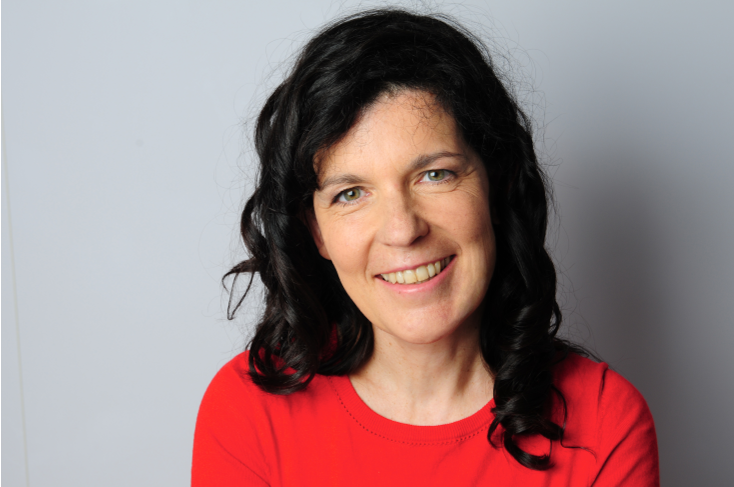 Figure 2: Prof. Elisabeth André, a pioneer in Human-Centered Multimedia.
Conclusion
This keynote serves as a sobering reminder that as we race toward more capable AI, we must not confuse robust sensing with true social intelligence. The future of Socially-Aware UIs lies in the synergy between the "intuition" of deep learning and the "logic" of social reasoning architectures.