
Beyond Facebook: The Untapped Frontier of Organizations as Social Actors
Socially immature organizations: a typology of social networking systems [SNS] with organizations as users [OAU]
This paper introduces a comprehensive typology for Social Networking Systems (SNS), shifting the focus from individuals to "Organizations as Users" (OAU). It identifies a significant research gap in online organizational social networking and proposes a framework for the emergence of OAU SNS, potentially rivaling individual-centric platforms like Facebook.
TL;DR
While the last decade of social media has been defined by how individuals connect, a massive vacuum exists in how organizations interact as social entities. This research by Matthew T. Mullarkey identifies a startling gap: zero academic coverage of online Social Networking Systems (SNS) where organizations are the primary users. By proposing a new typology, the paper paves the way for a "Facebook for Organizations" that prioritizes social capital over simple transactions.
The Missing Link: Why Organizations are "Socially Immature"
Most digital interactions between companies today are cold and transactional. We have Electronic Data Interchange (EDI) for supply chains and Customer Relationship Management (CRM) for sales. However, these systems lack the "soul" of a social network—the ability to foster trust, build reputation, and exploit "structural holes" (gaps in the network that offer competitive advantages).
The author argues that while individuals have migrated their offline social lives to platforms like Facebook and LinkedIn, organizations have remained tethered to archaic, offline methods for social networking, such as business chambers and trade consortia.
A New Typology for Social Networks
To understand this landscape, the paper introduces a logical framework to categorize SNS research. The vertical axis distinguishes whether the user is an Individual (IAU) or an Organization (OAU). The horizontal axis looks at the scale: is the focus on the Single Actor (Egocentric) or the Collective (Whole Network)?
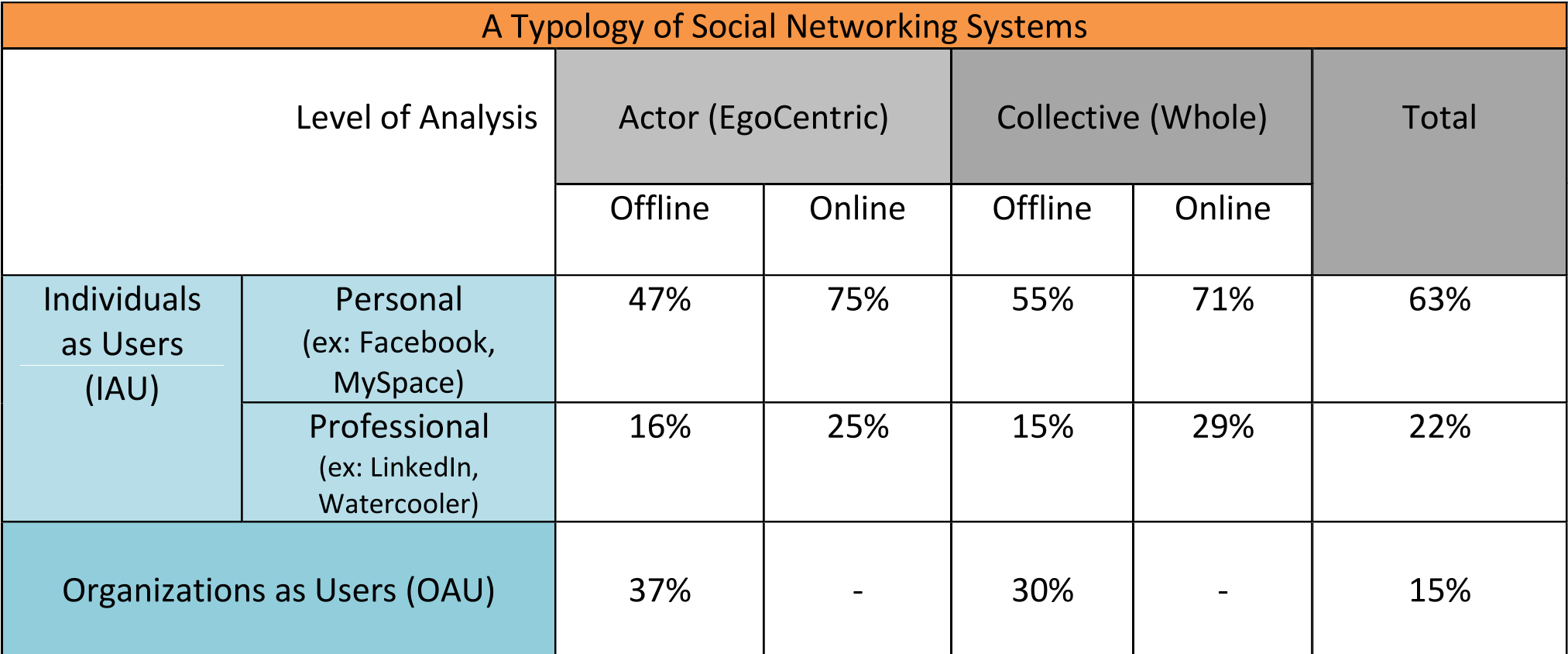
The findings are stark: The "Online OAU" category is a complete void. Despite the fact that there are over 200 million organizations globally contributing to over $30 trillion in sales, we lack a dedicated social platform for them to interact as peers.
The Case for OAU SNS: Why Now?
Mullarkey provides five compelling reasons why "Organizations as Users" is the next logical step for the internet:
- Replicating Reality: Individuals moved online; organizations (which form rich social networks offline) are destined to follow.
- Economic Potential: Organizations represent a high-value, untapped user base for platform developers.
- Social Capital: Research shows that "densely connected" firms are less vulnerable to opportunistic behavior and more likely to thrive.
- Choice vs. Success: OAU networks can facilitate both performance-based rewards (Success) and intrinsic peer connectivity (Choice).
- Global Reach: Moving organizational networks online eliminates geographical boundaries, allowing a small firm in Tampa to connect socially with a partner in Tokyo as easily as a local one.
How Will it Emerge? (Evolutionary Paths)
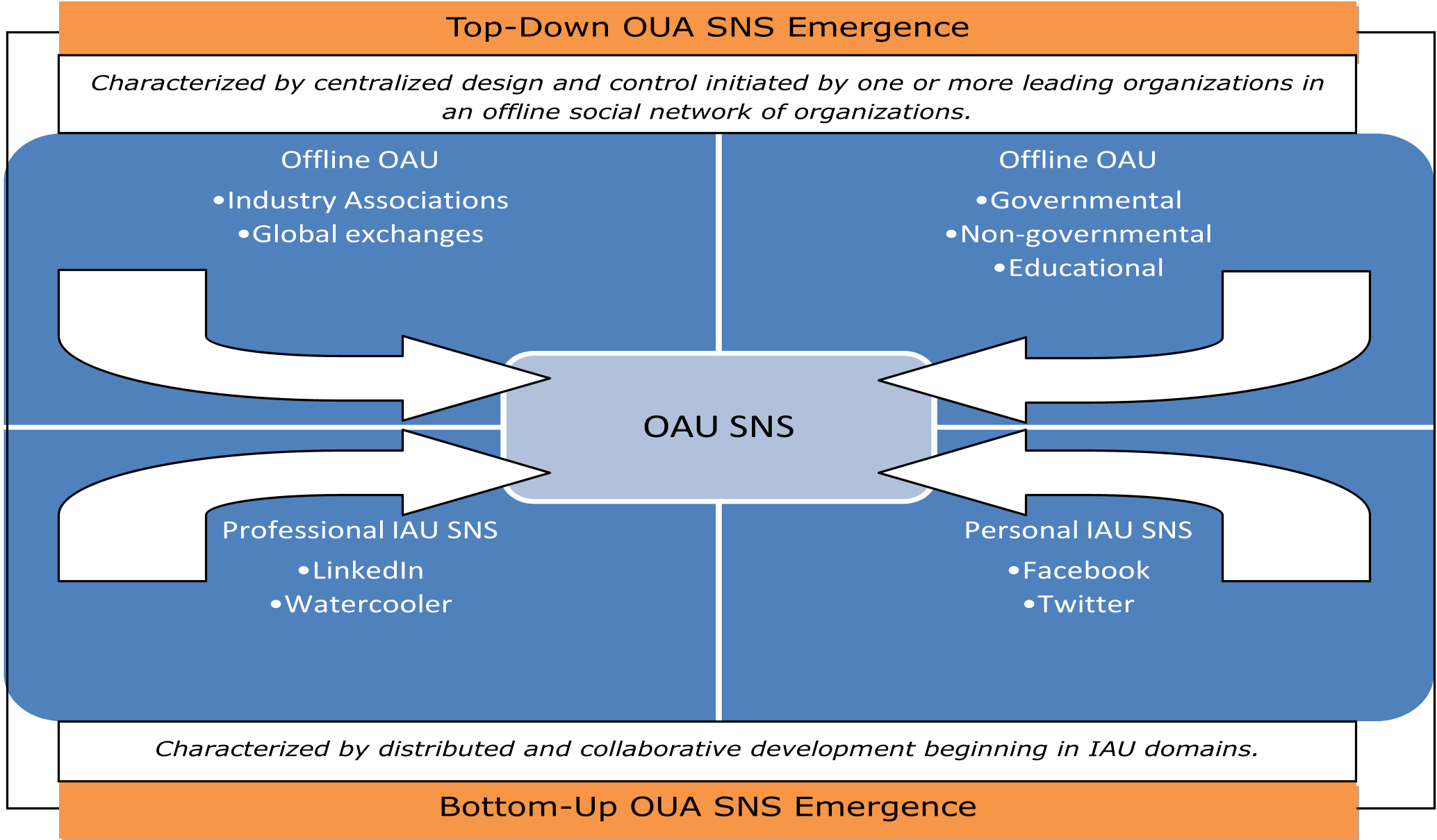
The paper hypothesizes two potential emergence patterns:
- Top-Down: Industry titans or consortia deliberately create a platform to "augment social practice" (similar to how OEMs designed EDI systems).
- Bottom-Up: The "latent connectivity" between employees of different firms on LinkedIn or Twitter eventually crystallizes into formal organizational ties.
Critical Insight & Future Outlook
The primary takeaway is a call to action for both researchers and developers: Stop viewing organizations as mere containers for individual users.
Instead, we must design systems where the organization itself has a profile, a reputation, and a set of social ties. The limitation of this 2012 study was the lack of existing platforms to test, but in today's world of decentralized autonomous organizations (DAOs) and interconnected ecosystems, Mullarkey's "OAU" vision seems more prophetic than ever. The next "gold mine" isn't the next billion individuals; it’s the millions of organizations waiting for a place to truly network.