
Beyond Sparse Data: Deciphering the Socio-Environmental DNA of Disease Outbreaks
Understanding the Impact of Socio-Economic and Environmental Factors for Disease Outbreak in Developing Countries
The paper investigates disease outbreak prediction in Pakistan using machine learning. It proposes an enrichment framework that fuses sparse health unit data with socio-economic and environmental factors, achieving successful outbreak classification using Decision Trees and Logistic Regression for Diarrhea, Malaria, and Pneumonia.
TL;DR
In developing countries, health data is often a "noisy puzzle" with missing pieces. This paper demonstrates how to bridge the gap by fusing sparse medical reports with localized environmental and socio-economic data. By applying machine learning to data from Punjab, Pakistan, the researchers successfully identified unique triggers for Diarrhea, Malaria, and Pneumonia, transforming raw figures into actionable survival insights.
Background: The Infrastructure Gap
While developed nations enjoy high-fidelity digital health records, developing regions like Pakistan often face the "Dengue Dilemma": conventional prediction systems fail because they rely on incomplete data. After the catastrophic 2011 dengue outbreak, it became clear that simply counting patients isn't enough; we need to understand the context—the weather, the water, and the way people live.
The "Enrichment" Insight: Problem & Motivation
The researchers identified a fundamental flaw: Global standards (WHO/NIH) are often applied uniformly, ignoring local "Inductive Bias." A humidity level in a plateau region like Rawalpindi might have a different impact on disease vectors than in a flat, arid region like Bahawalpur.
The technical challenge was two-fold:
- Data Fragility: 5.6 million records existed, but most were noisy or lacked "the why" (epidemic factors).
- Factor Fusion: Integrating disparate datasets—rainfall from meteorological departments and literacy rates from statistics bureaus—into a unified feature set.
Methodology: Peering into the "Decision Logic"
The study focused on three killers: Diarrhea, Malaria, and Pneumonia. Instead of using "black-box" models, the authors prioritized interpretability through Decision Trees (DT) and Logistic Regression (LR).
Feature Engineering
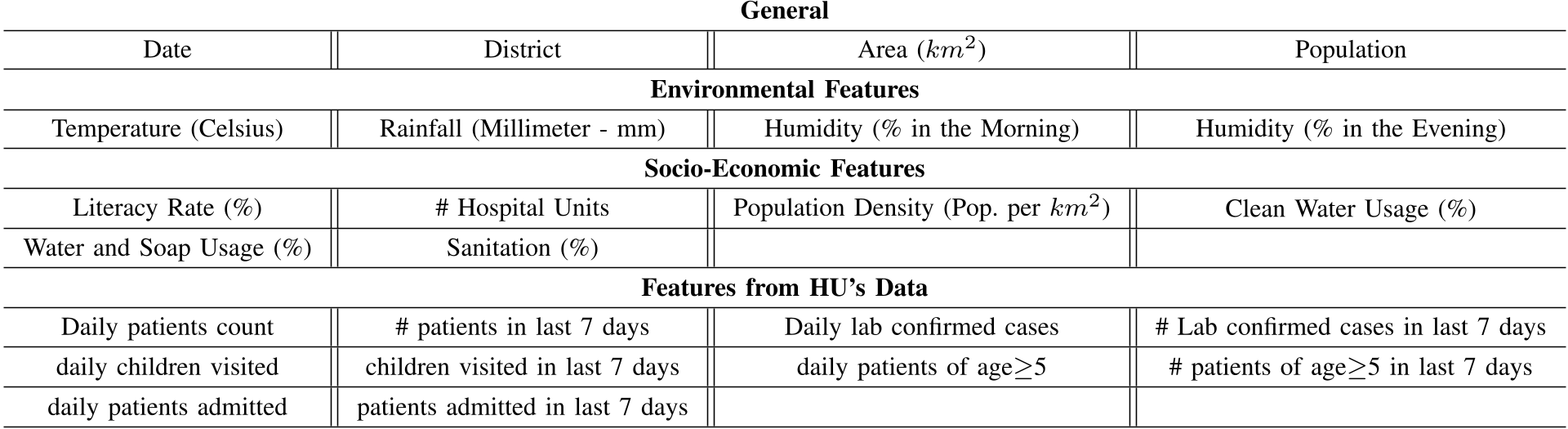
The data was aggregated by district and enriched with 15 key features categorized into:
- Environmental: Temp, Rainfall, Humidity.
- Socio-Economic: Literacy Rate, Population Density, Water/Sanitation Index.
Why These Models?
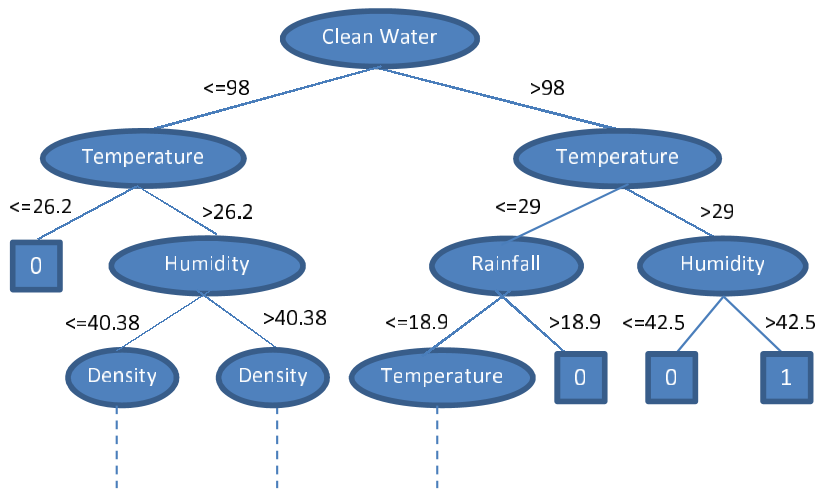
- Decision Trees: By using Information Gain, the model naturally places the most "informative" factor at the root. For Diarrhea, the root was surprisingly Literacy Rate, illustrating that education is the first line of defense against water-borne illness.
- Logistic Regression: Provides a "weight" for each factor. A negative weight for sanitation across all diseases confirmed it as the universal bottleneck for public health in Punjab.
Experimental Results & Deep Dive
The analysis revealed distinct "Disease Personalities":
- Pneumonia: Driven by the intersection of high population density and low winter temperatures.
- Malaria: Highly sensitive to temp/humidity fluctuations for mosquito breeding.
- Diarrhea: Strongly correlated with poor sanitation and low literacy (lack of awareness regarding water boiling/hygiene).
Performance Comparison
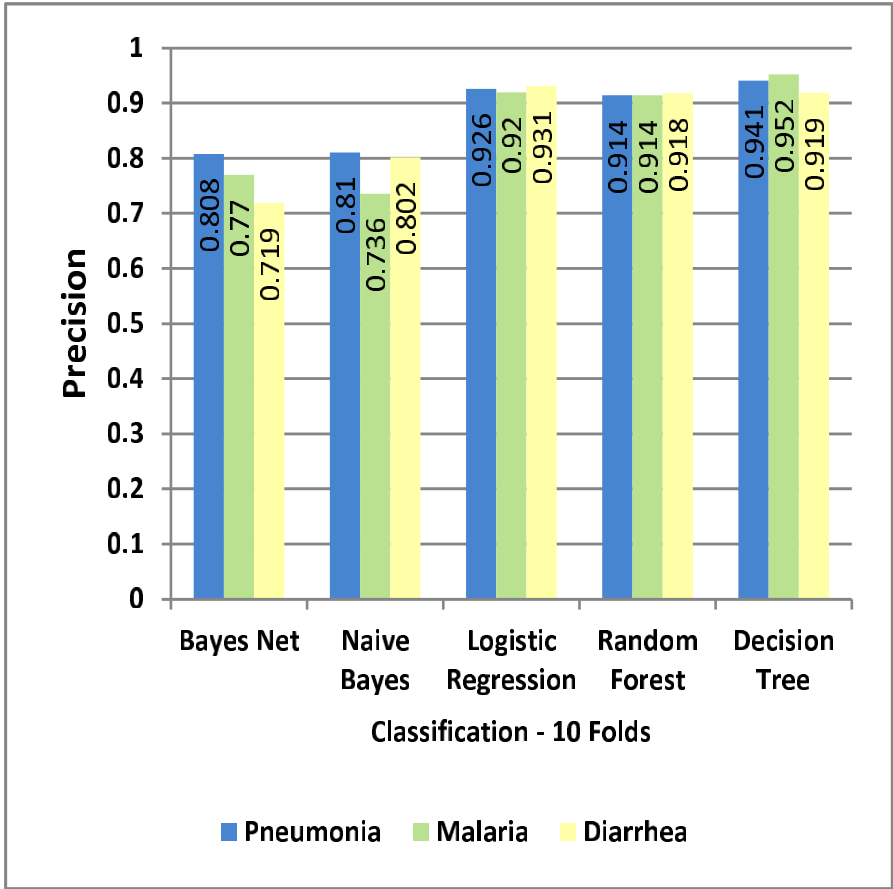
When benchmarking against SOTA classifiers, Decision Trees and Random Forests yielded the most consistent results. Interestingly, Logistic Regression suffered from poor recall (captured by the F-measure), suggesting that the relationships between environmental factors and outbreaks are likely non-linear.
Deep Insight: Sanitation as the "Overlapping Factor"
The most profound takeaway is the cross-disease analysis. While temperature might trigger Pneumonia and rain might trigger Malaria, Sanitation appeared as a consistent inverse weight in every model. This confirms that infrastructure is the most significant "feature" health administrators can optimize to mitigate multiple concurrent outbreaks.
Conclusion & Future Outlook
This work shifts the focus from purely algorithmic complexity to Contextual Data Enrichment.
- Limitation: The model relies on "Reported Cases," which inherently misses patients who don't visit Health Units (under-reporting).
- Future Work: Integrating real-time satellite data for standing water detection could automate the "Rainfall" factor even further, providing a truly proactive early warning system for the developing world.
Takeaway for Practitioners: When data is noisy, don't just change the model—change the data. Small, localized features (like literacy or sanitation) often carry more predictive weight than deep neural layers when solving real-world humanitarian crises.