
SoCoMo Marketing: The Convergence of Social Intelligence and Context-Awareness
SoCoMo Marketing for Travel and Tourism
This paper introduces SoCoMo Marketing, a novel conceptual framework that integrates Social Media (So), Context-Aware Technologies (Co), and Mobile Devices (Mo). It establishes a theoretical foundation for delivering hyper-personalized, situation-specific offers, primarily targeting the travel and tourism industry to enhance real-time consumer decision-making.
TL;DR
The quintessential goal of marketing is delivering the right product at the right time in the right place. While social media tells us the "who" and "what," and mobile tells us the "where," the missing link has always been the "how" (the context). This paper defines SoCoMo (Social Context Mobile) marketing as the next evolution of engagement, particularly for the tourism sector, where situational needs fluctuate by the minute.
Background: Beyond Location-Based Services
For years, marketers equated "context" with "location." If you were near a coffee shop, you got a coupon. However, this paper argues that location is merely a proxy for a much more complex environment. True context includes external factors (weather, lighting, humidity) and internal factors (emotional state, immediate goals, tasks). The transition from simple Location-Aware Marketing (LAM) to Context-Aware Marketing is the core paradigm shift proposed here.
The SoCoMo Framework: A Three-Pronged Data Engine
The author's conceptual model resides in the intersection of three distinct information sources:
- Social (So): The "Identity Layer." Data shared voluntarily on social media regarding preferences, wishes, and personality.
- Context (Co): The "Environmental Layer." Data pulled from sophisticated mobile sensors (optical, audio, motion, and bio-sensors) that understand the user’s physical and psychological surroundings.
- Mobile (Mo): The "Behavioral Layer." Patterns of device usage and the platform for delivering immediate, actionable interventions.
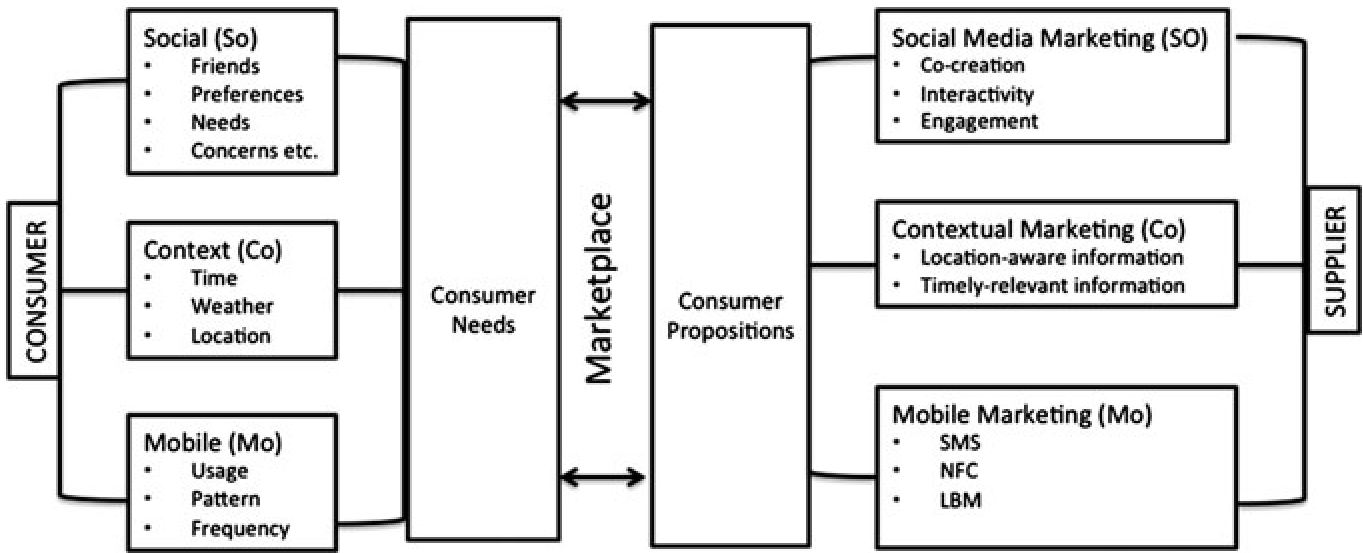 Figure 1: The SoCoMo framework illustrating the flow from data retrieval to personalized message crafting.
Why This Works: The Insight
By feeding these three streams into a Context Management System, suppliers move from reactive marketing to predictive marketing. Instead of waiting for a user to search for "nearby restaurants," a SoCoMo system recognizes that it is raining (Context), the user is feeling tired (Internal Context/Bio-sensors), and they previously liked Italian food on Instagram (Social). The system then proactively suggests a cozy Italian bistro 100 meters away that offers delivery.
Impact on Travel and Tourism
Agriculture and Tourism are "perishable" industries—if a hotel room isn't sold tonight, that revenue is lost forever. SoCoMo marketing addresses this by targeting the "On-Trip" stage.
- Shortening the Pre-Consumption Phase: Tourists no longer need to spend weeks planning every detail.
- Heuristic Decision Making: SoCoMo supports spontaneous, "unreflective" decisions by providing the exact information needed to reduce the perceived risk of an unknown destination.
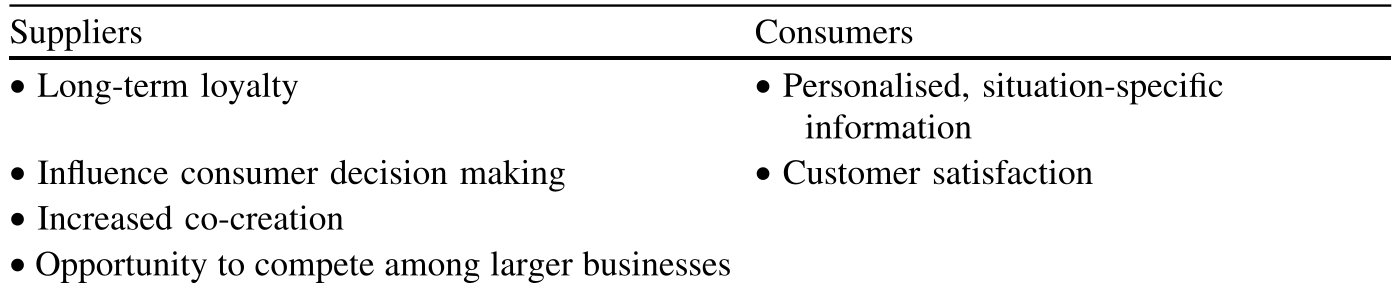 Table 1: Strategic advantages for both Suppliers (Loyalty, Co-creation) and Consumers (Satisfaction, Relevance).
Critical Analysis: The Challenges Ahead
While the theoretical potential is massive, the paper acknowledges two significant barriers:
- The Privacy-Personalization Paradox: As sensors track bio-data and emotional states, at what point does marketing become "creepy" or intrusive? The success of SoCoMo depends entirely on the consumer's trust.
- Technological Bottlenecks: Constant sensor polling and GPS usage drain smartphone batteries rapidly. Until battery technology or edge-computing efficiency improves, ubiquitous SoCoMo remains a high-energy drain.
Conclusion: Toward a Semantic Future
Buhalis and Foerste provide a roadmap for the future of the "Intelligent Travel Environment." The takeaway is clear: the future of SOTA marketing isn't just about big data; it's about thick data—data that is rich with situational meaning. Brands that fail to integrate context into their social mobile strategies will eventually be filtered out as "digital noise."