
Deciphering the SaaS Crowdsourcing Engine: A Holistic Analysis of TopCoder's Talent Ecosystem
Software crowdsourcing for developing Software-as-a-Service
This paper introduces a holistic analysis framework for SaaS-oriented software crowdsourcing, focusing on the TopCoder ecosystem. It combines a game-theoretical model of individual contestant behavior with a competition network analysis to understand the dynamics between global talent and complex software tasks.
TL;DR
Building Software-as-a-Service (SaaS) at scale requires more than just code; it requires a vibrant, competitive ecosystem. This paper dissects the decade-long history of TopCoder to model how individual incentives and community network structures drive the quality of crowdsourced SaaS products. The core finding? The "stickiness" and clustering of developers around specific projects are the true predictors of software excellence.
Background: The Shift to Cloud-Based Peer Production
Modern SaaS systems like Salesforce's AppExchange are not just apps—they are socio-technical ecosystems. To keep pace with innovation, these platforms rely on Software Crowdsourcing, moving away from traditional software factories toward decentralized, competition-based models. However, managing 600,000+ developers competing for prizes requires more than just a leaderboard; it requires an understanding of the underlying economic and social dynamics.
The "Why": Why Some Projects Succeed and Others Fail
The researchers identified a critical gap: while distributed development usually emphasizes collaboration, crowdsourcing is inherently competitive. Previous attempts to model this used simple auction theory, which ignored the social evolution of the community. Authors argue that the success of a project depends on:
- Individual Rationality: Why do coders choose specific tasks?
- Structural Topology: How does the web of "repeated rivalries" improve code quality?
Methodology: Gaming the System and Mapping the Web
1. The Game of Participation
Using Contest Theory, the paper models the "Payoff Function" (). Developers perform a mental ROI calculation: if the cost of effort () exceeds the probability of winning () the prize (), they simply won't submit. This explains the "Submission Paradox"—where a task might have 25 registrations but only 3 actual submissions. The system naturally reaches a Nash Equilibrium, filtering out all but the most confident participants.
2. The Cloud-Based SaaS Ecosystem
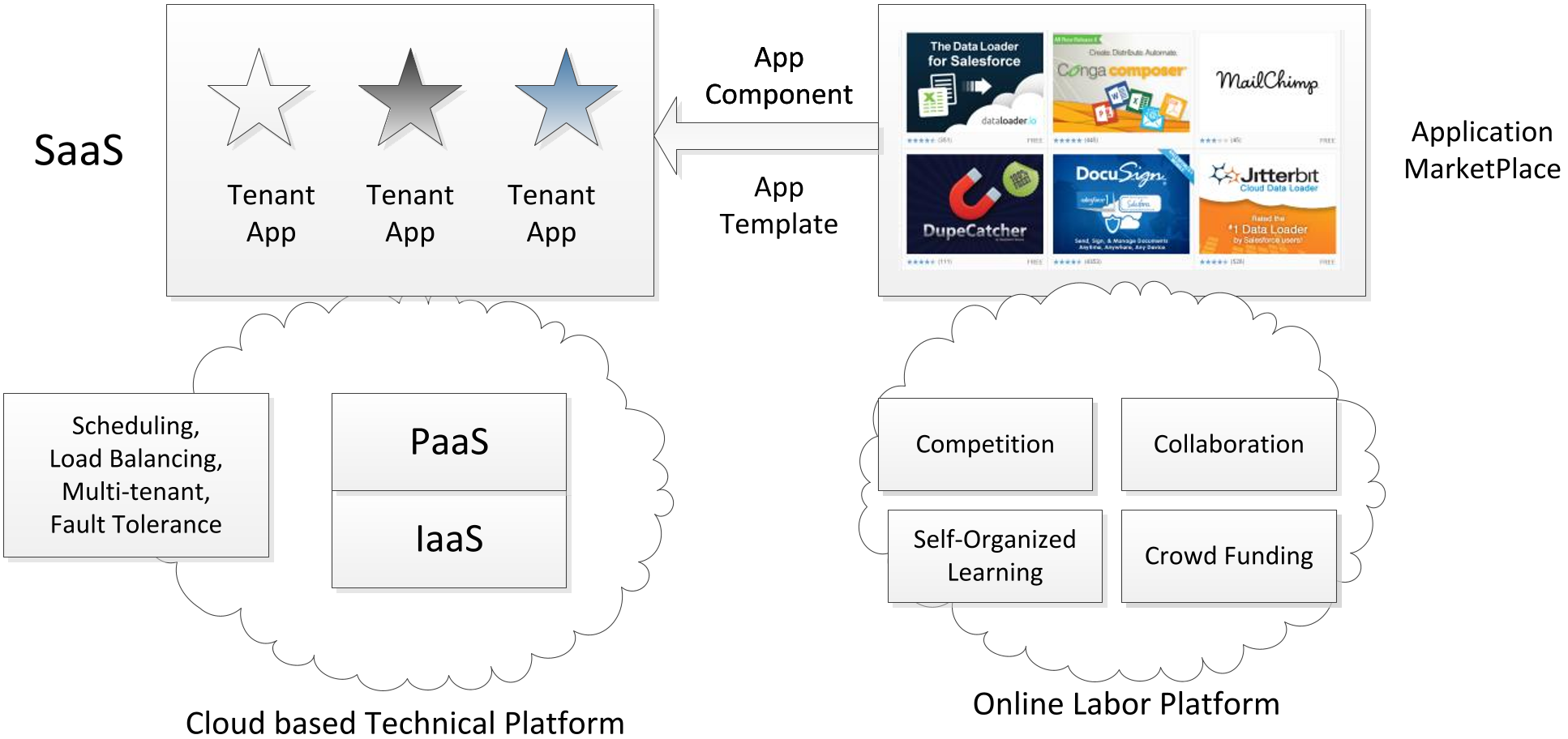
The paper defines a three-pillar structure for SaaS development: the Marketplace, the Developer Community, and the Online Labor Platform.
3. Competition Networks
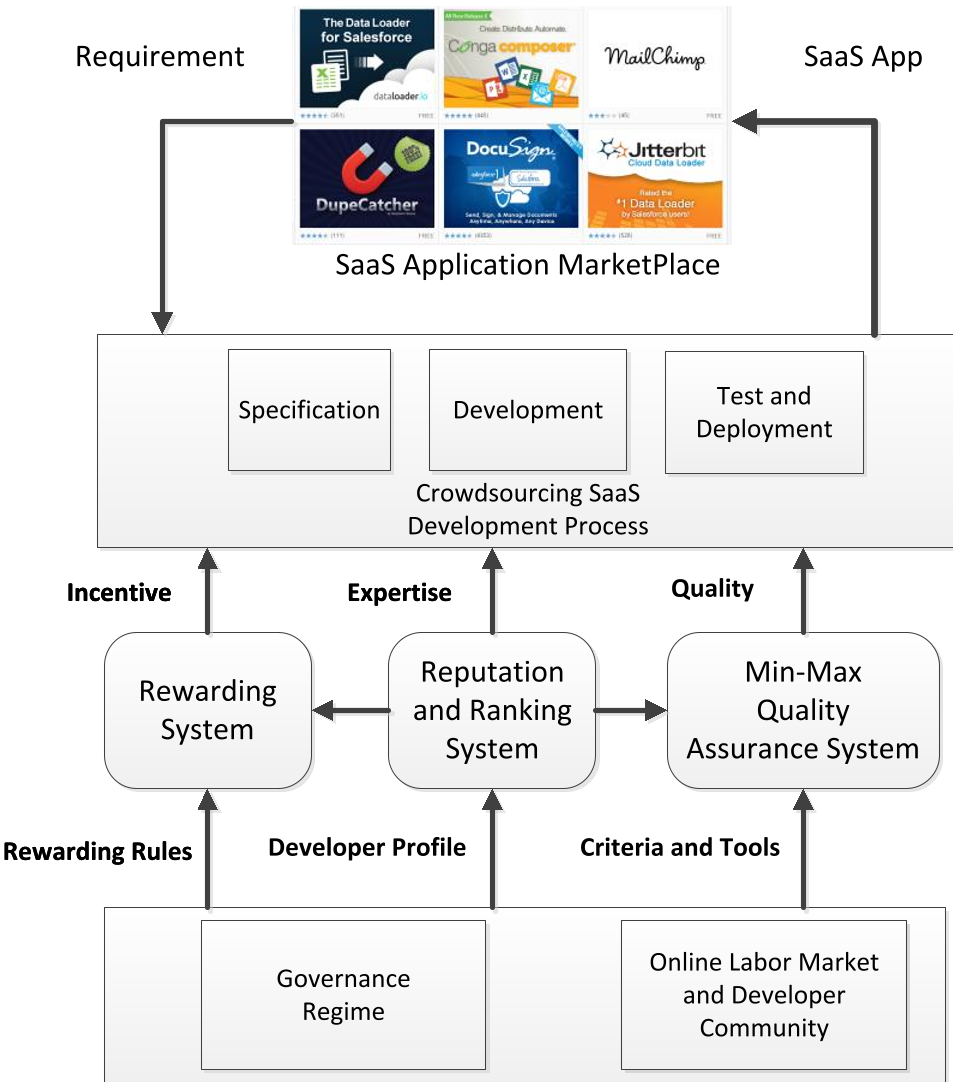
The authors define a Competition Network (), where an edge exists if two developers compete in the same contest. They refined this by weighting edges based on the competitor's ranking, essentially quantifying how much "threat" a rival poses.
Experimental Insights: Data from a Decade
Analyzing 14,751 contests from 2004 to 2014, the study found that high-difficulty tasks like Architecture and Assembly command significantly higher prizes (1300) compared to simple coding.
The most striking discovery was the Clustering Effect. High-quality projects (measured by final review scores) showed much higher Clustering Coefficients (Pearson = 0.603).
- High-Quality Projects: Formed "stable teams" of competitors who followed the project from specification through to testing.
- Low-Quality Projects: Had fragmented networks with transient participants.
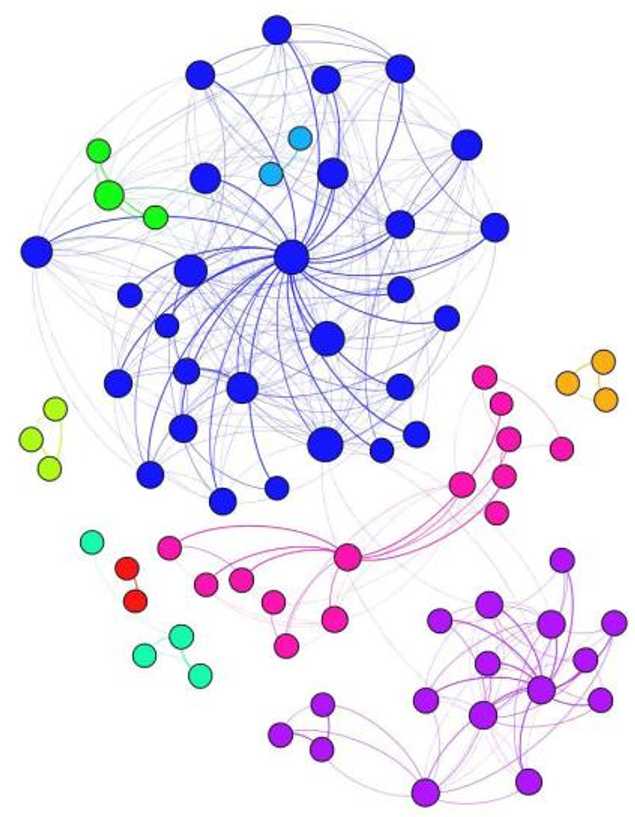 In the figure above, Network B (right) shows denser connectivity and clustering, directly resulting in superior software output compared to the sparse Network A.
Critical Analysis & Conclusion
This research moves the needle by proving that competition is a social coordination mechanism. The takeaway for SaaS vendors is clear: don't just throw money at a crowd. Instead, design a sequence of contests that encourages a "developer cohort" to stick with the project lifecycle.
Limitations: The data precedes the massive shift toward AI-assisted coding (Copilot/ChatGPT era). Future work should explore how automated tools change the cost function () of participants and whether this breaks the traditional Nash equilibrium of crowdsourcing.
Final Thought: The success of crowdsourced SaaS isn't just about the size of the crowd—it’s about the density of the network that forms within it.