
Beyond Metrics: Decoding Security Vulnerabilities via Traceable Code Patterns
Towards a software vulnerability prediction model using traceable code patterns and software metrics
This paper introduces a software vulnerability prediction framework utilizing "traceable patterns" (micro and nano-patterns) alongside traditional software metrics. By leveraging machine learning on Java-based projects like Apache Tomcat and CXF, the study demonstrates that code patterns significantly outperform traditional metrics in Recall and False Negative rates for identifying security flaws.
TL;DR
Building secure software is often a "detect and fix" race. While traditional software metrics have been the industry standard for assessing code quality, they often act as blunt instruments for security. This paper introduces a more surgical approach: Traceable Patterns. By analyzing the structural "DNA" of Java classes (micro-patterns) and methods (nano-patterns), the researcher proposes a prediction framework that significantly reduces False Negatives, catching vulnerabilities that traditional complexity metrics overlook.
The Problem: The High Cost of Missing Vulnerabilities
Most security debt remains hidden because existing metrics (like Cyclomatic Complexity or Churn) are too abstract. They tell you that a file is "complex," but not why it is "dangerous."
The author identifies two critical gaps:
- High False Negative (FN) Rates: Traditional metrics often label vulnerable code as safe.
- Lack of Guidance: Developers receive no actionable insights on how to refactor a "complex" class into a "secure" one.
Methodology: The Anatomy of Micro and Nano-Patterns
The core innovation lies in the use of Traceable Patterns—mechanically recognizable structures in code.
- Micro-patterns (Class-level): Structural conditions like
DataManager(encapsulated fields) orStateless(no instance fields). - Nano-patterns (Method-level): Properties of individual methods, such as how they interact with fields or calling conventions.
The author utilized tools like JiraExtractor and Understand 4.0 to analyze datasets from Apache Tomcat, Apache CXF, and Stanford SecuriBench. By calculating the Phi-coefficient, the study identifies which patterns are "vulnerability-prone" versus those that are "neutral."
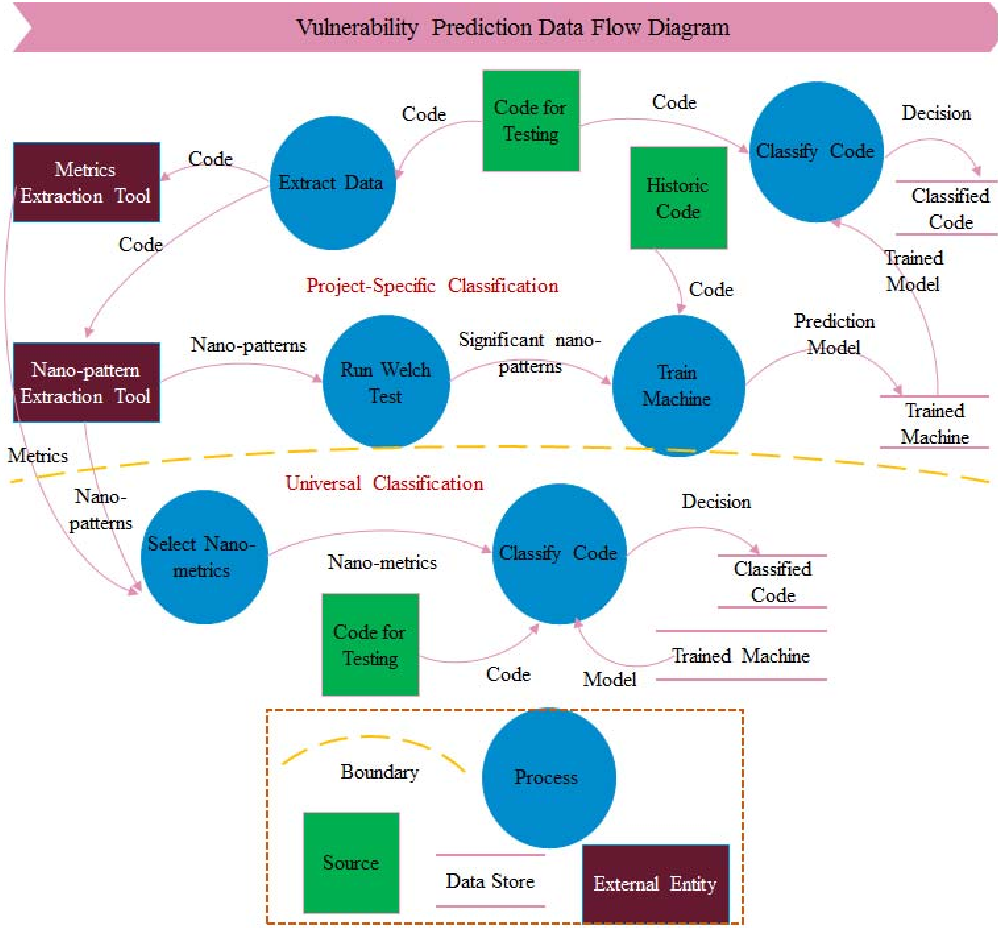 Fig. 1: The proposed workflow offering Universal and Project-Specific classification paths.
Experiments & Key Findings
The research evaluated several ML models (Logistic Regression, SVM) using patterns vs. metrics.
1. Superior Recall and Lower False Negatives
The performance data reveals a clear winner. In security, Recall is king—we care more about catching all vulnerabilities than accidentally flagging a few clean ones.
 Table 1: Performance of Micro and Nano-patterns in Tomcat-7.
Contrast this with Table 2 (Traditional Metrics) below. Notice that while metrics have high precision, their False Negative rates are consistently higher than pattern-based models (e.g., 0.143 vs 0.104 in SVM).
 Table 2: Traditional class and method-level metrics performance.
2. Pattern Evolution: The "Fix" Signature
The author tracked how patterns change when a bug is fixed. A common transition found was CommonState → Stateless. This suggests that state-heavy classes are more susceptible to vulnerabilities, and moving toward stateless architectures is a statistically proven security improvement.
Critical Insights: Universal vs. Project-Specific Models
The paper proposes two deployment strategies for these findings:
- Universal Classification: A "pre-tuned" model trained on massive open-source data (like Apache) that developers can use instantly on new projects.
- Project-Specific Classification: A model trained on a project’s own history using Welch’s t-test to identify local patterns that consistently lead to security leaks.
Conclusion & Future Outlook
This work marks a shift from descriptive metrics (what the code looks like) to predictive patterns (how the code behaves security-wise). By pinpointing dangerous constructs like AugmentedType or Outline, developers can perform targeted testing on the most "defective-prone" components.
Limitations: The study is currently centered on Java. However, the logic of traceable patterns is applicable to any object-oriented language. The next frontier will be developing "security-only" patterns—specialized constructs that uniquely identify injection or overflow risks before the code is even compiled.
Senior Editor's Note: This research provides a robust foundation for building "Security-Aware" IDEs that could warn developers in real-time when they implement a pattern statistically linked to historical breaches.