
SoLoMo Marketing: The Strategic Convergence of Social, Local, and Mobile
Using the Concept of SoLoMo Marketing in Digital Environment to Increase Brand Awareness and Communication with Customers
This paper explores the integration of "SoLoMo" (Social, Local, Mobile) marketing to enhance brand awareness and customer engagement. Focusing on a Slovakian SME in the hospitality sector, it validates the effectiveness of Facebook-driven geolocation advertising in driving real-world foot traffic.
Executive Summary
TL;DR: This research investigates the SoLoMo (Social, Local, Mobile) marketing framework as a tool for SMEs to bridge the gap between digital interaction and physical sales. By utilizing Facebook's advanced targeting and geolocation features, the authors demonstrate how a newly established business can rapidly build brand awareness and drive localized customer traffic.
Contextual Positioning: In the academic landscape, this paper serves as an empirical validation of the SoLoMo concept. While the theoretical foundations emerged around 2013-2015, this work provides a practical blueprint for integrating these pillars in the specifically under-explored Slovakian digital market.
The Motivation: From Passive Reach to Contextual Engagement
The "classic" digital marketing approach—simply having a website or a Facebook page—is no longer sufficient. Today's "fragmented and diversified market" presents a unique challenge: the Attention Economy.
The authors identify that standard advertising often misses the Contextual Trifecta:
- Social: The power of word-of-mouth and virtual visibility.
- Local: The physical proximity of the customer to the business.
- Mobile: The device that is always present and ready for action.
The motivation behind this study is to prove that when these three elements overlap, the marketing message shifts from being an "annoyance" to a "service" that solves the user's immediate problem (e.g., "Where can I find a place to stay right now in this city?").
Methodology: The SoLoMo Integrated Framework
The core methodology revolves around a four-step monitoring and implementation process applied to a new business in the catering and accommodation sector.
1. The SoLoMo Architectural Pillars
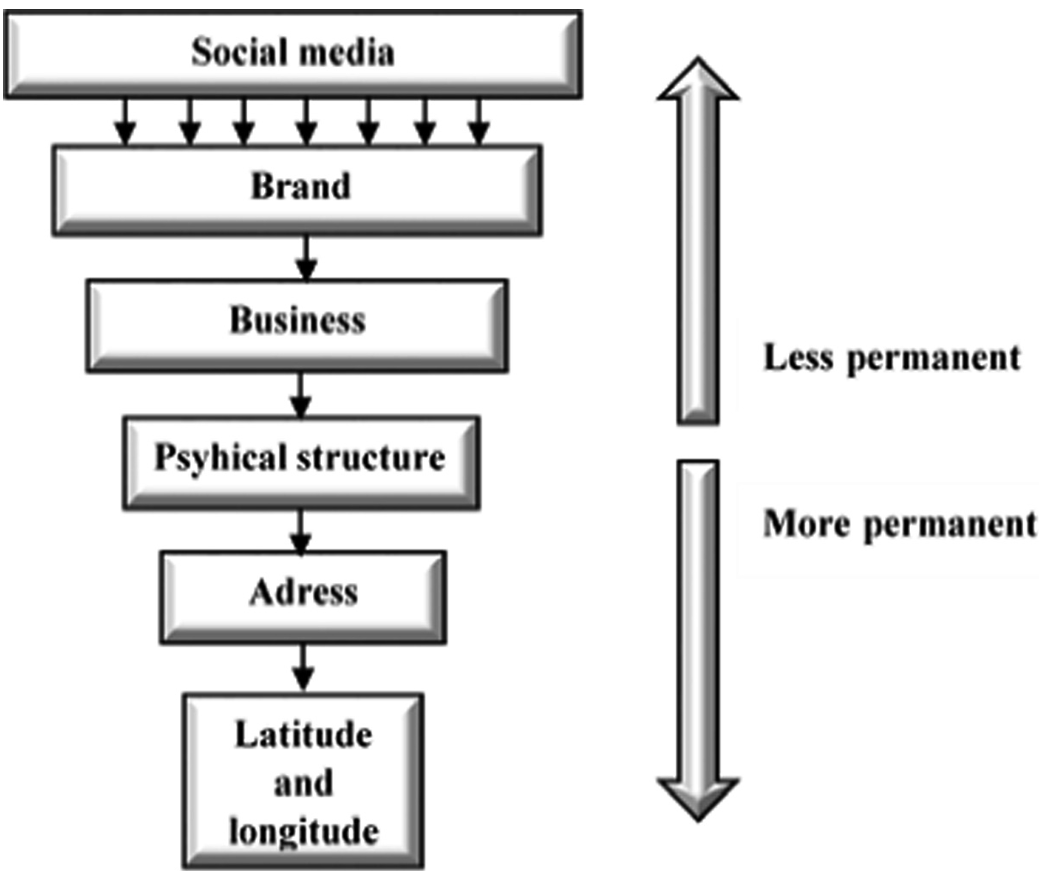
The authors define the mechanism through three distinct but interconnected layers:
- Social (The Connector): Using Facebook not just for ads, but for community building and "two-way dialogue."
- Local (The Filter): Utilizing GPS, Wi-Fi, and Bluetooth (Beacons) to trigger messages based on the "geographic code."
- Mobile (The Interface): Ensuring that the entire conversion funnel—from the Facebook ad to the booking menu—is optimized for smartphone users.
2. Campaign Strategy
The study focused on a "Summer Events" campaign. Rather than maximizing the frequency of posts (the "quantity" trap), the researchers shifted to Quality & Differentiation, focusing on:
- Creating a "Wow" effect with high-quality visual content.
- Solving immediate customer problems (e.g., last-minute accommodation).
- Active crisis communication and problem-solving via Facebook comments.
Experiments & Results: Turning Clicks into Customers
The performance was measured by tracking user demographic data and, crucially, the number of actual service orders/bookings.
Key Performance Indicators (KPIs)
- Engagement: The demographic data revealed a highly targeted reach (primarily ages 18-44), ensuring that the ad budget wasn't wasted on irrelevant audiences.
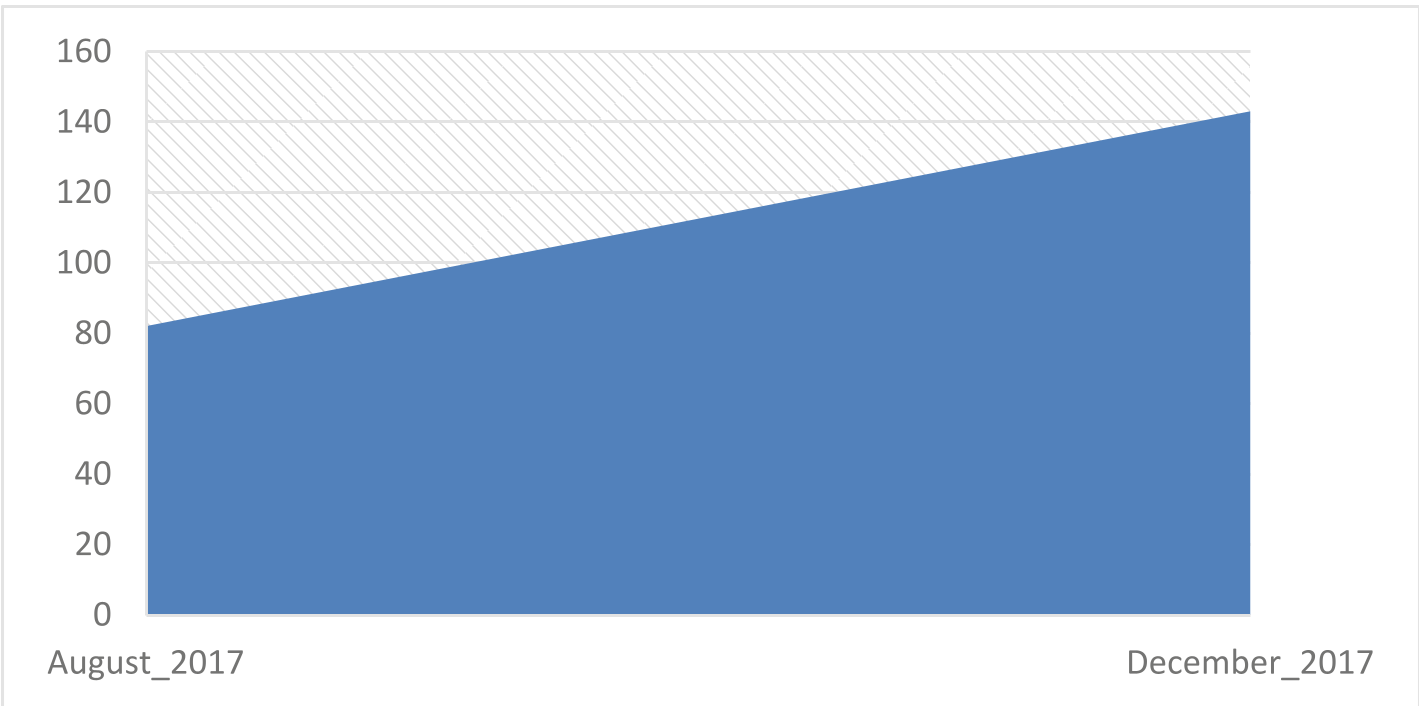
- Conversion: The most striking result was the correlation between campaign activity and customer volume. Before the campaign, physical visits were minimal. Post-launch, the "number of customers who found accommodation" peaked significantly within the reference month.
The "Smarter, Not Harder" Insight
A significant takeaway from the experimental phase was that 54% of smartphone users report technical issues on websites. The study proved that Technical SEO for Mobile is just as important as the ad content itself. If the local ad is successful but the website menu is incomprehensible on a phone, the conversion fails.
Critical Analysis & Conclusion
Takeaways
The paper clarifies that SoLoMo is not a "buzzword" but a fundamental shift in perceived value. By utilizing real-time geographic information and social proof, businesses can move from persuasion to solution-providing.
Limitations & Future Outlook
While the study provides a successful case, it is limited by its focus on a single SME in a specific region (Slovakia).
- Future Research: Needs to explore the integration of Data-Driven Optimization (AI/ML) to automate A/B testing in real-time.
- Privacy Concerns: The reliance on "geographic codes" and user location monitoring raises privacy issues that modern marketers must navigate as regulations like GDPR evolve.
In conclusion, the SoLoMo model represents a strategic imperative: for a business to be visible in the physical world, it must first be integrated correctly into the digital pocket of the consumer.