
SoReC: Decoding Influence via Social Stability in Dynamic Mobile Networks
SoReC: A Social-Relation Based Centrality Measure in Mobile Social Networks
This paper introduces SoReC (Social-Relation based Centrality), a novel measure for identifying influential users in dynamic Mobile Social Networks (MSNs). By combining a new direct contact metric (SRS) with indirect neighbor relations and Entropy theory, SoReC achieves superior performance in predicting future info-diffusion capabilities on real-world datasets like MIT Reality Mining.
TL;DR
Identifying influential nodes in Mobile Social Networks (MSNs) is notoriously difficult due to the constant "churn" of connections. SoReC (Social-Relation based Centrality) shifts the focus from simple connectivity to Social Stability. By modeling direct and indirect relations through a sine-based stability metric and Entropy theory, it outperforms traditional measures like PageRank in predicting which users will actually spread information the furthest in real-world scenarios.
The Dynamic Dilemma: Why Static Centrality Fails
In a typical 5G or D2D (Device-to-Device) environment, users move, encounter others briefly, and move on. Static graphs—where a link either exists or doesn't—throw away the most vital piece of the puzzle: Temporal Dynamics.
Most prior work relies on Encounter Frequency (EF) or Total Contact Duration (TCD). However, these metrics are "blind" to regularity. Consider two scenarios:
- A user who meets a friend for 60 minutes once a month.
- A user who meets a friend for 2 minutes every day.
While TCD might be similar, the regularity of the second user offers far more reliable opportunities for data offloading and information diffusion. Current SOTA failed to distinguish these patterns—until now.
Methodology: Stability as the New Metric
The authors propose a two-tiered framework to capture the "Social Nature" of MSNs.
1. Direct Social Relations (The SRS Metric)
The core innovation is the Social-Relation Stability (SRS) metric. Instead of linear counting, it uses a sine function:
This mathematical choice is brilliant because the sine function's concavity ensures that the metric is positively correlated with Frequency, Longevity, and Regularity. It rewards "stable" relationships over "bursty" ones.
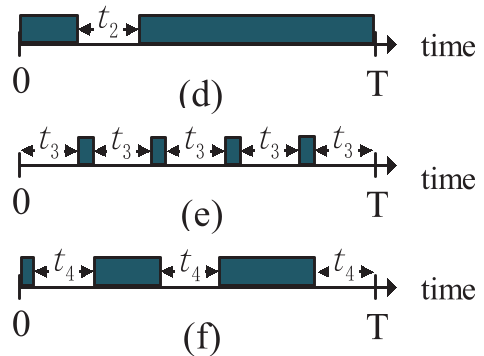 Fig 1: The SRS metric successfully differentiates patterns (c) through (f) where traditional ASP-based methods (LocalCom, TCCB) fail.
2. Indirect Relations and Influence Spheres
Influence isn't just about who you meet; it's about who they meet. SoReC calculates an in-SRS (indirect SRS) value, treating paths through neighbors as probabilistic chains. These are then aggregated using Entropy theory to determine a node's "Influence Sphere," weighting the breadth and intensity of their social reach.
Experimental Results: SIR Model Validation
The team tested SoReC on two iconic datasets: MIT Reality Mining and UCSD WTD. They used the SIR (Susceptible-Infected-Recovered) model to simulate a virus or information spreading through the network.
The results were conclusive:
- Higher Correlation: SoReC showed a much stronger Pearson correlation with actual influence range and speed compared to PageRank and Closeness.
- Head-heavy Accuracy: The measure was particularly effective at identifying the "Top-L" most influential nodes, which is the most critical task for viral marketing or network deployment.
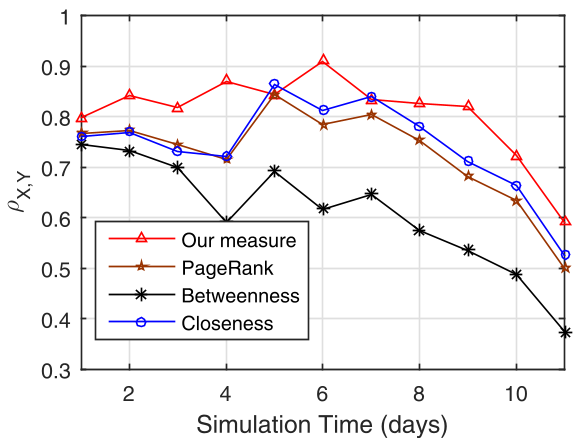 Fig 2: Correlation performance shows SoReC (red line) consistently maintaining the highest accuracy as the prediction interval grows.
Critical Insight & Future Outlook
The move from "contact-counting" to "stability-measuring" is a significant shift in MSN research. SoReC proves that social regularity is an inductive bias that significantly improves the performance of centrality algorithms in human-centric networks.
Limitations: The current model requires global knowledge of the network topology. In a massive-scale 5G deployment, calculating global SRS might be computationally expensive.
Next Step: The next frontier is Distributed SoReC—enabling devices to estimate their own centrality using only local "neighborhood" snapshots, a necessity for truly decentralized edge computing.
Conclusion
SoReC offers a robust answer to the volatility of mobile networks. By quantifying the "social glue" (stability) rather than just the "social sparks" (contacts), it provides a blueprint for more efficient 5G content delivery and network management.