
RSPO: Navigating Uncertainty in Cross-Platform Spam Detection
Spam Detection Approach for Cloud Service Reviews Based on Probabilistic Ontology
The paper proposes a Review Spam Probabilistic Ontology (RSPO) approach to detect spam reviews across diverse Social Media Platforms (SMPs). By combining traditional behavioral and linguistic features with two new indicators—Profile Authenticity and Opinion Deviation—the method leverages Probabilistic Web Ontology Language (PR-OWL) to handle information incompleteness and judgment uncertainty, achieving approximately 90% accuracy across multiple datasets.
TL;DR
Detecting fake reviews is a game of cat-and-mouse, made harder by the "information silos" of different social networks. This paper introduces the Review Spam Probabilistic Ontology (RSPO), a framework that uses Probabilistic Ontologies (PR-OWL) and Multi-Entity Bayesian Networks to identify spammers. By introducing features like Profile Authenticity and Opinion Deviation, and modeling the "shades of gray" in spam judgment, the authors achieve 90% accuracy across platforms even when user data is incomplete.
The Core Challenge: Missing Data and Heterogeneity
Most SOTA (State Of The Art) spam detectors are built for closed ecosystems like Amazon or Yelp, where user history is transparent. However, on Social Media Platforms (SMPs) like Facebook:
- Incompleteness: Metadata (account age, review history) is often hidden or unavailable.
- Heterogeneity: A "review" on one site is a "post" on another; "profiles" are "accounts."
- Uncertainty: A user might have a fake profile but write a genuine review (or vice versa). Static, binary logic (Spam vs. Honest) fails in these nuanced scenarios.
Methodology: The RSPO Framework
The researchers moved beyond simple classification by building a Probabilistic Ontology. This allows the system to represent not just what an entity is, but the probability of its behavior.
1. New Feature Engineering
While using standard features (Rating Deviation, Early Time Frame), the authors add:
- Profile Authenticity (PA): Analyzes profile pictures, friend counts, and professional info to find "burner" accounts.
- Opinion Deviation (OD): Uses clustering to find "outliers." If a review's sentiment score significantly deviates from the cluster centroid of other reviews for the same service, it's flagged.
2. Multi-Entity Bayesian Networks (MEBN)
The architecture relies on MFrags (MEBN Fragments). Unlike traditional Bayesian networks that are static, MEBNs are dynamic templates that can be instantiated based on the specific situation.
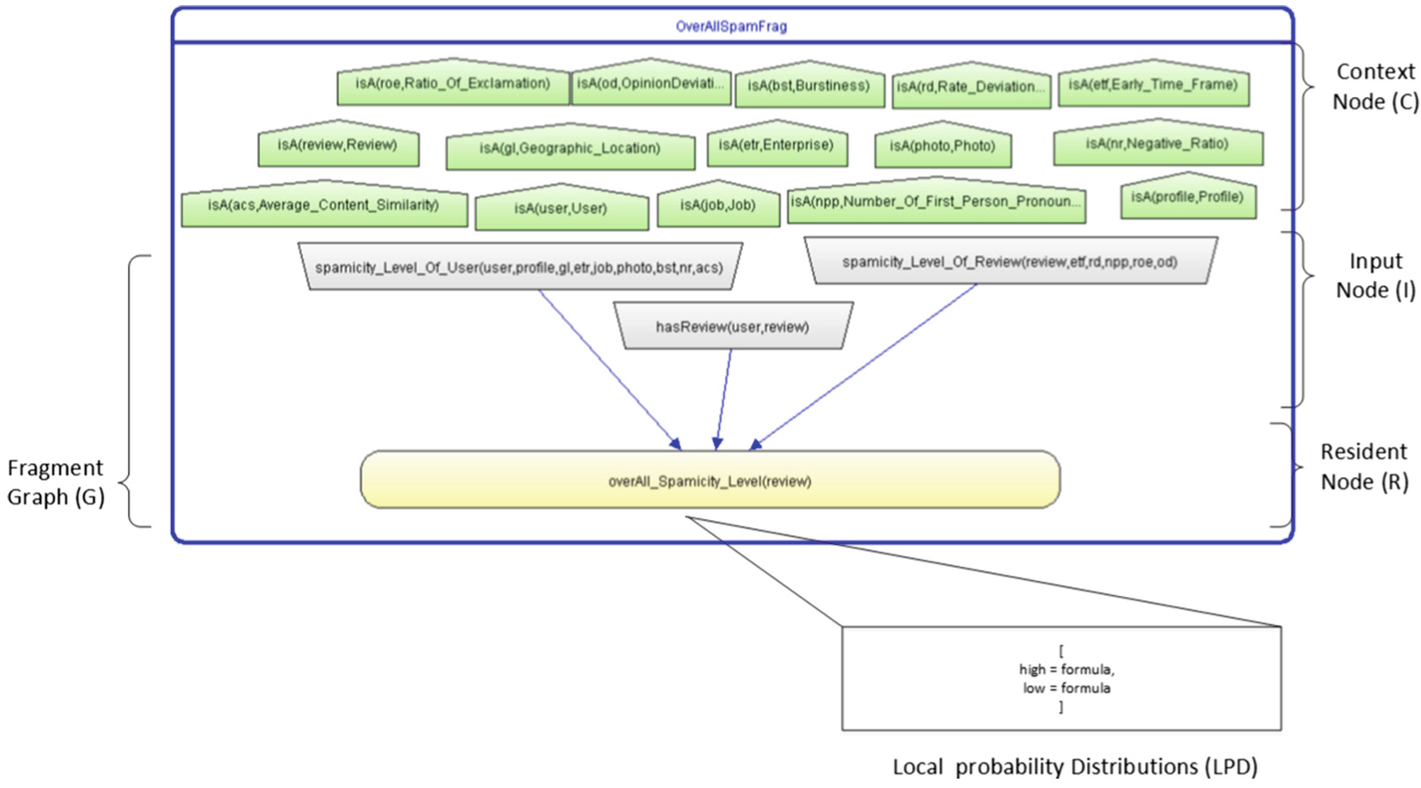 Figure 1: Example of an MFrag dealing with overall review spamicity.
The logic follows a clear hierarchy: Individual "clues" (Evidence) inform "Queries" (e.g., Is the profile authentic?), which finally aggregate into the Overall Spamicity Level.
Experiments and Insights
The model was tested on 3,000 reviews categorized into SNS (Facebook), RLI (LinkedIn-linked), and RF (Free platforms).
SOTA Comparison & Performance
The system maintained a consistent 90% Accuracy across diverse datasets.
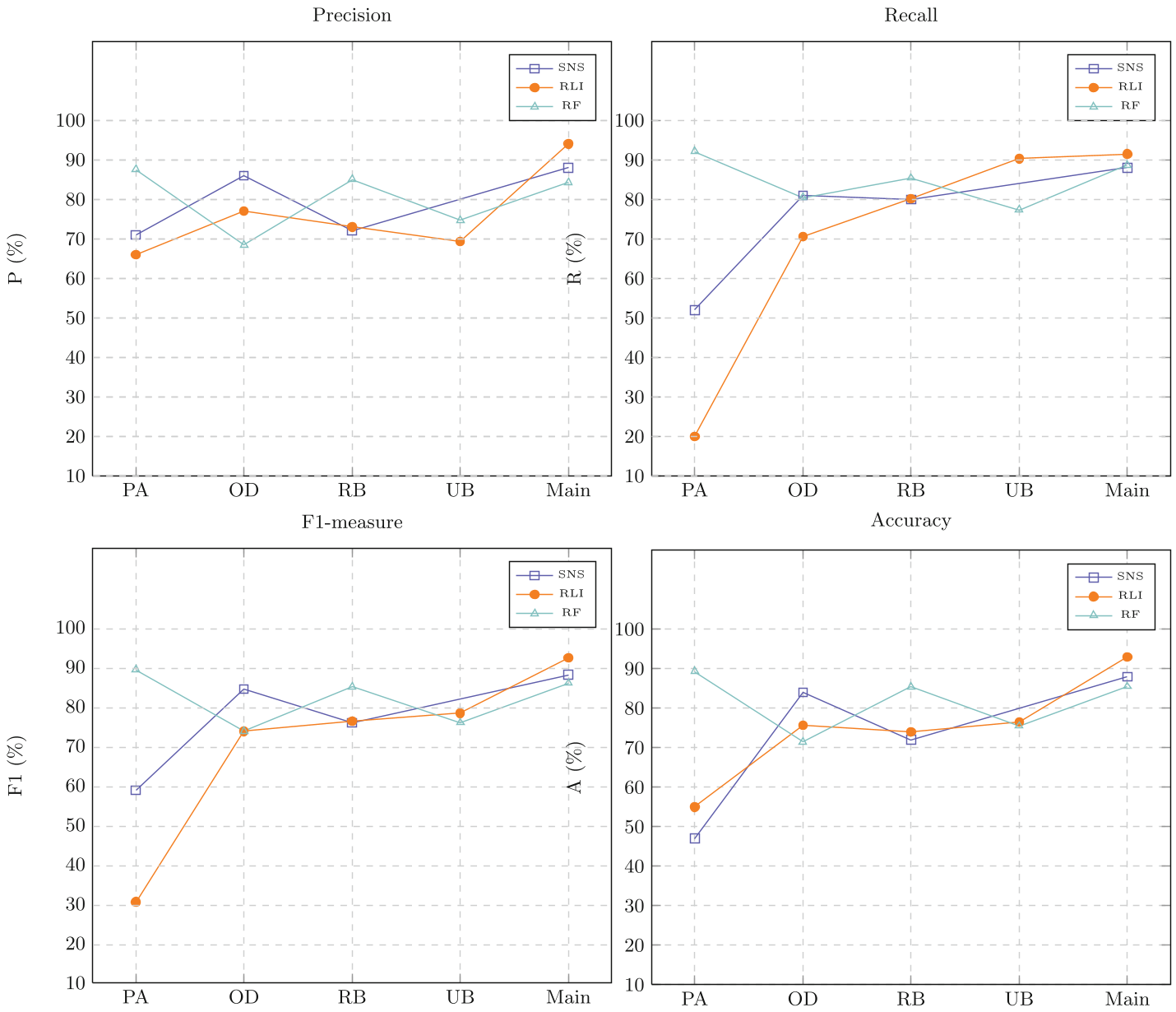 Figure 2: Performance metrics showing the stability of the RSPO approach.
Key Findings:
- The Authenticity Paradox: Spammers promoting a service (5 stars) often use authentic looking profiles to build trust, while those defaming a service (1 star) almost always hide behind fake identities.
- Resilience to Missing Data: In cases where "User History" was NA, the probabilistic nature of the MEBN allowed the system to remain functional, simply adjusting the confidence of its prediction rather than crashing or guessing blindly.
Critical Analysis
Why it works
The genius of this approach is the semantic abstraction. By mapping platform-specific terms (Post, Feedback, Review) to a unified ontology, the detector becomes platform-agnostic. The use of PR-OWL ensures that "low confidence" in one feature doesn't move the needle as much as "high confidence" in another.
Limitations
- Computational Overhead: Reasoning over complex probabilistic ontologies is generally slower than passing data through a simple Random Forest or Neural Network.
- Ground Truth Dependency: The model relies on expert annotation for the learning phase, which is expensive to scale.
Conclusion
The RSPO approach shifts the focus from "feature matching" to "probabilistic reasoning." By accounting for the uncertainty inherent in social media data, it provides a more reliable tool for consumers and businesses to filter the noise of organized spam campaigns. Future work involving the integration of this into zero-shot recommendation engines could revolutionize how we trust online cloud service reviews.