
Adaptive Gabor Sparse Representation: A Breakthrough in GPR Signal Classification
Sparse Representation of GPR Traces With Application to Signal Classification
This paper proposes an adaptive Sparse Representation (SR) framework for Ground Penetrating Radar (GPR) signals using a refined Gabor dictionary. The method decomposes complex radar traces into elementary waves to extract salient features, achieving state-of-the-art results in classifying subsurface materials like railway ballast conditions.
TL;DR
This research introduces an adaptive Sparse Representation (SR) framework specially designed for Ground Penetrating Radar (GPR). By decomposing radar traces into elementary Gabor waves through a dynamic dictionary refinement process, the authors achieve highly efficient signal modeling. The method yields "salient features" (delay, frequency, width, energy) that enable Support Vector Machines (SVM) to classify railway ballast conditions with up to 99.3% accuracy, significantly outperforming traditional Wavelet and STFT techniques.
Problem & Motivation: The Complexity of the Subsurface
Ground Penetrating Radar (GPR) is vital for non-destructive testing, from archaeological exploration to monitoring railway safety. However, the signals (traces) are notoriously difficult to process.
Current methods like the Discrete Wavelet Transform (DWT) or fixed-dictionary Sparse Coding often suffer from:
- Lack of Physical Intuition: Fixed bases don't "look" like the re-reflected Ricker pulses.
- Rigidity: They cannot adapt to varying resonance frequencies caused by different underground materials (clay vs. coal).
- High Dimensionality: Representing a signal accurately often requires too many coefficients, making feature extraction noisy.
The authors' Insight: GPR signals roughly resemble Gabor functions. If we can adapt the parameters of these functions (frequency , width , and delay ) to the signal itself, we can describe the entire physical interaction with just a few "atoms."
Methodology: Adaptive Signal Decomposition
The core innovation is the Adaptive Gabor Dictionary. Unlike K-SVD, which learns a dictionary from a large training set, this method refines the dictionary atom by atom for each specific trace.
The 3-Step Iterative Process:
- Selection: Use cross-correlation to find the best-fitting Gabor atom from an initial overcomplete dictionary.
- Adaptive Refining: Perform a hierarchical search to optimize the atom's frequency () and width () to minimize the residual error.
- Global Update: Re-solve the least-squares problem to update the weights () of all previously selected atoms, ensuring the most sparse representation possible.
 Figure 1: The proposed GPR classification pipeline using adaptive SR.
Experiments & Results: Efficiency vs. Accuracy
The authors tested their method on two major datasets: the Windmill Islands (Antarctic rock) and the Wollongong Railway data.
1. Representation Efficiency
When compared to K-SVD and DWT, the proposed method reached a target error (NRMSE) of 0.10 much faster. In many cases, just 6-8 coefficients were enough to reconstruct the complex radar trace, whereas Wavelets required double that amount.
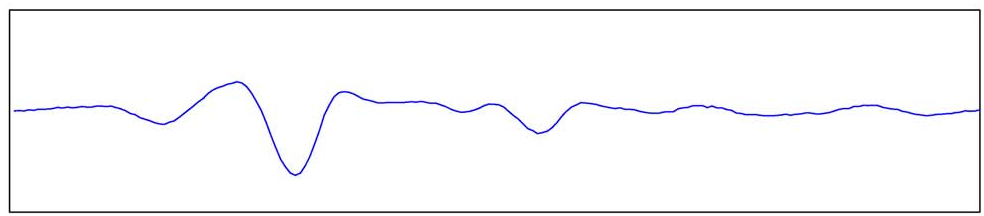 Figure 2: Performance analysis showing the proposed method tracks signal error more efficiently than K-SVD or Wavelets.
2. Classification Supremacy
The true value of this decomposition lies in the features: . By feeding these into an SVM, they achieved remarkable results in detecting "ballast fouling" (the contamination of railway rocks with clay or coal).
| Feature Type | Set 3 (Wet Conditions) Accuracy |
|---|---|
| Proposed Composite Feature | 99.3% ± 0.5 |
| STFT (Traditional) | 99.2% ± 0.5 |
| Wavelet (DWT) | 95.6% ± 1.1 |
The method proved particularly robust in Wet Conditions (Set 3), where water saturation usually makes signals extremely difficult to interpret for standard algorithms.
Critical Analysis & Conclusion
Takeaway
This work demonstrates that Adaptive Sparse Representation serves as a bridge between pure signal processing and physical modeling. By allowing the Gabor dictionary to "flex" its parameters, it captures the physical characteristics of underground reflectors—such as their depth (delay) and material property (bandwidth/frequency)—directly in the feature vector.
Limitations & Future Work
While highly accurate, the iterative hierarchical search for each atom is computationally more expensive than a simple FFT or DWT. Future research could explore Deep Unrolling (e.g., LISTA architectures) to speed up this sparse decomposition process, making it suitable for real-time GPR scanning on high-speed inspection trains.
Despite the complexity, the ability to decompose a messy radar trace into 3-4 distinct, physically interpretable waves is a massive step forward for geophysical pattern recognition.