
Beyond Crowdsensing: A Unified Blueprint for Spatial Crowdsourcing Platforms
A generic architecture for spatial crowdsourcing
The paper introduces a generic architecture for Spatial Crowdsourcing Platforms (SCP). It synthesizes research from scientific literature and an analysis of nine commercial platforms (e.g., Uber, TaskRabbit) to define a robust framework for location-dependent task brokering.
TL;DR
While most academic focus on spatial crowdsourcing is limited to smartphone-based sensing, this paper expands the horizon to include physical services like house cleaning and ride-sharing. By analyzing heavyweights like Uber and TaskRabbit alongside academic models, the authors propose a Generic Architecture for SCPs that bridges the gap between digital data collection and real-world physical tasks.
Background: The Academic-Industry Divergence
Spatial Crowdsourcing Platforms (SCPs) act as brokers matching location-dependent tasks with a willing workforce. However, a major rupture exists:
- Academia often views SCPs through the lens of crowdsensing—using mobile sensors to collect data.
- Industry focuses on services—moving people (Uber) or manual labor (TaskRabbit).
This paper seeks to unify these perspectives, ensuring that future platforms can handle anything from capturing a photo of a river level to mowing a lawn.
Requirements: What Makes an SCP Tick?
The authors derived a set of core requirements by auditing commercial platforms. Key insights include:
- Workflow Diversity: Commercial platforms usually stick to one workflow (e.g., bidding or direct assignment), but a generic architecture must support many.
- The Power of Rating: While academia focuses on complex probabilistic quality control, the industry relies heavily on reputation systems (Ratings).
- Multi-Platform Access: Contrary to the "mobile-only" academic assumption, many services (like Sereale) function perfectly well via web interfaces.
Methodology: The Proposed Architecture
The proposed architecture is a modular, server-client system designed for flexibility and scale.
1. Server-Side Intelligence
The heart of the system lies in three specialized managers: Task, Worker, and Requester.
- Task Life Cycle Manager: The "engine" that moves a task from "Open" to "In Progress" to "Validated" based on defined workflows.
- Matching Helper: This component uses algorithms to balance the interests of the worker (satisfaction), the requester (quality), and the platform (profit).
- Quality Controller: Validates outcomes, such as checking if a worker was actually at the required GPS coordinate.
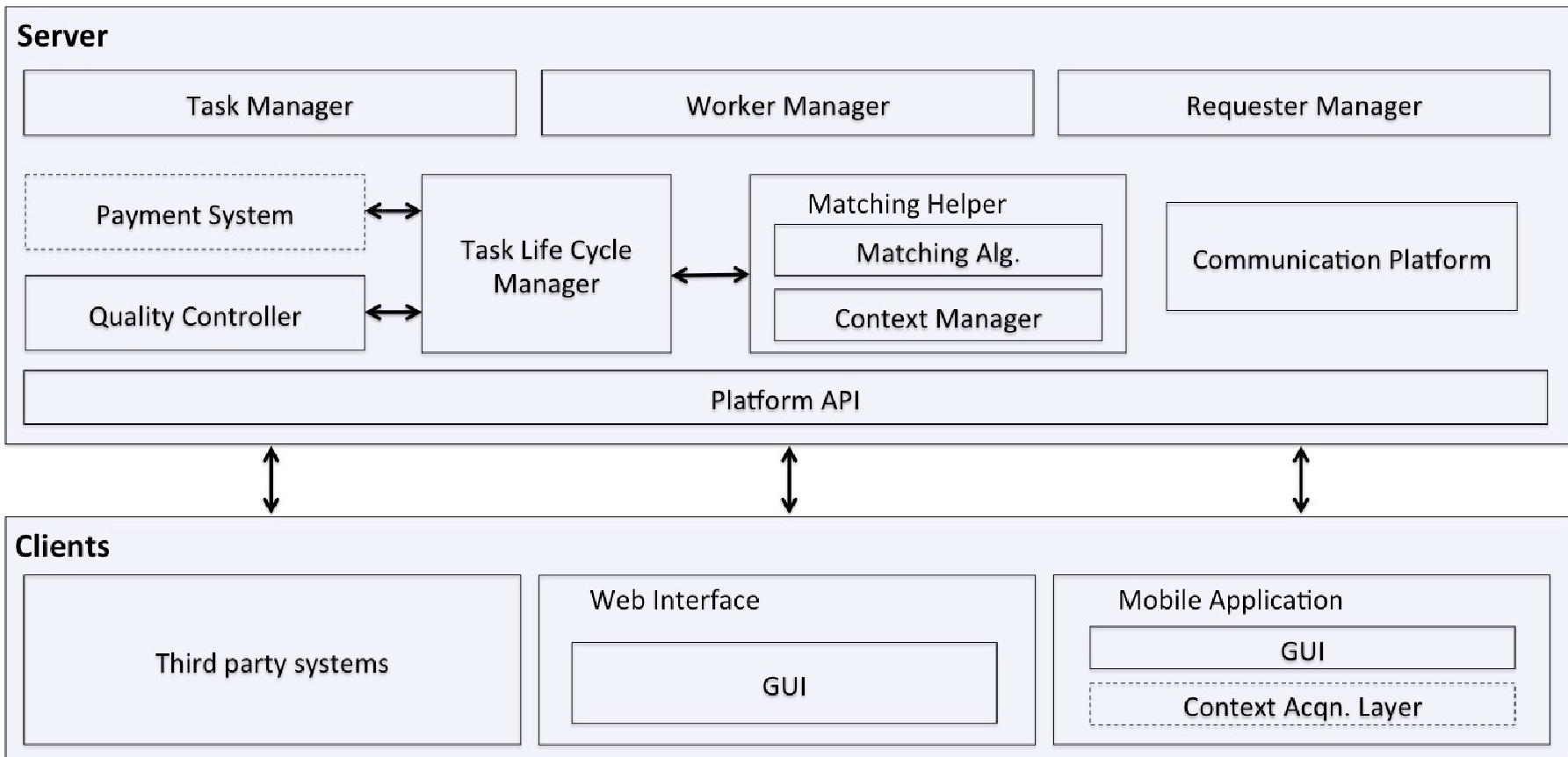 Fig. 1: The high-level decomposition of the proposed SCP architecture.
2. Client-Side and Context
The architecture includes a Context Acquisition Layer on the mobile side. This isn't just for GPS; it tracks activity and transport modes to suggest tasks that fit a worker's current "flow," reducing the friction of contribution.
Validating the Blueprint
The authors validated their requirements against a matrix of commercial giants. The results highlight a critical finding: Incentive Mechanisms (CR1) and Communication Tools (CR9) are universal, while Social Network Integration (CR5) is often avoided by commercial platforms to prevent users from bypassing the platform to avoid fees.
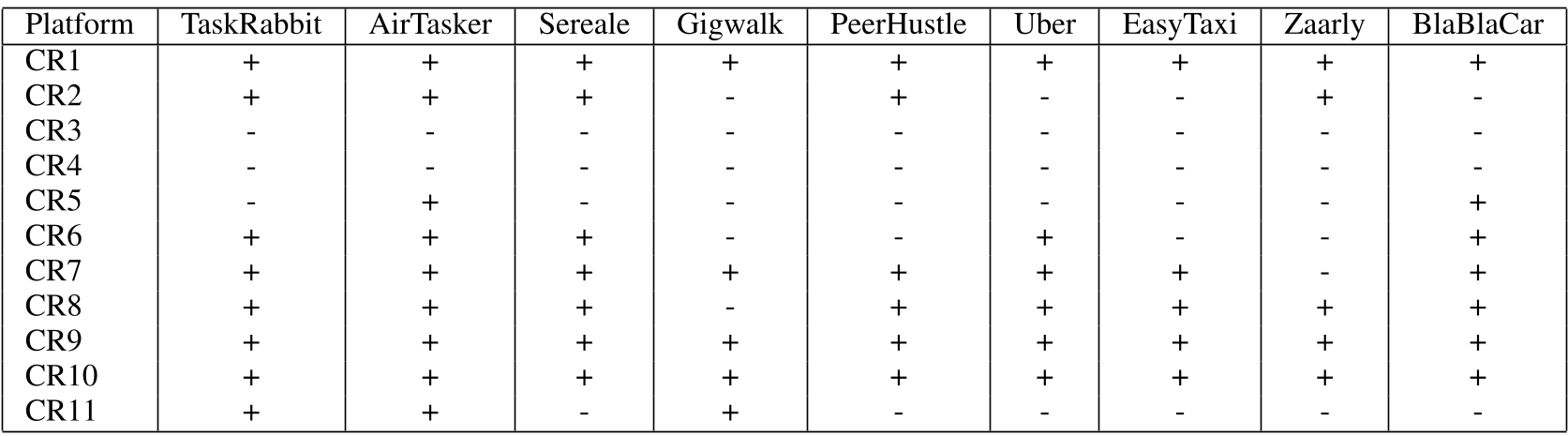 Table 1: Comparison of Candidate Requirements across commercial platforms like Uber, TaskRabbit, and BlaBlaCar.
Critical Insight: The "Human-in-the-Loop" Future
One of the most compelling aspects of this architecture is the Platform API. It allows for "Human Computation" where an automated system (e.g., a river monitoring AI) can automatically trigger a human task if its sensors fail. This creates a seamless integration between IoT and the human workforce.
Conclusion & Future Outlook
This work moves spatial crowdsourcing from a niche sensing research area into a mature software engineering discipline. By defining a Generic Architecture, the authors provide a roadmap for building the next generation of "marketplaces for everything."
The next frontier? Software Product Lines (SPL) for SCPs, which would allow developers to "check off" features (like bidding vs. assignment) and automatically generate a custom platform tailored to specific regional or industrial needs.