
Leveraging Spatial Neighbors: A New Frontier in Event Prediction with Adjustment-Bias
Spatial Event Prediction via Multivariate Time Series Analysis of Neighboring Social Units using Deep Neural Networks
2019-07-01
Summary
Problem
Method
Results
Takeaways
Abstract
This paper introduces a novel "adjustment-bias" () mechanism for spatial event prediction in social networks, specifically targeting social units with sparse data. By training Deep Learning models on data-rich neighboring nodes and applying the proposed bias vector, the researchers achieved State-of-the-Art performance in meteorological forecasting across a 5-city clique in China.
## TL;DR
Predicting events for a social unit with "scanty" data is a classic bottleneck in Social Network Analysis (SNA). This paper introduces a clever **Adjustment-Bias ($a_b$)** method that allows a model trained on a data-rich city to accurately predict events for a neighbor with minimal records. By optimizing a Deep Multilayer Perceptron (MLP), the authors achieved significant speedups and accuracy gains over traditional RNNs and statistical models.
## The Motivation: When Data is Sparse
In the context of social networks or interconnected cities, we often face a "data desert" for certain nodes. Previous work assumes every node has a rich history, but in reality, sensors fail or records are lost. The authors identify this as an **NP-Complete Satisfiability problem**. Their core insight: **Social units (cities) in a clique share intrinsic relationship patterns.** If we can learn the "physics" of the system from a well-documented node, we only need a small "nudge" (the bias) to make it work for a neighbor.
## Methodology: The Architecture and the "Nudge"
The heart of the solution isn't a more complex gate (like LSTM), but a better way to adapt simple, deep structures.
### 1. The Optimized MLP
Instead of relying on the heavy gates of LSTMs or GRUs, which the authors found to be prone to overhead, they used a **10-layer deep MLP**. They discovered that for multivariate time series, the *depth* of the network is more critical for feature abstraction than the specific type of neuron.
### 2. The Adjustment-Bias ($a_b$)
This is the paper's "secret sauce." The bias is calculated by finding the difference in feature means between the source ($x$) and the target ($y$):
$$a_b = ([\bar{f}_n^x] - [\bar{f}_n^y])^T$$
This vector is subtracted from the final prediction layer, effectively recalibrating the model to the target’s specific spatial-meteorological "offset."
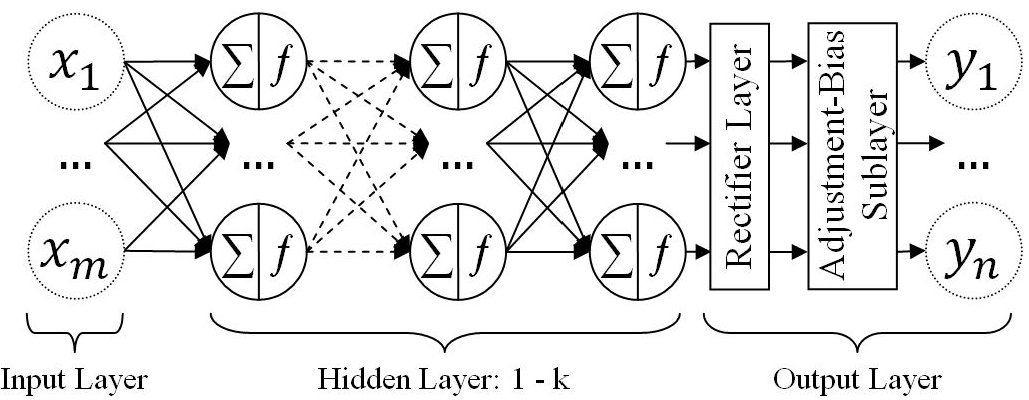
*Figure 1: The proposed workflow, showing the transformation of raw spatial data into calibrated predictions.*
## Experimental Results: Speed vs. Accuracy
The authors rigorously benchmarked their approach against 9 other models including Random Forest, KNN, VAR, and LSTM.
* **Accuracy:** The MLP with Adjustment-Bias reached a Validation RMSE of **5.00** on Dataset D3, outperforming all other Deep Learning and Statistical candidates.
* **Efficiency:** While Statistical models like VMA took over **6 hours** to train, the optimized MLP completed training in **50 seconds**.
* **Structure Insight:** The study interestingly notes that wide-and-shallow RNNs often perform as well as narrow-and-deep ones, but simple MLPs often provide the best trade-off for these specific regression tasks.
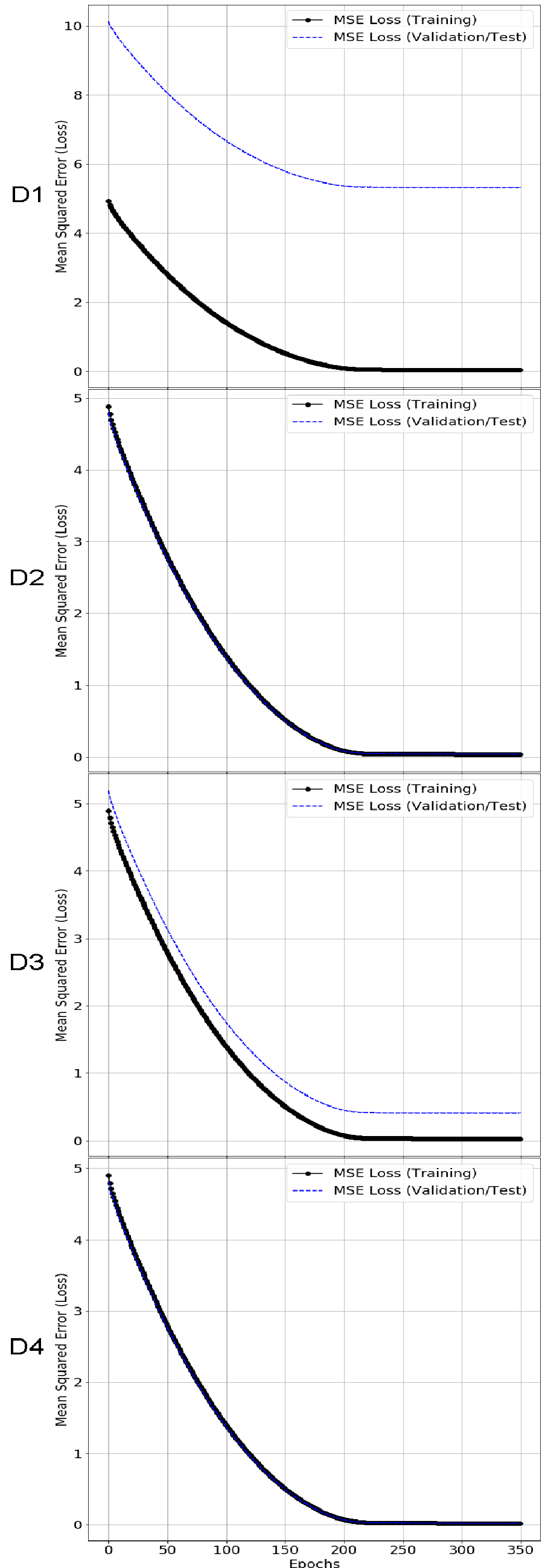
*Figure 2: Convergence of the Optimized MLP. Note how the training (thick) and validation (dotted) lines align closely, indicating high generalization without overfitting.*
## Critical Analysis & Takeaways
The standout contribution here is the **pragmatic simplicity**. In a field currently obsessed with increasingly complex Transformer architectures, this paper argues that for specific multivariate time-series tasks, a **properly calibrated MLP** is not just "good enough"—it's superior.
**Key Takeaways:**
* **Spatial Context Matters:** Use the "Clique" structure of your data to supplement missing information.
* **Don't Over-Engineer:** Gated mechanisms (LSTM/GRU) add significant training latency that might not yield accuracy dividends in every regression scenario.
* **The Power of Bias:** A simple mean-shift adjustment can act as a lightweight "Transfer Learning" mechanism.
## Future Outlook
The authors plan to extend this to **Model Hybridization** (e.g., combining CNNs for spatial features with MLPs for adjustment). For practitioners, the message is clear: when faced with sparse data in a network, look at the neighbors and don't be afraid to go deep with simpler neurons.