
SPDNA: Decoding the Academic Genetic Code for Smarter Scholar Recommendations
SPDNA: A User Recommendation Model for Academic Social Network
The paper introduces SPDNA (Scholar Profile DNA), a novel recommendation model for academic social networks. By encoding scholar attributes, behavioral preferences, and social influence into a binary "DNA" sequence, it achieves high-precision friend recommendation and out-of-sample performance compared to traditional Friend-of-Friend (FoF) methods.
TL;DR
In the vast ocean of academic social networks, finding the right collaborator is like finding a needle in a haystack. The SPDNA model (Scholar Profile DNA) treats every scholar's profile and behavioral data as a unique "Social Gene." By digitizing attributes and influence into a binary sequence, this model provides a highly effective way to match researchers based on their professional "DNA."
The Problem: Why "Friends of Friends" is Not Enough
Most social platforms suggest friends based on mutual connections (FoF). While this works for casual social media, academic networking is driven by intellectual alignment and professional authority. Existing methods often suffer from:
- Semantic Blindness: Failing to understand that "Big Data" and "Data Mining" are closer than "Big Data" and "Big Oil."
- Static Bias: Ignoring how active or influential a scholar actually is within the community.
- Data Sparsity: Difficulty in making recommendations when common friends are few.
Methodology: Building the Scholar's DNA
The SPDNA model is structured around three core "genetic segments":
1. User Property DNA (The Blueprint)
This segment encodes the academic pedigree:
- Degree and Affiliation: Hierarchical matching (e.g., same university > same province).
- Research Interests: Using Word2Vec trained on millions of papers to calculate semantic similarity rather than simple keyword matches.
2. User Preference DNA (The Behavior)
This segment captures active engagement. It tracks the teams a scholar joins, the courses they manage, and the groups they lead. The model uses Jaccard Similarity to compare these behavioral clusters.
3. User Influence (The Carrier)
Unlike traditional models, SPDNA uses influence as a "carrier width." It calculates influence via a Bayesian Average of interaction metrics (likes, comments, forwards) and response time (). This ensures that "hot" or authoritative scholars are prioritized appropriately.
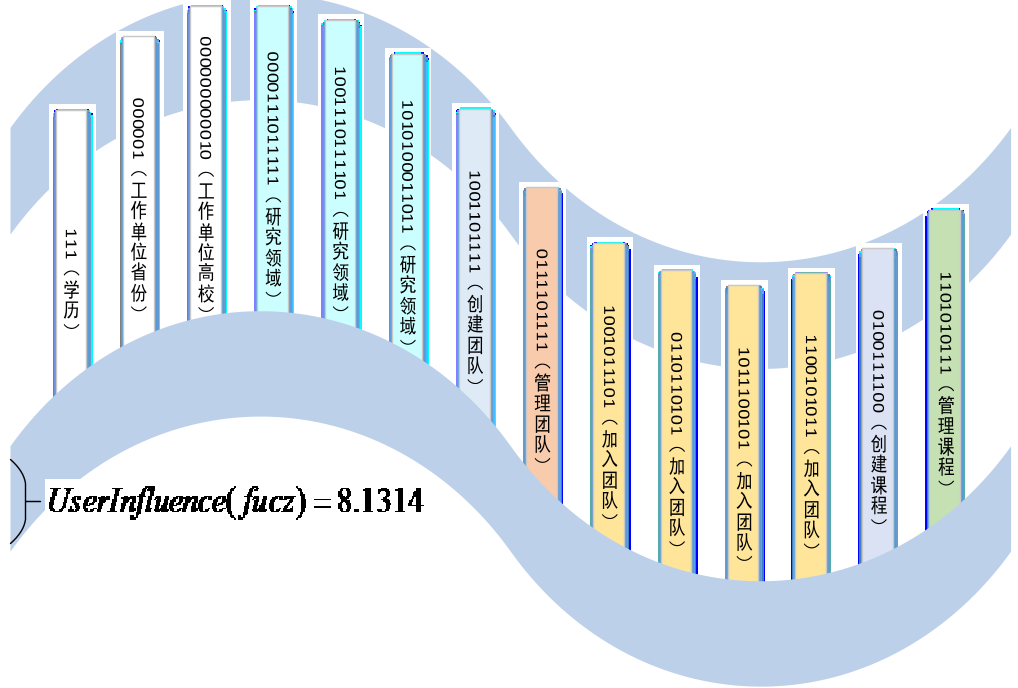 Figure 1: The visual representation of the SPDNA model and its constituent genetic factors.
Calibration and Matching
Because every scholar has a different number of interests and teams, their "DNA strings" vary in length. The paper introduces an SPDNA Calibration process. It uses color-coded segment matching to align identical factor types before calculating the final weighted similarity score.
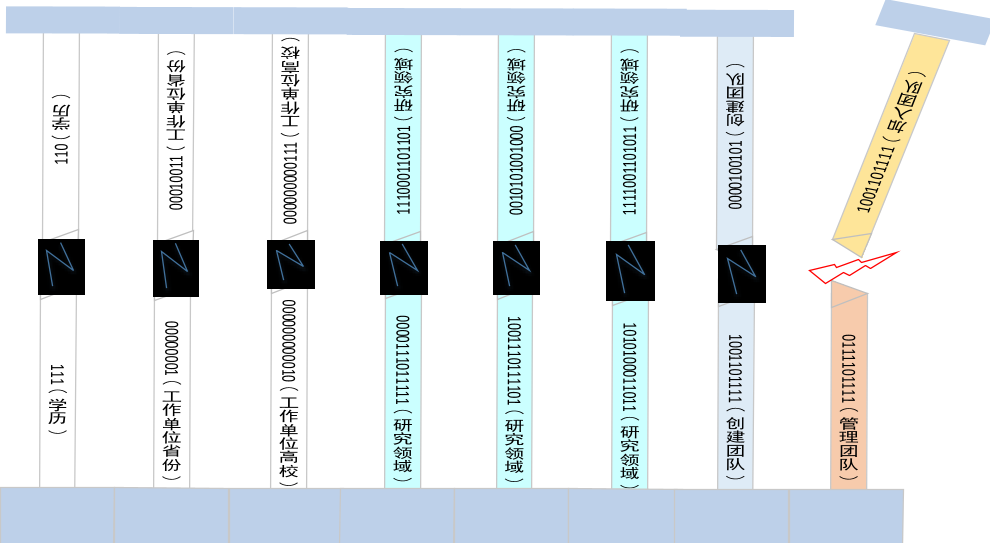 Figure 2: Alignment of mismatched DNA segments for similarity computation.
Experimental Insights: What Makes a Match?
The researchers conducted nine sets of experiments to find the optimal weights (). The results were telling:
- Academic Identity is King: The highest precision was reached when User Properties (especially research interests) were weighted at 70% ().
- The Power of VIPs: When tested on Weibo data, the model's accuracy improved significantly when filtering for "VIP" (high-influence) users, proving that social influence is a critical signal for recommendation quality.
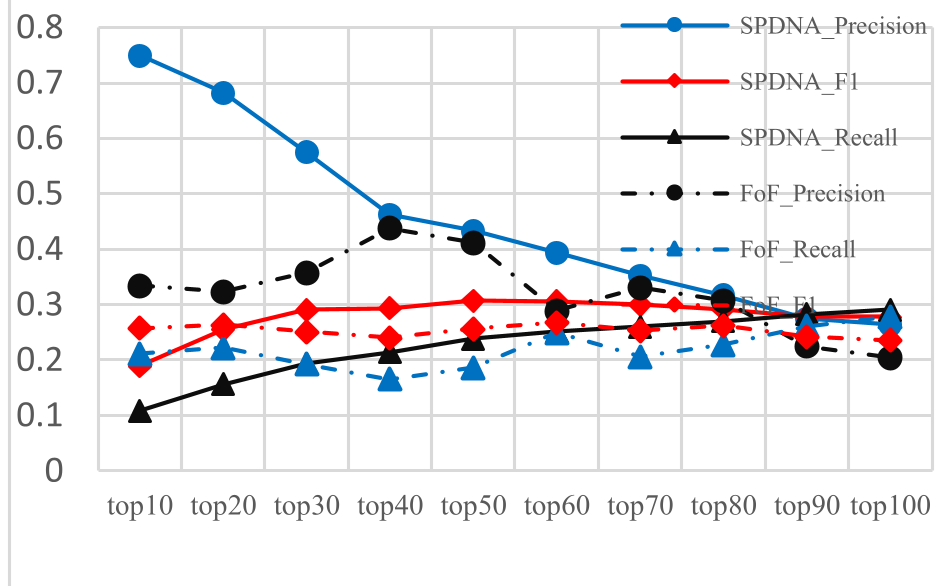 Figure 3: Comparative analysis showing SPDNA outperforming the standard FoF algorithm across Recall, Precision, and F1-Measure.
Critical Analysis & Future Outlook
Contribution: The SPDNA model successfully bridges the gap between content-based filtering and social network analysis. By incorporating Word2Vec for interest semantic matching, it overcomes the "lexical gap" found in older tag-based systems.
Limitations: The model currently relies on binary encoding which, while fast, may lose some nuance compared to vector embeddings used in modern Transformer-based models. Furthermore, the weight parameters () require manual tuning for different datasets.
The Future: As academic networks grow, the fusion of "Genetic" user modeling with Graph Neural Networks (GNN) could be the next frontier—combining the structural logic of the graph with the granular identity logic of the SPDNA.