
SERGE: Solving the Event Cold-Start Problem via Graph Entropy and Successive Feedbacks
SPECIAL SECTION ON CYBER-PHYSICAL-SOCIAL COMPUTING AND NETWORKING
The paper introduces SERGE, a Successive Event Recommendation framework based on Graph Entropy for Event-Based Social Networks (EBSN). It utilizes a dual-graph structure—a Primary Graph (PG) for historical context and a Feedback Graph (FG) for real-time user-event interactions—to achieve state-of-the-art performance in dynamic event recommendation and cold-start scenarios.
TL;DR
Recommending offline events is notoriously difficult due to the "event cold-start" problem—events have no history before they happen. SERGE (Successive Event Recommendation based on Graph Entropy) tackles this by building two separate graphs: a "Primary Graph" for deep historical context and a "Feedback Graph" for rapid user-action updates. By using Graph Entropy to decide which graph to trust more at any given second, it achieves superior accuracy in real-time event discovery.
Context: The Perishability of Events
Unlike books or movies, offline events (concerts, hikes, meetups) are ephemeral. They are announced, they happen, and they expire. This creates a dual challenge:
- Cold Start: How do you recommend an event that has zero participants so far?
- Asynchronous Feedback: If a user's friend joins an event at 2:00 PM, the system should ideally update that user's 3:00 PM recommendation list without retraining the entire multi-million node database.
Methodology: The Dual-Graph Engine
The core innovation of SERGE is its departure from the "one-size-fits-all" graph.
1. The Primary Graph (PG) - The Foundation
At the start of a period (), SERGE builds a high-fidelity graph. It doesn't just link users to events; it clusters tags into "Subjects," links users to "Groups," and connects events to "Hosts."
- Intuition: If you liked a "Jazz" event hosted by "Blue Note" in the past, and a new "Soul" event is hosted by the same "Blue Note," the PG connects these dots even if no one has RSVP'd yet.
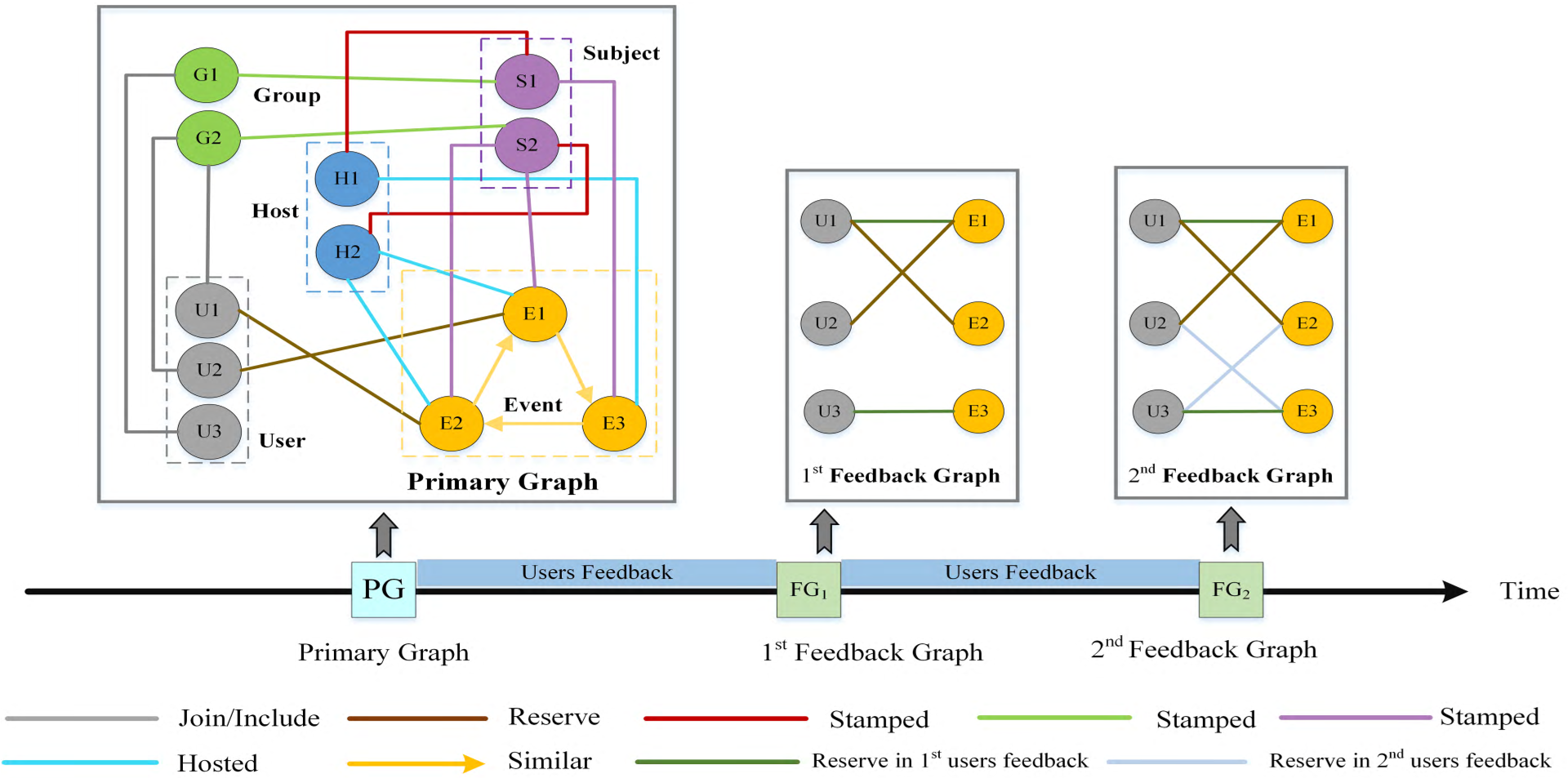 Figure 1: Comparison between the complex Primary Graph (left) and the agile Feedback Graph (right).
2. The Feedback Graph (FG) - The Pulse
The FG only contains users and events. It is lightweight and updated as soon as a user clicks "Interested" or "Reserve."
3. Graph Entropy: The Master Balancer
How do we combine the deep knowledge of PG with the fresh signal of FG? SERGE uses Graph Entropy. Where measures the topological diversity of a node. If the Primary Graph's entropy is high relative to the Feedback Graph, the system relies more on long-term preferences. As more people RSVP, the Feedback Graph’s entropy grows, and the system automatically shifts its weight to follow the "crowd."
Experiments and Insights
The researchers tested SERGE on two datasets from Douban Event (Beijing and Shanghai).
 Figure 2: Performance metrics across successive time steps ( to ) showing SERGE's consistent superiority.
Key Findings:
- Cultural Differences in Data: In Beijing, the "OnlyFG" model (using only participants' behavior) performed quite well, suggesting users there are heavily influenced by social proof. In Shanghai, users were more "individualistic," requiring the Primary Graph's attribute-matching to get accurate results.
- Efficiency: By not reconstructing the massive Primary Graph every time a single user RSVP'd, SERGE saved significant computational overhead while maintaining high Precision and Recall.
Critical Analysis & Conclusion
SERGE proves that we don't always need complex Deep Learning to solve real-time problems. By applying classical Graph Theory (RWR) and Information Theory (Entropy), the authors created a system that is both interpretable and robust.
Limitations: The current model relies on cosine similarity for event attributes. Future iterations could benefit from LLM-based embeddings to understand the "vibe" of an event announcement beyond just tags and categories.
Future Outlook: This "Successive Recommendation" approach is a blueprint for any O2O (Online-to-Offline) service where the "item" being sold is a moment in time—be it a limited-time restaurant pop-up or a flash sale.