
Decoding Academic Potential: A Factor-Analysis Approach to Finding Rising Stars
SPECIAL SECTION ON CYBER-PHYSICAL-SOCIAL COMPUTING AND NETWORKING
This paper introduces a novel framework for identifying "Rising Stars"—junior researchers with high future impact—within heterogeneous academic social networks. The method combines Factor Analysis for latent trait mining with CART decision trees to predict future citation counts, outperforming traditional PageRank-based iterative algorithms.
TL;DR
In the hyper-competitive world of academia, identifying the next "Einstein" before they become a household name is a high-stakes challenge for recruiters and collaborators. This paper moves away from slow, iterative graph algorithms like PageRank. Instead, it leverages Factor Analysis to distill latent "inner factors" from network 13 structural parameters and uses Decision Trees to predict future impact with over 80% accuracy.
Background: Why Predicting Impact is Hard
Current evaluation metrics like the H-index or G-index are essentially "trophies"—they tell us what someone has done, not what they will do. Meanwhile, graph-based methods like PubRank treat the network as a plumbing system where "authority" flows through links. While accurate, these are:
- Time-Consuming: They require multiple iterations across the entire network to converge.
- Surface-Level: They often ignore the behavioral "inner factors" that suggest why a researcher is gaining momentum.
Methodology: From Network Parameters to Inner Factors
The authors operate on a fundamental hypothesis: Outer behaviors (network parameters) are driven by inner factors (research potential).
1. Feature Engineering & Triple Closure
The model extracts 13 distinct parameters from a heterogeneous graph (comprising authors, papers, and journals). A standout inclusion is the Triple Closure principle. In network science, if Author A works with B, and B works with C, the likelihood of A working with C indicates a "tight" and efficient communication circle. The paper quantifies this to measure how effectively a junior scholar absorbs and transmits knowledge.
2. The Factor Analysis Bridge
To avoid the "curse of dimensionality," the authors use Factor Analysis () to map 13 raw parameters into a smaller set of latent factors. This assumes that things like "citation growth" and "co-author diversity" are actually manifestations of a singular underlying "Research Quotient."
3. Predictive Modeling with CART
Instead of a simple linear regression, the authors employ a Classification and Regression Tree (CART). This allows for non-linear decision boundaries—useful because academic success often follows a "long-tail" distribution where specific combinations of factors (e.g., high citation rate + influential co-authors) lead to exponential growth.
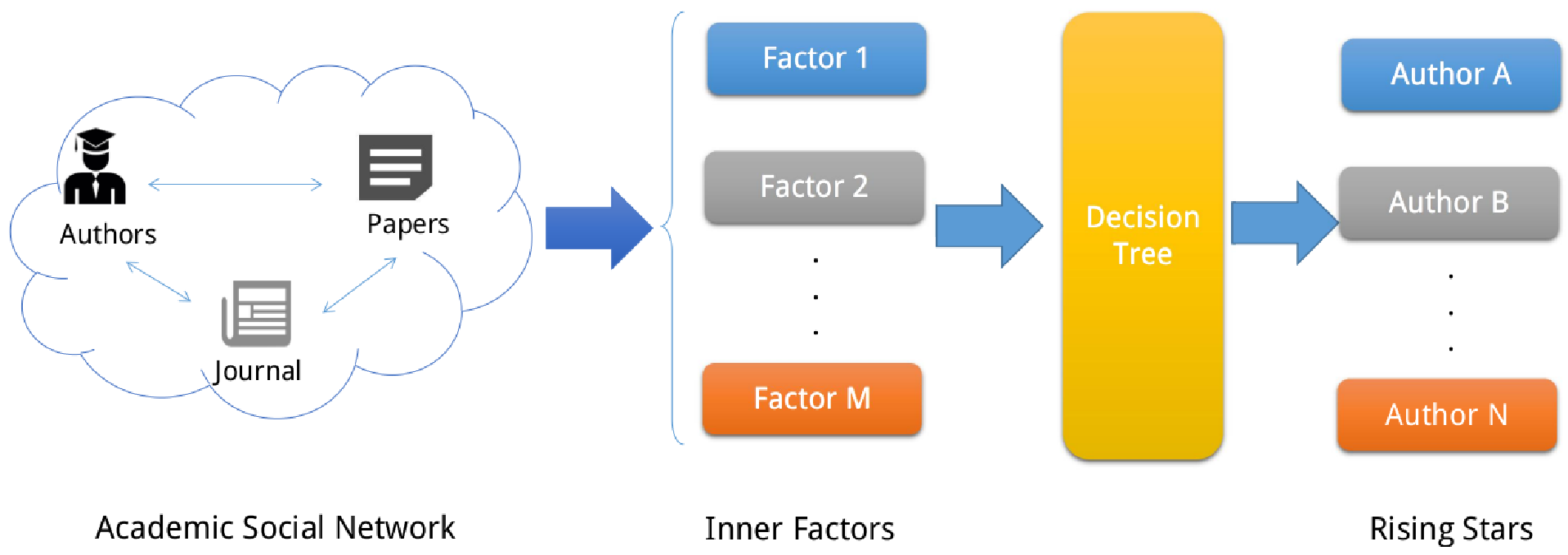 Figure 1: The overall pipeline from the heterogeneous network to the final decision tree output.
Experimental Results: Slaying the Baselines
The method was tested on the American Physics Society (APS) dataset, spanning decades of physics history (1970–2010).
- Hitting the Mark: In predicting the top 15% of authors, the proposed "Decision-Ex" method reached an accuracy of over 80% in the 1990-2000 cohort, far outstripping the standard PubRank.
- Finding the Giants: The model successfully flagged "Superstars" (those who would go on to gain >10,000 citations) which the baseline PageRank-style algorithms completely overlooked because their current "prestige" was too low at the time of evaluation.
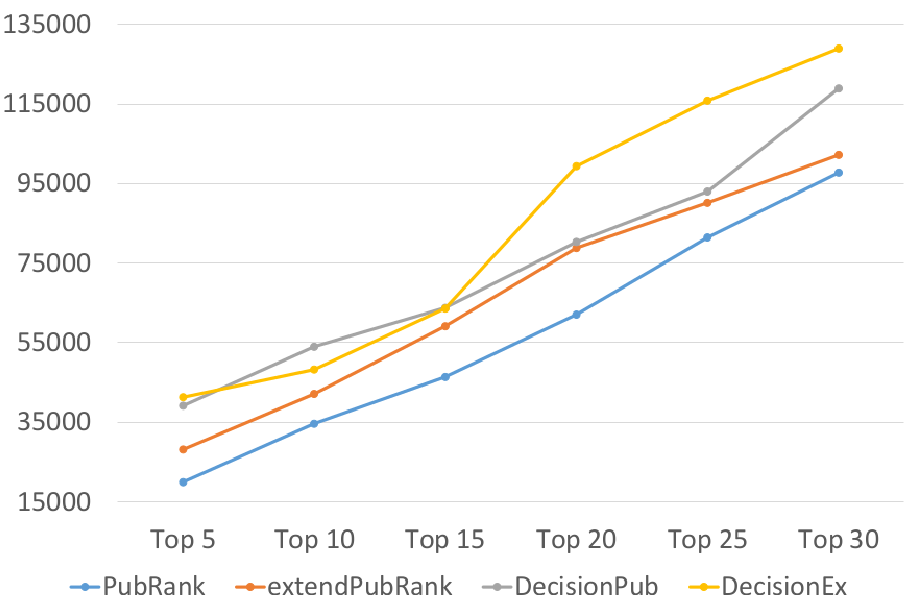 Figure 2: Citation yield comparison showing the method's superior ability to identify high-growth scholars over time.
Critical Insight & Future Outlook
The brilliance of this work lies in its computational efficiency. By replacing global graph iterations with local factor extraction and tree-based inference, it makes "Rising Star" detection scalable to massive, real-time social networks.
Limitations: The paper notes that performance varied across different historical decades. This suggests that "academic success factors" might be shifting—perhaps co-authorship mattered more in the 90s than it did in the 70s.
Takeaway: For research institutions and journal editors, this method provides a "Crystal Ball" that looks past current fame to find the latent potential hidden in the topology of a researcher's social connections.