
ISS-EWATUS: Architecting Social Networks for Sustainable Water Use
A Specialised Social Network Software Architecture for Efficient Household Water Use Management
This paper presents a specialized social network (SSN) software architecture designed for the ISS-EWATUS project to promote efficient household water management. It introduces a component-based framework that integrates social interactions, universal gamified rewards, and open interfaces to bridge the gap between niche behavioral change goals and large-scale user engagement.
TL;DR
The ISS-EWATUS project introduces a specialized social network (SSN) architecture designed to turn household water conservation into a collaborative, gamified experience. By integrating smart meter data with an open-interface software architecture, the system motivates users through "Universal Rewards" that can be used across different platforms, solving the engagement decay typically seen in niche utility apps.
Background & Motivation: Why Niche Social Networks Fail
Most social networks are horizontal (Facebook, X), designed for broad communication. Vertical or Specialized Social Networks (SSNs), however, target specific societal issues like environmental conservation. The authors identify three critical bottlenecks that prevent SSNs from succeeding:
- Lack of Goal Alignment: Social interactions often don't translate to actual utility savings.
- Island Incentives: "Points" earned in a water-saving app are usually useless elsewhere, leading to low motivation.
- Interoperability Barriers: Connecting real-time hardware (smart meters) with social feeds is technically fragmented.
Methodology: Bridging Social Tech with Utility Management
The core innovation lies in the alignment of social features with Water Conservation Management (WCM) theory. The authors don't just add a "like" button; they map interactions to specific instruments:
- Economic Instruments: Sharing water bills with friends to benchmark costs.
- Educational Instruments: Discussing water-saving tips or playing educational games.
- Encouragement: Earning badges for completing offline conservation tasks.
High-Level Architecture
The system is built on a component-based architecture to ensure loose coupling and high scalability.
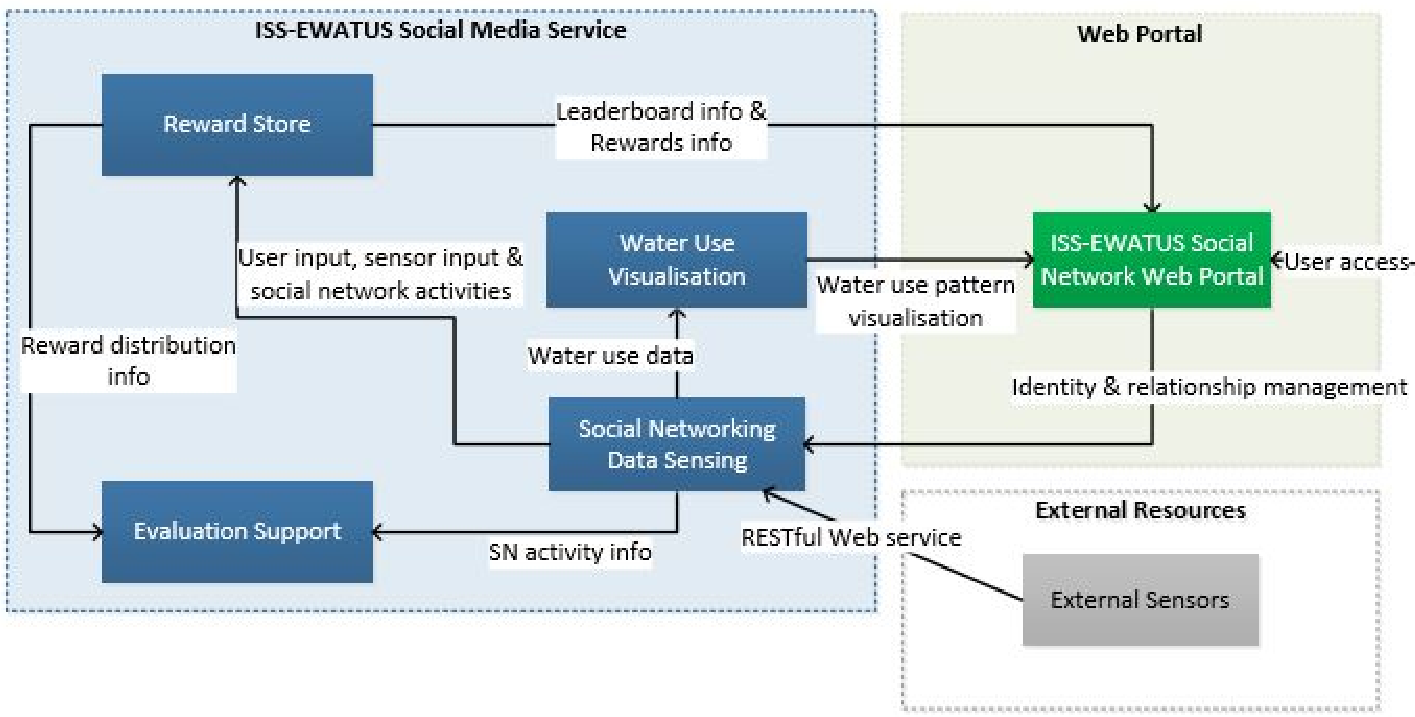 Fig 1: The architecture separates the "Social Media Service" from "External Resources" like smart meters and "Web Portals" for cross-platform access.
The Reward Store: Solving the Motivation Gap
Unlike traditional systems, the Reward Store uses an open credit system (like Credly). This allows a user who saves water in London to earn a digital badge or credit that might be recognized by a local water utility or a third-party retailer, providing a tangible "nudge" toward better habits.
Experiments & Functional Integration
The paper defines a specific mapping between social interactions and water management goals, which is crucial for the system's logic:
| Instruments | Social Networking Interactions |
|---|---|
| Economics | Sharing water readings with friends |
| Enforcement | Reviewing recommendations and penalizing waste via community comments |
| Education | Organizing wise water use discussions and educational games |
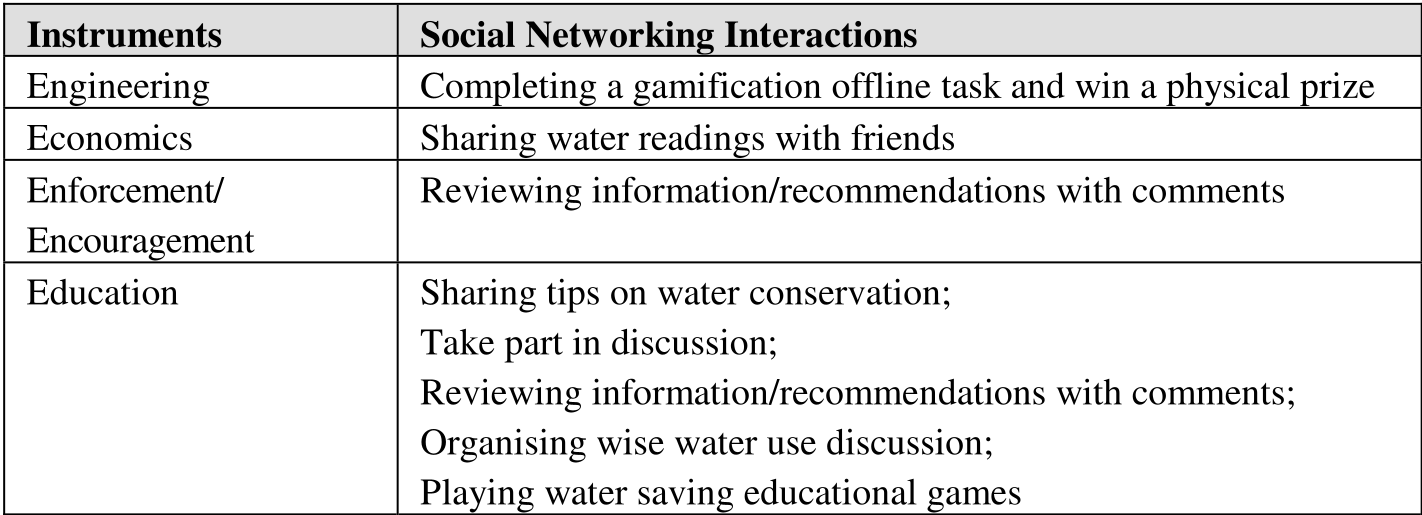 Table 1: Mapping WCM Theory to Social Features.
The system uses RESTful Web Services to fetch data from smart meters. This "Data Sensing" layer ensures that rewards are based on actual consumption data (objective) rather than just manual user input (subjective), preventing "cheating" in the gamification loop.
Critical Insight: The "Openness" Factor
The most forward-thinking aspect of this architecture is its focus on Openness. By allowing users to log in with Twitter or Facebook credentials and sharing anonymous profiles with water companies' decision support systems, the ISS-EWATUS platform avoids the "walled garden" trap. It recognizes that water conservation is a multi-stakeholder problem involving users, utilities, and researchers.
Conclusion & Future Outlook
The ISS-EWATUS architecture provides a robust template for any software engineer designing systems for the "Social Internet of Things." Its value lies in:
- Theory-Driven Design: Social features are derived from water management science, not just UI trends.
- External Validity: Universal rewards make the "game" of saving water relevant in the real world.
Limitations: While the architecture is sound, the real-world impact depends heavily on the "Motivation Level" vs "Difficulty Level" (Fogg Behavioral Model). Future work should focus on longitudinal studies to see if "universal rewards" actually prevent the 6-month churn common in gamified apps.