
Decoding Human Affect: A Comprehensive Framework for Speech Emotion Recognition in HCI
Speech emotion recognition approaches in human computer interaction
This paper provides a comprehensive review of Speech Emotion Recognition (SER) systems, focusing on the extraction of diverse acoustic features and their classification using SVM and HMM architectures. It achieves high-accuracy emotion classification across the Berlin (EMO) and Danish (DES) databases, specifically highlighting the efficacy of combining Pitch, MFCC, and Formant features for human-computer interaction.
TL;DR
Speech Emotion Recognition (SER) is the key to evolving interfaces from "point-and-click" to "sense-and-feel." By analyzing acoustic features like Pitch, Formants, and MFCCs, researchers have achieved recognition rates as high as 96% for intense emotions, bridging the gap between human empathy and machine response.
Contextual Positioning
While most early HCI focused on what was said (Speech-to-Text), this paper addresses the how—the paralinguistic cues that reveal a user's internal state. It serves as a foundational survey and performance benchmark, positioning SER as a more cost-effective and real-time alternative to facial emotion recognition.
Problem & Motivation: The Empty Interface
Most machines are "emotionally blind," treating a frustrated user the same as a calm one. This leads to friction in automated systems like Intelligent Tutoring or Call Centers. The challenge lies in:
- Computational Complexity: Facial recognition requires high-end hardware.
- Feature Selection: Identifying which acoustic "fingerprints" correlate to specific emotions across different languages and speakers.
- Data Integrity: The subtle difference between "simulated" (acted) emotions used in labs and the "spontaneous" emotions found in the real world.
Methodology: The SER Architecture
The paper outlines a robust framework for extracting and classifying emotional signatures:
- Low-Level Descriptors (LLD): Extraction of Pitch (F0), Energy, Formants, and MFCCs.
- Global Statistics: Calculating mean, variance, and range to filter out linguistic content and focus purely on affect.
- Arousal-Valence Mapping: Categorizing emotions based on intensity (Arousal) and positivity/negativity (Valence).
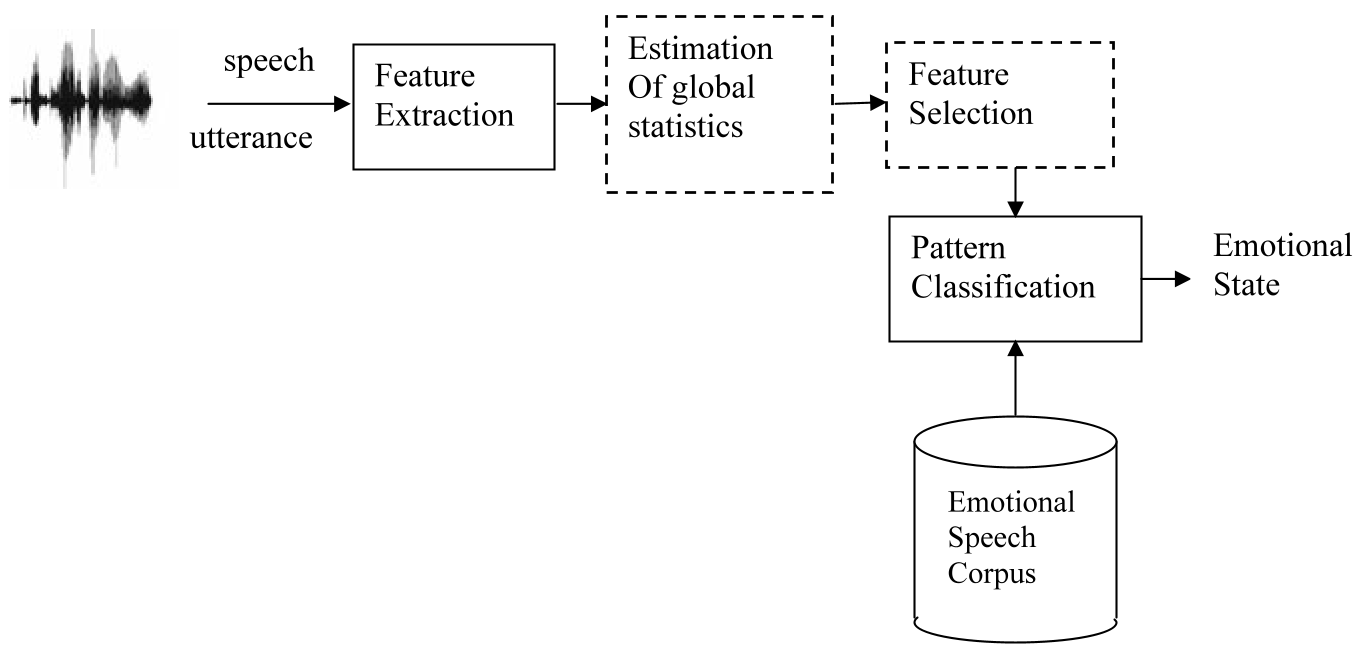 Figure 1: The standard workflow from speech input to emotion classification.
The Feature Power-House
The authors identify a "Golden Trio" of features:
- Pitch & Formants: Critical for distinguishing high-arousal states like Anger and Fear.
- MFCCs: Essential for capturing the spectral envelope of the voice.
- Zipf Features: Used to characterize the rhythm and prosody of the speech.
Experiments & Results: SVM vs. HMM
The study evaluated these features on the Berlin (EMO) and Danish (DES) databases. Key findings include:
- Classifier Superiority: SVM consistently beat HMM because it handles the high-dimensional feature vectors of global statistics more effectively.
- Arousal is Easier than Valence: High-activation emotions like Anger (96% accuracy) and Joy (95% accuracy) are significantly easier to detect than subdued states like Boredom or Neutrality.
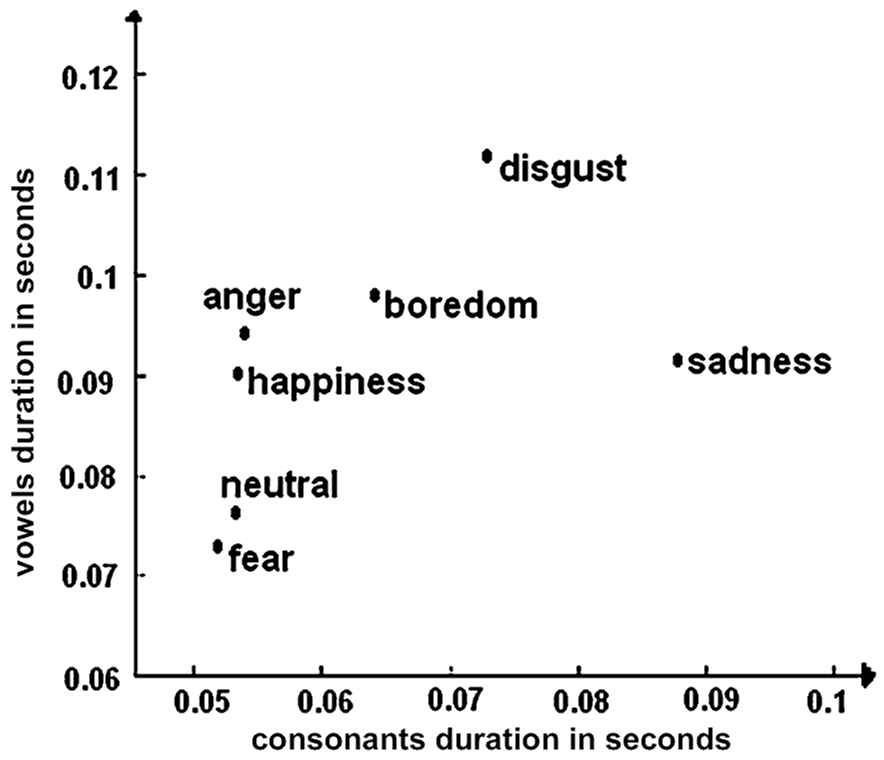 Figure 2: The Arousal-Valence space shows why certain emotions (like Anger/Joy) are often confused due to similar arousal levels.
Real-World Applications
The paper lists 10+ applications, highlighting:
- Intelligent Tutoring: Adjusting difficulty when a student sounds frustrated.
- In-Car Systems: Detecting road rage or sleepiness to improve safety.
- Medical Diagnosis: Using vocal quality to identify signs of clinical depression.
Critical Analysis & Conclusion
Takeaway
The study proves that combining spectral and prosodic features creates a highly reliable signature for primary emotions.
Limitations
The primary bottleneck remains the "Naturalness Gap." Most high-accuracy results are achieved on acted databases. In real-world HCI, emotions are often mixed, weak, or "shaded," which significantly increases the error rate.
Future Outlook
The next frontier is Speaker-Dependent Hierarchical Systems. By tailoring models to an individual's unique vocal tract and using a "decision tree" for emotions (e.g., first detecting Arousal, then Valence), we can reach the level of accuracy required for seamless human-robot companionship.