
CNN-Based Emotion Recognition: Breaking Communication Barriers for Neurological Patients
Speech Emotion Recognition in Neurological Disorders Using Convolutional Neural Network
The paper proposes a specialized Speech Emotion Recognition (SER) system tailored for individuals with neurological disorders using a Convolutional Neural Network (CNN). By extracting Mel-frequency Cepstral Coefficients (MFCCs) and utilizing data augmentation, the model achieves a state-of-the-art accuracy of 82.5% on the RAVDESS dataset, outperforming traditional ML models and VGG architectures.
TL;DR
Communication is often a hurdle for those with neurological disorders. This research introduces a Convolutional Neural Network (CNN) based Speech Emotion Recognition (SER) system that classifies eight emotional states with high precision. By combining the global RAVDESS dataset with a custom local patient dataset, and applying aggressive data augmentation, the model achieved an impressive 82.5% accuracy, outperforming standard benchmarks like VGG16 and SVM.
The Motivation: Why Standard SER Falls Short
For individuals suffering from stroke, dementia, or epilepsy, expressing emotion through speech is physically and neurologically complex. Standard SER models are typically trained on professional actors or healthy individuals, creating a significant "domain gap" when applied to clinical settings. The authors recognized that to create a truly inclusive communication tool, the system must be robust enough to handle the tonal irregularities of neurologically disordered speech.
Methodology: Custom CNN Archihtecture
The core of the system is a 4-layer CNN designed to process MFCC (Mel-frequency Cepstral Coefficients). MFCCs are effective because they represent the power spectrum of a sound based on the human ear's perception, which is vital for distinguishing emotions like "calm" versus "sad."
Key Architectural Choices:
- Iterative Complexity: The model uses four convolutional layers with increasing filters (16, 32, 64, 128) to capture hierarchical features from the audio signal.
- Regularization: Dropout layers (0.2) are placed between convolution blocks to prevent overfitting on the relatively small datasets.
- Data Augmentation: Using the
nlpauglibrary, the authors injected noise into the original files to double the training data size, which proved essential for deep learning stability.
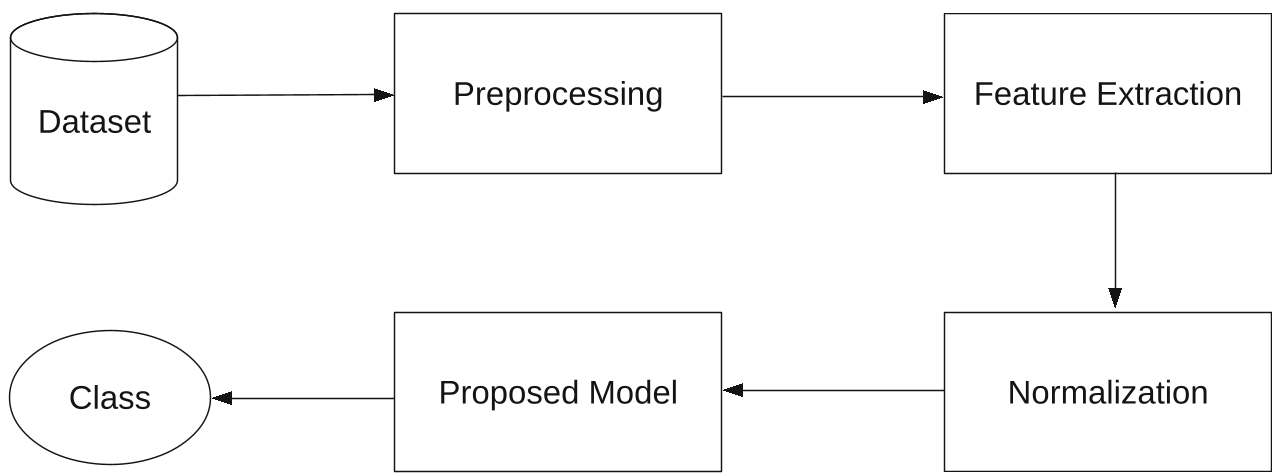 Figure 1: The proposed flow chart indicating the path from raw audio to emotion prediction.
Experiments and SOTA Comparison
The researchers tested the model against the RAVDESS dataset (7,356 files) and a Local Dataset (400 files from 25 patients in Bangladesh).
Performance on RAVDESS
The proposed CNN model surpassed all traditional machine learning baselines and even outperformed heavyweights like VGG19.
- Proposed CNN: 82.5% Accuracy
- SVM: 79.1% Accuracy
- VGG19: 76.3% Accuracy
The Challenge of Patient Data
The local dataset from neurological patients initially yielded low results (~37%). However, after Data Augmentation, the accuracy jumped to 61.2%. This highlights the inherent difficulty in classifying disordered speech and the necessity of further data collection in this niche.
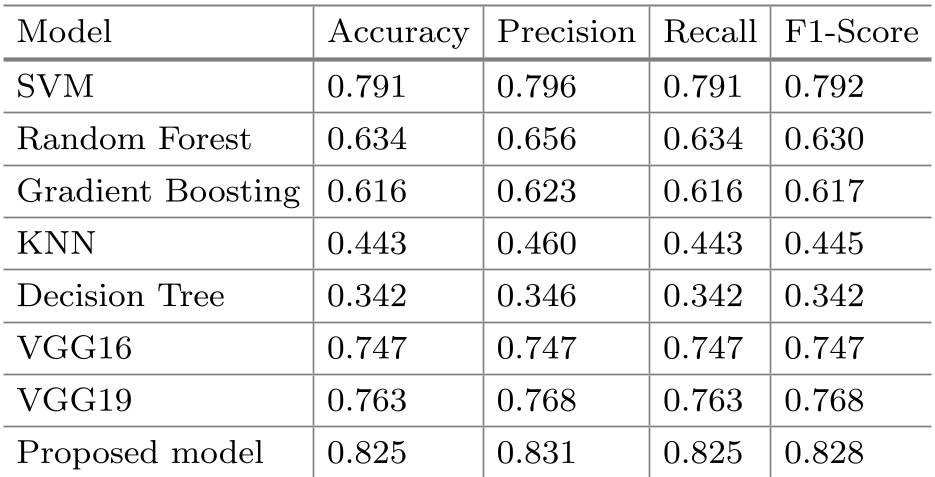 Table 1: Accuracy comparison between different ML and Deep Learning architectures.
Critical Analysis & Future Outlook
Takeaway
The study demonstrates that CNNs are highly effective at capturing the "tonal signatures" of emotions. The significant performance boost from data augmentation suggests that for medical AI, the quality and quantity of specialized data are just as important as the model architecture.
Limitations & Future Work
- Dataset Size: While augmentation helped, the local patient dataset remains small (25 patients). Real-world deployment would require thousands of diverse clinical samples.
- Noise Reduction: The authors noted that future iterations should include noise reduction algorithms before the augmentation phase to ensure the signal-to-noise ratio remains optimal for feature extraction.
- Hybrid Approaches: Integrating this CNN with Sequence models (like LSTM or Transformers) or Belief Rule-Based (BRB) systems could better account for the temporal dynamics and uncertainty inherent in disordered speech.
This research marks a vital step toward assistive technologies that can "hear" what patients with neurological conditions are feeling, even when they cannot explicitly say it.